
Two-portfolio balancing act

Swiss asset manager Compenswiss was established in 1948 to manage the assets of three Swiss Federal Social Security Funds: Old Age and Survivors’ Insurance (AHV), Disability Insurance (IV) and the Income Compensation Scheme (EO). Almost 60 years on, Compenswiss is continuing the development of a sophisticated strategy, investing assets of CHF34.8 billion ($34.8 billion) in a way that provides returns but is also low risk and has a high level of liquidity.

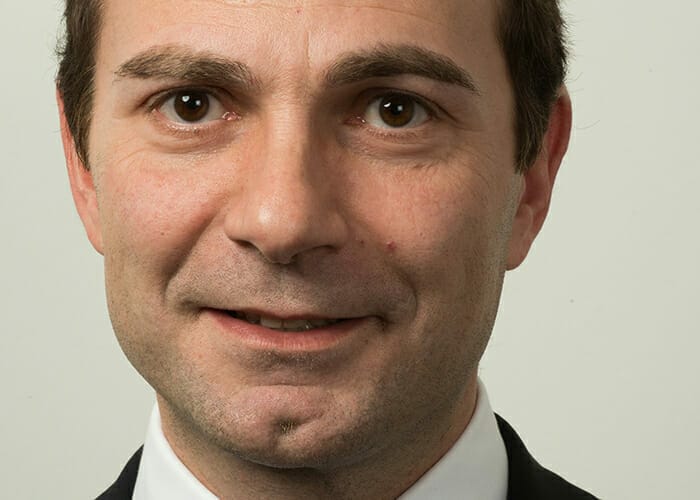
“By law, we must be fairly liquid and ensure our treasury has enough cash to deploy during the year. Building up a portfolio within these confines that delivers both returns and liquidity is a fine balance. We sometimes liken it to squaring a circle,” says Frank Juliano, head of asset management, speaking from Compenswiss’s Geneva headquarters. After deductions for hedging, the fund posted a return of 3.93 per cent in 2016, in spite of nearly a quarter of the return-seeking portfolio lying in negative-yielding bond investments.

The three schemes are managed on a pooled basis to keep costs low. Yet each scheme’s different asset and liability projections are met via an innovative structure that moves assets between a market (or return-seeking) portfolio, and a basis portfolio in cash and money markets.

Two portfolios are better than one

“The scheme’s assets are invested in a combination of the market and basis portfolios, according to their own risk/return profiles. We realised that the different schemes were facing different futures and that each had a different risk tolerance and cash needs.”

The vast majority (93 per cent) of the funds’ assets are in the market portfolio, half of which Juliano’s internal team manages. The interplay between the return-seeking and basis portfolios becomes particularly important during spikes in market volatility. The asset liability management (ALM) unit has developed a volatility tracking process, which means that a sharp market move triggers a decrease in risk according to the needs of each portfolio.

Sponsored Content

“When markets are volatile, we sell part of the market portfolio and invest in cash, bringing the risk portfolio back into a defined band.” The last time the volatility tracking was triggered was the summer of 2015.

Assets in the market portfolio are split between a 21 per cent allocation to Swiss bonds and loans, a 44 per cent allocation to foreign bonds – including high yield, credit and senior loans – a 24 per cent equity allocation, an 8 per cent real-estate allocation, and a 1 per cent allocation to commodities. The remainder of the market portfolio is in cash.

The allocations within the market portfolio have changed over time in a dynamic process that Juliano says is essential because of the confines of the local investment universe.

“Switzerland is a small country, with a strong currency and negative interest rates. We have to diversify the portfolio to find returns.”

Last year, the fund added an allocation to European high-yield and local currency emerging-market debt; it already had an allocation to hard currency emerging market debt.

Real estate grows in importance

Other recent allocations include foreign real estate, accessed via core real-estate funds in Europe and Asia. In the real-estate allocation, Juliano is also contemplating investments into value-add and opportunistic, and diversifying the portfolio across geographies and time spans. Such flexibility means real estate has become an important portfolio for delivering Compenswiss’s need for both returns and liquidity.

“We can invest only a limited portion into less liquid assets and, at this stage, can’t do the long time horizons of private equity and infrastructure. Increasingly, real estate has become a priority.”

Most allocations at the fund were managed externally until 2009. Today, half the portfolio is managed externally and half by Juliano’s internal team, in a decision-making process shaped by the extent to which internal management of an allocation can reduce costs, the ability to hire the right staff, and the operational risk of Compenswiss running the allocation itself.

“The availability of skills is an important consideration around internal and external management,” Juliano explains. “In Geneva, we have some good equity managers, but it is hard to find credit and high-yield managers. Also, the further you are from the market, the more difficult internal management is. For example, we have very limited access to the primary US credit market here.”

Currency risk becomes priority

As the fund diversified its asset base and invested outside Switzerland, managing currency risk at a portfolio level became another priority. Compenswiss’s Treasury Department runs a currency overlay program that covers roughly three-quarters of the fund’s currency exposure, through a dynamic and systematic process. It is not a full hedging program because of cost constraints, Juliano explains.

“We still keep some risk because hedging is costly. The Swiss base rate is -0.75 per cent. To hedge any currency involves paying the interest rate differential, so there is that trade-off between the currency risk and the cost of hedging.” In a recent example of the strategy at work, the investment committee took the view that hedging the fund’s Euro/Swiss currency risk ahead of the United Kingdom’s vote to leave the European Union last June was worth it.

“We increased our hedging ratio on the euro/Swiss exchange rate. Our fear was that should Brexit happen, the euro would fall and the Swiss franc would become a safe haven currency,” Juliano says.

Eleven elected members sit on the Compenswiss board, mostly drawn from representatives of the funds’ employers and employees. The investment committee prepares scenarios and proposals, which the board then scrutinises before approval.

“The board approves the risk budget, the asset allocation, the fluctuation bands of each asset class and the managers, and we then manage and execute investments according to their guidelines. It is a very transparent process and the universe is well defined,” Juliano says.


Leave a Comment

PMT talks infra equity and how to balance stock concentration risk

PMT talks infra equity and how to balance stock concentration risk

Scenario testing has put inflation risk front and centre at PMT, the Netherlands’ third largest pension fund, and it's driving the investor to take stock of the inflation protection it gets from infrastructure. In an interview with Top1000funds.com, chief investment officer Hartwig Liersch unpacks the risk, as well as another initiative where it's balancing concentration risk in the equity allocation without hurting returns.

Sort content by

Utah Retirement Systems: Why ESG is a waste of time

Divestment doesn't work, scope 3 reporting will tie companies in regulatory knots and ESG integration threatens pension funds long term returns and their ability to finance the transition. Utah Retirement Systems' John Skjervem says the only way to solve the climate emergency is to keep investing in fossil fuels.

Switzerland’s Publica hit by equity, fixed income correlation

Hit by last year's unusual correlation between equities and bonds, and in a bid to avoid higher long-term inflation, Switzerland's €45.6 billion Publica kick-starts a new strategic asset allocation that will reduce the bond allocation and result in a search for new managers.

NYCRS readies to allocate more to private markets

Since joining $233.5 billion New York City Retirement Systems (NYCRS) six months ago, CIO and Deputy Comptroller for Asset Management Steven Meier has spent the bulk of his time getting under the hood of the private markets allocation, engaging with business partners and meeting some of the best minds in the industry to discuss the

Wellcome Trust: Hedge funds, property and low allocation to equity delivers

Allocations to property, some hedge funds and holding most of its assets in currencies other than sterling, helped Wellcome Trust withstand the impact of last year's simultaneous decline in prices in equities, government bonds and corporate credit on a scale not seen for many years.

After the horror of 2022, UTIMCO says asset classes set to do well

It’s possible that a traditional 60:40 passive portfolio could get close to a target return of 7-8 per cent this year in a trajectory not seen for the last 12 years, according to Rich Hall, CIO of $65 billion University of Texas endowment.

Active, in-house and sustainability: The driving factors at AP3

AP3’s ability to actively benefit from volatile markets is rooted in a reform process undertaken by CIO Pablo Bernengo, replacing decade-old, separate alpha and beta allocations with a traditional asset class structures but avoiding silos. Active risk and sustainability go hand in hand, he says, and is a 2023 focus.

Previous




