
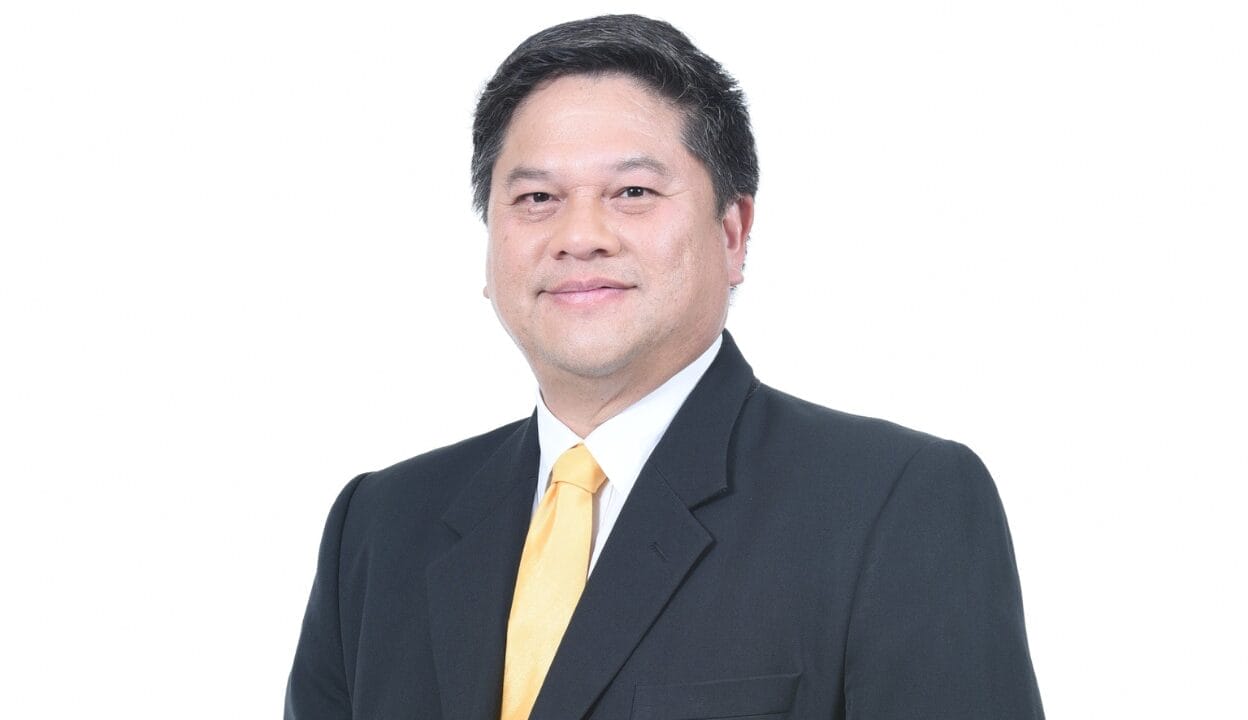

Thailand’s $34 billion Government Pension Fund leads the region’s asset owners when it comes to integrating ESG, focusing on an optimal return for members and a social return for other stakeholders. Top1000funds.com talks to Man Juttijudata, responsible for GPF’s active investment strategy, outsourced funds management and RI strategy about the key challenges – like how to treat EV companies – and how he relies on fund managers for nuanced assessment.
Thailand’s $34 billion Government Pension Fund has developed a leading ESG strategy among institutional investors in the region that integrates sustainability into two thirds of its holdings spanning all asset classes, with the exception of government bonds and hedge funds.
“Our objective is not to just maximize returns,” explains Man Juttijudata, senior director, strategic and tactical asset allocation who is responsible for GPF’s active investment strategy, outsourced funds management and responsible investment strategy, and has been at the fund since 2006.
“We prefer to achieve an optimal return for our members and a social return for all our other stakeholders. We are not investing just for this generation but for future generations too and sustainability is the most important return.”
Sixty per cent of the portfolio is in fixed income comprising Thai government and corporate bonds, global sovereign and corporate bonds, and a smaller allocation to short term bonds and emerging market fixed income.
Risk assets claim the remaining 40 per cent, divided equally between equity (domestic, global and emerging market) and alternative assets where allocations include global real estate, infrastructure, private equity, commodities and two mandates with absolute return managers to support tactical allocation and with a low correlation to other assets.
“The economic cycle between the global and domestic allocation is different and by investing globally we can tap a wider and deeper market that gives us more opportunity to bring back returns for our members,” says Juttijudata.
Weights and scoring
The fund integrates ESG in its actively managed equities by applying negative screens and using an ESG weight and score asset valuation methodology that adjusts the weighted average cost of capital and stocks in the portfolio.
In place since 2018, the methodology scores companies using MSCI ESG data but also draws on additional, local analysis of Thai companies that includes governance data, a particular concern at the fund.
“We seek to assign a greater weight to governance in our investment process. We modify MSCI’s ESG data and scoring processes to integrate Thai-specific data sources to reflect our concerns,” says Juttijudata.
In fixed income, the fund draws on credit research that includes ESG performance, and also applies a negative screening process. It does not currently analyse ESG issues for its sovereign bond holdings, but does invest in sovereign Green, Social, and Sustainability (GSS) bonds which contribute to ESG outcomes.
Juttijudata won’t add any more fossil fuel holdings to the portfolio, but says the fund won’t divest on climate or emissions grounds either – although it does on governance concerns. He argues that divestment only leads to less scrupulous investors buying dirty assets and also worries that the data is too sketchy to inform accurate divestment decisions.
“We are trying to introduce more emissions data and quantitative analysis into our reporting. But right now, we are not confident that the data is accurate enough to make a decision on divestment so we concentrate on engagement.”
Recent engagement wins include persuading companies in Thailand’s power sector to increase efficiency.
“We engage with small cap stocks as well,” he says.
He observes that Thai companies are increasingly open to engagement. Last year the investor engaged with Thailand’s top 10 companies, most of which have a net zero target and have set caps on emissions.
“Companies that export to Europe know that if they don’t do this they may face a tax on their exports.”
Key challenges to the ESG strategy include the oftentimes absence of coherent beliefs around investing in sin stocks like alcohol. He is also struggling to develop the right nuance around stocks like EVs.
“EVs are good companies but lithium mining is ESG negative and you are always going to have this dispute with electric cars.” For now he relies on managers to conduct a trade off in the scoring process.
Looking to the future his focus is on improved reporting on GPF’s climate exposures; extending ESG to all assets in the portfolio and driving higher standards of responsible investment in Thailand, and across the Asian markets.
He says he has no plans to move into impact investment, primarily because he’s worried about the impact on returns.
“We do try to have a positive impact, but if we trade too much of our return we will lose the consensus from members,” he says.
The internal team manages the domestic allocations to Thai equity and bonds. In global investments where the team don’t have the expertise, he outsources and incorporates ESG into external manager selection, appointment, and monitoring processes.
He likes the competitive tension between the internal and external team and despite outsourcing, the internal team is still able to add top down tilts when they see an opportunity between sectors or regions that complements bottom up active management.
He would also like to build out the allocation to risk assets, namely public equity and a new allocation to private debt.








Leave a Comment
You must be logged in to post a comment.
Login