

With no precedent for delivering 4 per cent returns and economic benefit in a small economy, the strategic investment fund will play its strengths in evolving a strategy to invest a further €5.6 billion ($6.1 billion) across the capital structure and for the long term.
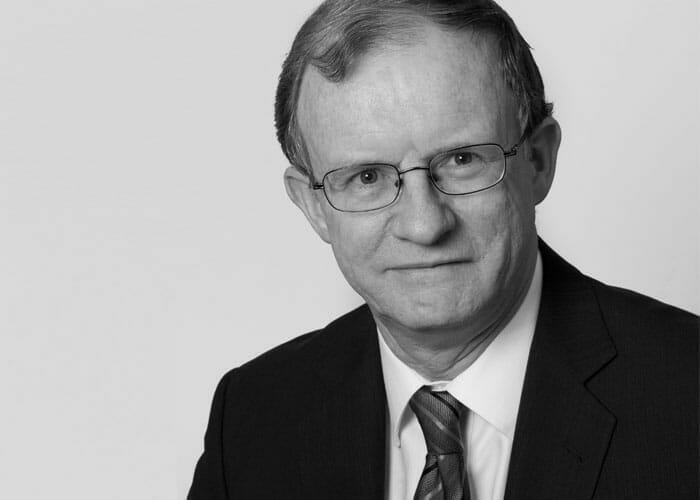
“Ireland is a small proportion of the global economy so we only have a small opportunity set,” says Eugene O’Callaghan, articulating the biggest challenge he faces shaping investment strategy at Ireland’s €7.6 billion ($8.3 billion) strategic investment fund (ISIF).
So far only a third of the fund has been invested in Ireland, yet the aim is for it all to be put to work in a duel mandate that brings commercial returns of 4 per cent alongside Irish economic benefit. Finding investments that meet the fund’s strict developmental agenda within Ireland’s shores isn’t easy and most of the fund is still sitting offshore waiting deployment.
“There remains €5.6 billion ($6.1 billion) to be invested. That’s a large amount of money that will need to be deployed over several years,” said O’Callaghan, director at the fund.
In 2014, ISIF was seeded from funds transferred from the remnants of the National Pensions Reserve Fund. At its peak this rainy-day fund had €23 billion ($25.2 billion) in assets, but the government used most of it during the financial crisis to bail out Ireland’s banks.
Assets waiting to be put to work in Ireland are “conservatively managed” in a global portfolio split between a 45 per cent cash allocation, a 13 per cent equity allocation with some option protection, 20 per cent in bonds and 21 per cent in alternatives including property, infrastructure and commodities.
“It is structured to make a contribution to the 4 per cent target, but not be depleted to any significant extent.”
It is all managed externally. It means O’ Callaghan’s team can concentrate on finding opportunities in Ireland where ISIF investments are split with flexible allocations between Irish assets that include water, public–private partnerships (PPPs), infrastructure, small to medium enterprises, food and agriculture, real estate, venture capital and private equity.
Co-investment is a key part of strategy with ISIF capital acting as a catalyst to draw other funds and asset managers into Ireland to invest alongside.
“Currently total investment size is running at around 2.5 times the ISIF commitment to such investments, thereby leveraging ISIF money into a much greater total investment program,” says O’ Callaghan.
Examples include a €500 million ($549.7 million) joint venture with KKR, the private equity firm, aimed at boosting housebuilding in Ireland; a technology and growth fund backed by China Investment Corporation targeting equity investment in software and clean tech in Ireland and China – the fund can invest in assets overseas as long as they have an impact back home – and minority PPP investments in schools and motorways also backed by Dutch pension manager PGGM.
ISIF invests directly and via fund platforms. With the large transactions, ideally with a minimum size of €10 million ($10.9 million), ISIF tends to invest directly. Smaller-value, but higher-volume transactions usually go through third-party platforms. Indicative of the smaller amounts currently being deployed at the moment, 70 per cent of investments are via platforms and 30 per cent are direct.
“We will grow this to a 50/50 split,” says O’Callaghan.
O’Callaghan has to navigate the fund through its tricky confines. If ISIF competes with other investors it runs foul of the ruling that its investment has to make an economic impact.
“Where is the economic impact if other funds can do the job just as well us?” he asks. “If lots of others are vying to invest, there is no impact from us.”
This proved a particular stumbling block when looking at Ireland’s PPP sector, originally tipped as prime investment territory for the development fund because of the economic slowdown and a lack of interest in the sector from other investors. As it happened, the economy recovered, other investors crowded in and ISIF had to retreat.
“We weren’t going to make an impact so we left it.”
It’s the kind of competition triggered by the Irish economy picking up and money starting to flow that makes finding suitable opportunities hard. Combine this with the development fund having scant protection from any downturn in the Irish economy because of its close linkage and the job becomes more difficult.
ISIF manages to diversify in such a small economy by spreading risk across durations, sectors, asset type and economic impact. It also finds it offers something other investors can’t in its ability to invest across the capital structure – from safe first security debt all the way along the risk spectrum to start-up venture capital.
“This could include equity in early stage companies, junior debt, infrastructure debt from the very safe to the speculative,” explains O’Callaghan.
The other ISIF advantage is that it can afford to tie up its capital for years. “We are able to invest for up to 30 or 40 years. It means we can offer long-term infrastructure or patient capital for business or projects.”
There is no precedent to follow in how best to deliver positive returns and an economic impact in a small economy.
“It is a big issue for us, that there is no textbook to follow,” O’Callaghan says, adding that although there are a small number of development funds with economic and social objectives targeting commercial returns, they are also recent.
For now ISIF is an evolving work in progress, with its first review planned in the second half of 2016.
“Strategy will evolve and be refined over time. The nature of investments will change,” he says.
Others will be looking on with interest.








Leave a Comment
You must be logged in to post a comment.
Login