Railpen: good partners add skills

Earlier this year, RPMI Railpen, investment manager for the £28 billion ($37 billion) pension fund serving the UK’s railway workers, embarked on a joint venture with the $66 billion Alaska Permanent Fund and Kuwait’s Public Institution for Social Security (PIFSS) to better access private markets.

Like many other asset owners, the trio have found competition and elevated prices has made accessing private markets difficult. The hope is that combining firepower and expertise in a joint venture will open up more opportunities. The joint venture, Capital Constellation, will invest in private equity and alternatives managers, and plans to deploy more than $1.5 billion in the next five years. The three funds manage about $200 billion in assets between them.

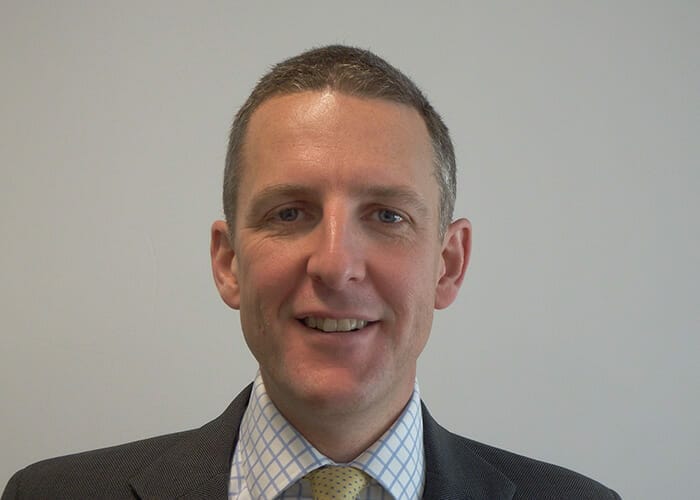
The project has revealed important lessons, Railpen chief investment officer Richard Williams says. First, asset owners should partner with investors that bring different elements to the party. In Railpen’s case, this means finding partners that can complement its ESG experience and UK presence, he says.

“It is also about finding heterogeneous skill sets that blend together,” Williams says. “There are lots of hurdles to jump through and we would like to do more initiatives like Capital Constellation, but only time will tell if we do. It won’t be for lack of intention.”

Preparing the ground at the beginning of a collaboration in case things grow tricky and parameters shift in the future is important as well, he says.

“It is a little bit like a prenup [prenuptial agreement],” Williams says. “If it doesn’t work out, all parties need to know how they can separate without it getting too acrimonious. I’m not suggesting the best marriages have to have a prenup, but sometimes love isn’t enough.”

Sponsored Content

For more on Railpen’s strategy see our profile Railpen reaps benefits of in-house team.

Leave a Comment

How CPP is evolving risk management for a faster, more interconnected world

How CPP is evolving risk management for a faster, more interconnected world

In an environment where multiple risks are emerging and their effects are compounding on the portfolio, CPP Investments' chief risk officer Priti Singh says the $572 billion fund is rethinking risk management from the ground up, shifting from reaction to preparation and embedding risk thinking earlier in investment decisions. She speaks to Amanda White about the fund's risk approach.

Sort content by

The challenges of a low-carbon mandate

AP4 already has US and emerging markets low-carbon mandates and plans to invest up to $1 billion across various regions. Mikael Johansson, senior portfolio manager global equities, AP4 explains how the concept of responsible investment can be integrated into the investment process of a large pension fund and the challenges in implementing low carbon mandates.

NEST’s defined contribution lessons

At the end of last year, 47 per cent of global pension assets were in defined contribution structures. As the trend towards defined contribution continues, one of the newest DC funds, the UK’s NEST, has some clear messages on what makes a defined contribution fund work. Chief executive, Tim Jones speaks with Amanda White.  

UniSuper’s domestic equities bias

John Pearce recently notched up five years in the role of chief investment officer at the $37 billion Australian fund, Unisuper. Here he explains his fund’s bias to domestic equities and explains the parameters of the fund’s in house management program. David Rowley reports. John Pearce has a side bet with a member of his

Why Sunsuper likes hedge funds

One of Australia’s largest superannuation funds, the $27 billion Sunsuper, is adamant that it gets value out of its large hedge fund program. This is against the grain in Australia, where many large funds (with the exception of the Future Fund) choosing not to invest in hedge funds. So why does Sunsuper favour hedge funds?

Behind the strategy of the French pension reserve fund

The French pension reforms in 2010 had a profound impact on the asset allocation of the Fonds de reserve pour les Retraites, the €35.8 billion French pension reserves fund. Instead of making payouts between 2020 and 2040, after the reform, the FRR has to pay €2.1 billon to Caisse d’Amortissement de la Dette Sociale (CADES)

Mercer capitalises on manager research

Mercer’s chief investment officer, Russell Clarke, explains how manager research helps create the 200 building blocks of an investment operation that has grown from $20 million a few years ago to $124 billion today and which covers – uniquely – all elements along the fixed income curve.   Starting from scratch in 1996, Melbourne was

Previous




