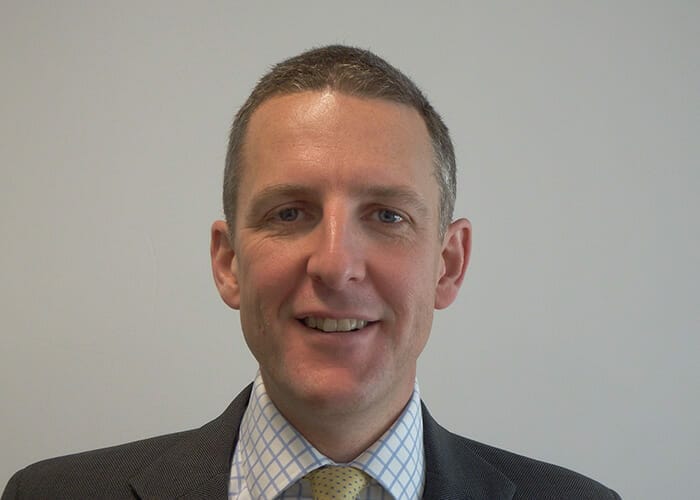
Railpen: good partners add skills

Earlier this year, RPMI Railpen, investment manager for the £28 billion ($37 billion) pension fund serving the UK’s railway workers, embarked on a joint venture with the $66 billion Alaska Permanent Fund and Kuwait’s Public Institution for Social Security (PIFSS) to better access private markets.

Like many other asset owners, the trio have found competition and elevated prices has made accessing private markets difficult. The hope is that combining firepower and expertise in a joint venture will open up more opportunities. The joint venture, Capital Constellation, will invest in private equity and alternatives managers, and plans to deploy more than $1.5 billion in the next five years. The three funds manage about $200 billion in assets between them.

The project has revealed important lessons, Railpen chief investment officer Richard Williams says. First, asset owners should partner with investors that bring different elements to the party. In Railpen’s case, this means finding partners that can complement its ESG experience and UK presence, he says.

“It is also about finding heterogeneous skill sets that blend together,” Williams says. “There are lots of hurdles to jump through and we would like to do more initiatives like Capital Constellation, but only time will tell if we do. It won’t be for lack of intention.”

Preparing the ground at the beginning of a collaboration in case things grow tricky and parameters shift in the future is important as well, he says.

“It is a little bit like a prenup [prenuptial agreement],” Williams says. “If it doesn’t work out, all parties need to know how they can separate without it getting too acrimonious. I’m not suggesting the best marriages have to have a prenup, but sometimes love isn’t enough.”

Sponsored Content

For more on Railpen’s strategy see our profile Railpen reaps benefits of in-house team.

Leave a Comment

Sort content by

The Austin advantage: Texas Teachers talks optimism, innovation and growth

Jase Auby, TRS's celebrated CIO, explains why TPA doesn't fit with its culture; why community push back on data centres could turn out to be an investor advantage, and argues the case for continuing to invest in fossil fuels. Top1000funds.com sat down with the CIO in his Austin office for an all-encompassing conversation.

PGGM: Impact begins at home

PGGM is preparing to build out the third element to its impact strategy targeting biodiversity. By focusing on food and the circular economy, PGGM aims to create most impact at home. Top1000funds.com looks at the fund's impact journey.

Finland’s Elo: Larger equity allocations promise new media scrutiny

As Finland's pension funds prepare to increase their equity allocations to unprecedented levels compared to global peers, they must also navigate a new and unfamiliar risk. Elo's chief investment officer Jonna Ryhänen explains the fund's investment approach going forward and how it will manage stakeholder and media scrutiny as they react to swinging volatility and returns.

PMT talks infra equity and how to balance stock concentration risk

Scenario testing has put inflation risk front and centre at PMT, the Netherlands’ third largest pension fund, and it's driving the investor to take stock of the inflation protection it gets from infrastructure. In an interview with Top1000funds.com, chief investment officer Hartwig Liersch unpacks the risk, as well as another initiative where it's balancing concentration risk in the equity allocation without hurting returns.

NZ Super cuts benchmark return expectation on US valuation concerns

A view that the US stock market is overvalued and equity risk premia will be lower over the long term has driven New Zealand Super to lower the return expectations for its reference portfolio following its recent five-yearly review of the benchmark. Co-chief investment officer Brad Dunstan also flags underweight commodity exposure as an area to address and explains why the fund remains sceptical of illiquidity premia despite seeing a growing case for private markets.

Sampension: Why there are many reasons to be optimistic

Now is not the time to reduce risk, argues Henrik Olejasz Larsen, chief investment officer of Sampension, Denmark’s $50 billion pension fund for public and private sector employees. In an interview with Top1000funds.com, he says corporate profits have not deteriorated, and although the market has been tested from multiple directions, the underlying optimism driving equities is strong enough to overrule the negative impact of geopolitical risk.




