
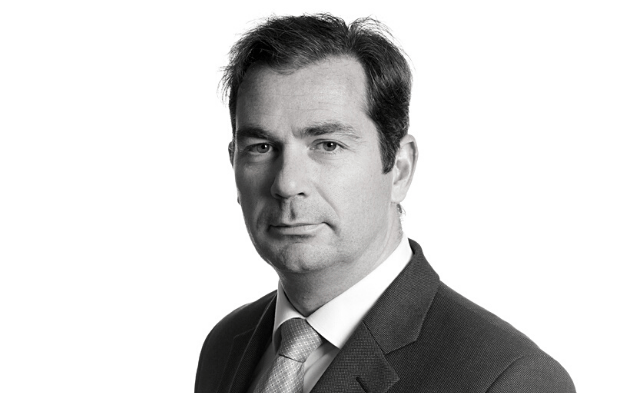

As private equity returns continue to outpace all other asset classes, so investors have steadily increased their exposure in the hunt for performance. But the way asset owners have traditionally accessed private equity will no longer reap the same return, and higher interest rates and lower growth ahead are set to impact the valuations of many private equity and venture portfolios counting on high multiples and growth expectations, warns Barry Kenneth, CIO of the United Kingdom’s £38 billion Pension Protection Fund (PPF) that has around £1.6 billion invested in private equity across direct and co-investments, and funds.
Investors going into large cap private equity today will struggle to get higher exit multiples than they get entry multiples, he says. “The traditional private equity model where you buy at an entry level multiple, optimize the balance sheet through leverage to improve returns and then sell at higher multiples – I think that game’s over,” says Kenneth.
He argues that private equity investors need to be more selective how they choose their managers. Strategy at the PPF is increasingly focused on finding GPs staffed by teams that can transform companies though operational improvements, adding on different businesses and being more thoughtful about value rather than just playing on structural bias and the multiples game. The PPF is exploring opportunities in Europe where investors can pick up smaller companies, which often struggle to access capital through public markets, at low multiples. “Private equity in the mid European market is doing well.”
Tougher times ahead
Like many CIOs, Kenneth believes private equity’s challenge is part and parcel of a much tougher investment climate ahead. A sweeping inflation and interest rate hedging strategy shelters the PPF’s liabilities but a new macro environment, accelerated by Russia’s invasion of Ukraine stoking inflation, will hasten central bank rate hikes and hit growth assets – currently accounting for around 60 per cent of the PPF’s portfolio and which returned 17.6 per cent last year. “I started in financial services in ’95 and this is the first time I have been in a sustained UK hiking cycle,” he says.
The PPF is not de-risking – but it is on the defensive. Higher interest rates in the long-term will have a negative impact on equities and while some businesses with an inflation linkage will benefit, others will suffer. If the supply chain crisis continues and globalisation trends that have kept inflation low for decades unwind, higher prices will become engrained. Companies with real-time supply chains dependent on imports from China will struggle – while many are still bogged down by Brexit red tape.
Most sectors will struggle with high interest rates and high inflation, but Kenneth urges index investors to look under the bonnet to see which stocks will be most affected. Cyclical companies and growth equity, particularly exposed to high interest rates and low growth are the ones to watch, he says. “Any asset classes impacted by higher nominal/real yields are worth worrying about, as are sectors like tech that generally have high valuation multiples and are most susceptible to a fall.” Elsewhere, long-term government bonds are now challenged by interest rates going up and the value of the asset falling.
Indicative of a new caution about how best to access certain asset classes, Kenneth favours infrastructure investments that aren’t linked to cashflows. The fund has invested in the United Kingdom’s Thames Link franchise, (a north-south rail corridor across London) yet the return is not based on traffic volumes but on the availability of the asset instead. “We are not doing opportunistic stuff,” he says. Similarly, toll roads where returns are based on traffic volumes are out and forestry, where the PPF now has a £1 billion portfolio that could benefit with the emergence of carbon credit trading backed by real assets, is in.
ESG
It reflects another theme pushing centre stage in today’s challenging environment. The PPF has integrated ESG since Kenneth joined nearly nine years ago, but now a number of key ESG strategies are on the agenda focused on private markets.
The PPF is improving its ESG data. Working with Dutch consultancy ORTEC, it is gathering carbon emissions data across every asset class in the portfolio with a particular emphasis on private markets. The depth of the process is most evident in the PPFs fund of funds allocation in private equity which comprises thousands of different companies.
“We are assigning a temperature score to every company we invest in so we can see how the portfolio aligns to Net Zero and Paris.” Only when the PPF can accurately measure this in a defined process will it set targets, says Kenneth. “Only by doing this groundwork can we figure out how to get to Net Zero without greenwashing,” he says. “There is no standardized process so in a complex portfolio made up of public and private investments where diversification is important this is how we have chosen to do it.”
According to recent data in the annual report, the carbon footprint in the PPF’s listed equities has fallen 16 per cent but it has increased slightly in the fund’s credit holdings, attributed to the inclusion of corporate bonds in the emerging market debt portfolio which tend to have a higher carbon footprint.
Elsewhere expectations of managers have risen. New managers are scored and must commit to minimum ESG standards enshrined in legal documents. The PPF’s internal team engage with managers on an ongoing basis and Kenneth estimates around a quarter of new managers have signed up with the PRI because of this pressure. “We are involved with moving managers to these platforms,” he says. “In private markets we are more dependent on the managers to push the companies to integrate ESG, but we have significant engagement with these managers to execute our beliefs/strategy here. If a company is listed, it is more likely they will report on ESG related issues, as they are more transparent to a wider investor base.”
The fund delegates stewardship to EOS at Federated Hermes but has the ability to overwrite and apply stronger stewardship if needed. “In our segregated mandates, we have an overwrite process whereby we agree standards on stewardship practices with EOS (at Federated Hermes) but if want to be able to overwrite and be stronger on some aspects, we can,” Kenneth concludes.








Leave a Comment
You must be logged in to post a comment.
Login