
PPF throws hat in the ring to manage DB pension assets for growth

The United Kingdom’s £32 billion Pension Protection Fund (PPF) is marketing its credentials to act as consolidator for the country’s thousands of  DB corporate retirement funds.

The government wants the £1.5 trillion sector to invest more in economic growth at home and put money into alternative assets like infrastructure and private equity rather than invest in these schemes’ favourite asset – liability-matching fixed income that safely secures member outcomes.

The PPF’s push for an expanded role to act as a consolidator comes in response to the government’s call for evidence on how DB pension schemes, and the PPF, could support greater productive investment in the UK. Growing pressure to cajole these risk-averse pension funds to invest more in illiquid assets is an increasingly fraught debate. Many closed DB pension funds are well funded and don’t need to take this added risk to deliver on returns.

The PPF is the latest large pension scheme to burnish its ability to manage these DB funds. Under its new name Brightwell, BT Pension Scheme Management, the executive arm of the £47 billion ($59.8 billion) BT Pension Scheme (BTPS) is already offering its pension management capabilities to other defined benefit pension schemes – like the £1 billion DB arm of the EE Pension Scheme.

Perhaps Brightwell’s most compelling service comes in its promise of a coherent, single approach to pension management. Under the Brightwell umbrella schemes can replace a noisy cohort of actuarial, investment, fiduciary and covenant advisors, plus multiple asset managers, with a single operation.

A step change

The PPF explains that persuading DB funds to invest in riskier long-term assets, and accepting more volatility, is at odds with many of these funds de-risking strategies and will require a step change.

Sponsored Content

These schemes typically seek insurer buy-outs, it continues in its response to the government. They buy gilts and corporate bonds to reduce balance sheet volatility to get to this endgame as soon as possible.

Most pension funds are sufficiently well funded and do not need to generate the higher returns offered by an equity stake in productive finance assets. Improved scheme funding in recent years, driven by higher interest rates, will further accelerate the trend for closed, corporate, DB schemes to de-risk, it states. Arguments echoed by others on these pages like Railpen’s head of investment strategy and research, John Greaves.

The PPF says it has the experience and expertise to run a consolidated fund. This would create scale, and combined with professional asset management, lead to greater allocations in productive finance while providing security for members.

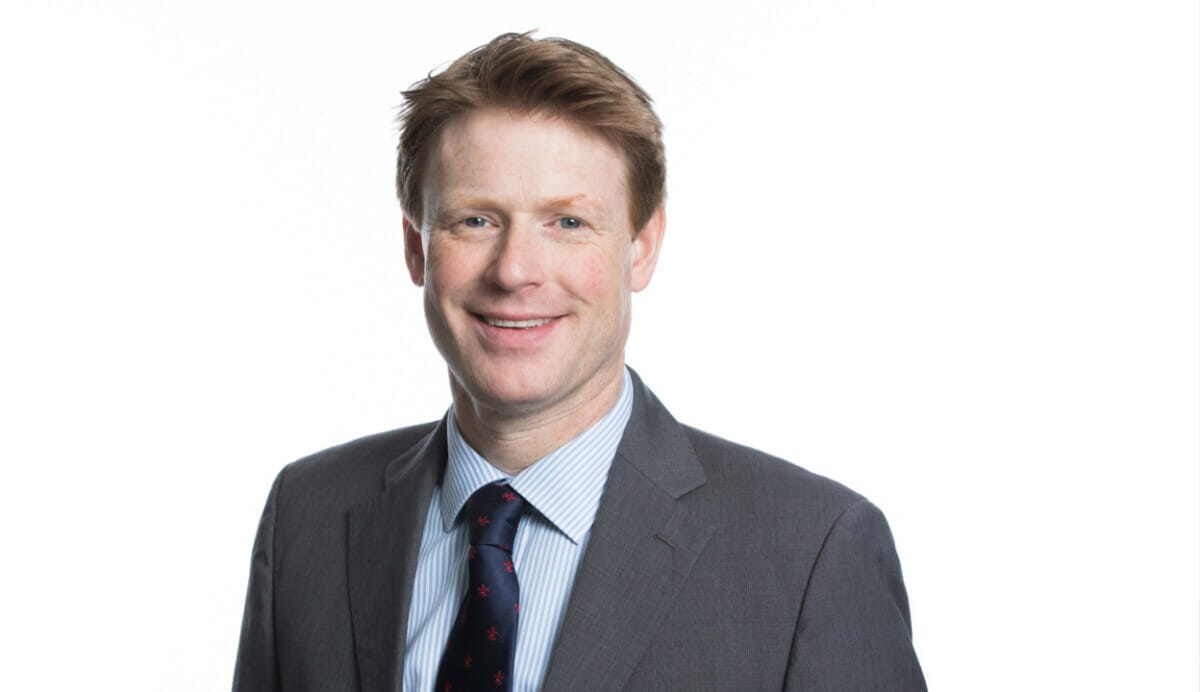
“The PPF is well placed to run such a Fund,” says Oliver Morley, PPF chief executive. “Consolidation must be an integral part of the solution.”

The PPF outlines how a Public Sector Consolidator solution could be designed, structured and set up. It argues that its own investment approach and asset allocation acts as a blueprint for what could be achieved.

Around 30 per cent of the portfolio is invested in alternative assets comprising private equity, private credit, infrastructure and timberland/agriculture, over two thirds of which are in the UK.  The PPF has 18-year experience consolidating over 1,000 DB schemes, it says.

“Running a Public Sector Consolidator would be a natural evolution of the PPF’s existing capabilities. Through our investment approach the PPF already provides a blueprint for how the government’s objectives can be delivered at scale. We’re a major buyer of UK gilts, invest heavily in productive assets and, by investing for growth over the long term, we’ve delivered greater security for our members,”  adds Morley.

Alongside consolidation, and an overhaul in the structure of the DB market, other step changes would also be essential. Schemes will have to embrace long term investments, diversification, interest rate/inflation risk management, scale and professional management.

The PPF also argues that unleashing this money for investment would involve “severing the link” between the sponsoring employer and its pension plan, which currently encourages most schemes to minimise risk.

Leave a Comment

The ‘space economy’ is a legal and literal vacuum for investors

The ‘space economy’ is a legal and literal vacuum for investors

The looming SpaceX IPO has put the spotlight firmly on the so-called ‘space economy’, but asset owners have been urged to exercise caution about investing in a sector that still resembles the wild west, with no legal or governance framework to protect capital. That’s not to say money will not be made, but it might not be in the areas investors first expect.

Sort content by

Investors head back to EM as US tech capex bill mounts

US tech mega caps are grappling with surging capital expenditure, casting doubt on whether the premium attached to these stocks in the AI super cycle has become detached from fundamentals. Investors are now turning their attention to emerging markets equities where they have the opportunity to buy into the AI hype at a much lower price.

China tech rivalry is ‘existential’ for the US – and diversification

Decades of US economic and financial supremacy have made diversification away from it a drag on returns for many investors, but the forces that have underpinned that supremacy may now be coming to an end.

AustralianSuper built scale – now its new CIO needs to make it work

The $295 billion AustralianSuper has spent two decades building scale, but Shaun Manuell's task as the fund's new chief investment officer is to ensure Australia's largest pension fund can operate effectively with it. As short-term performance pressure mounts on the fund and its assets set to hit A$1 trillion ($718 billion) by 2035, the local equities boss-turned-CIO will see his legacy defined by whether he can transform AustralianSuper from a domestic giant to a global leader.

Why Asian equities’ growth will outlast the AI-driven semiconductor cycle

In the latest episode of the Fiduciary Investors Series, Liao spoke with Top1000funds.com Asia Pacific correspondent Darcy Song on why the convergence of innovation, demographics and improving shareholder returns makes Asian equities an increasingly compelling diversification trade for asset owners navigating a geopolitically fractured world.

How CPP is evolving risk management for a faster, more interconnected world

In an environment where multiple risks are emerging and their effects are compounding on the portfolio, CPP Investments' chief risk officer Priti Singh says the $572 billion fund is rethinking risk management from the ground up, shifting from reaction to preparation and embedding risk thinking earlier in investment decisions. She speaks to Amanda White about the fund's risk approach.

Pension funds confront the question of who owns AI

As the use of AI within asset owners evolves, organisations are grappling with the governance question of where the strategy and accountability sit. Darcy Song looks at the treatment of AI organisationally within a number of high-profile funds, including OTPP, AustralianSuper, CPP and Norges Bank.



