
Norges’ 1-stop shop for risk data

Norges Bank Investment Management has developed a proprietary database allowing it to assess non-financial risks across the 9000 portfolio companies in which it invests. The database gives its risk team and portfolio managers the ability to make more in-depth decisions around the sustainability of a company’s business.

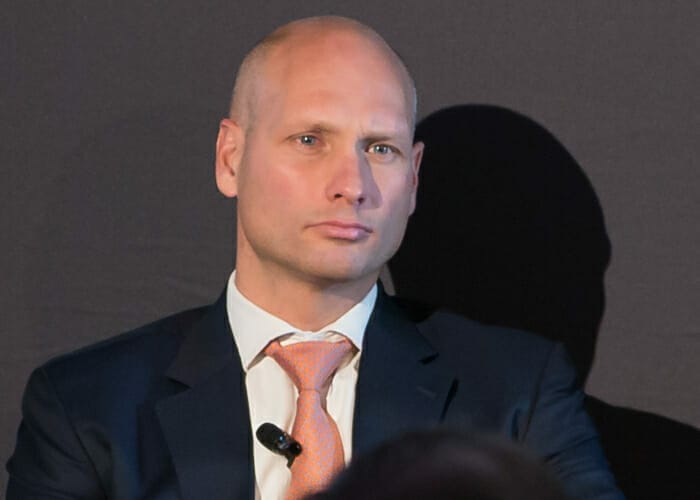
Speaking at the Fiduciary Investors Symposium at INSEAD, Patrick du Plessis, global head of risk monitoring at Norway’s NOK7.93 trillion ($940 billion) NBIM, explained the large investor’s approach to environmental, social and governance (ESG) risk and integration.

“Most investors are familiar with traditional investment risks and use these as the starting point for analysis, but we think to get a holistic picture of a company’s risk profile you need to take into account other risks, those that are below the surface and harder to identify,” du Plessis said. “We believe that what gets measured gets managed, and non-traditional financial data has been slower to become available.”

To counter this, the fund built its own database, which incorporates non-financial data alongside financial information.

“We don’t just look at financial data for opportunities; we think you need to look at ESG considerations as well, and that works for risk mitigation and investment opportunities,” du Plessis explained. “We need to consider all externalities and understand what they mean, because we are running a global fund.”

The database includes non-financial information on issues such as carbon, climate change, waste, water, child labour, corruption, and health and safety, at the country, sector and company level. The NBIM risk team incorporates the data into relevant systems, analyses and processes to facilitate a more comprehensive assessment of risk exposure. The data relies on company-reported ESG information, which is supplemented by other service providers, such as Trucost, MSCI and CDP.

Sponsored Content

This all allows for a deep dive on certain ESG themes. For example, all countries could be assessed on greenhouse gas risks. Risks can be viewed across countries and sectors, so a matrix could assess a risk threshold between countries and sectors, du Plessis said.

“The intention is to create a one-stop shop,” he said. “In one place we have traditional valuation metrics, benchmark-relative positions and a standalone ESG tab that looks at company ratings, fossil fuel compositions and inherent country and sector risk. The risk team and portfolio managers can use the tool and find much of what they need. The intention is to create a good dialogue between the risk team and portfolio managers.”

NBIM can look at specific ESG risk related to a certain theme, such as conventional electricity in the US. The database will spit out those companies with an inherent risk related to that theme that could affect the sustainability of business models. The risk team can then focus on 60 or 70 companies specific to that threat.

“This is not a discussion about ethics, it’s about the sustainability of business,” du Plessis said. “We are not just looking at income statements but other things below the surface of the iceberg. This is the quantifying and formalisation of ESG in the business analysis process.”

Risk and portfolio managers get a more holistic company profile, including traditional and non-traditional factors, on which to assess companies.

NBIM has three pillars to its responsible investing approach:

  1. Standard setting: It collaborates on global standards and expectations. Because of the sheer size of the portfolio (9000 companies) the fund can’t engage with all of them. Standard setting, and expectations documents, create an opportunity to affect them all.
  2. Active ownership: NBIM engages on specific ownership issues with the most material holdings.
  3. Risk: the entire portfolio of 9000 companies is examined on a risk basis. The database is a key tool for this.

Separate from this ESG risk analysis, NBIM is mandated by the Norwegian Ministry of Finance to implement certain exclusions, including coal, on ethical grounds.

Leave a Comment

How CPP is evolving risk management for a faster, more interconnected world

How CPP is evolving risk management for a faster, more interconnected world

In an environment where multiple risks are emerging and their effects are compounding on the portfolio, CPP Investments' chief risk officer Priti Singh says the $572 billion fund is rethinking risk management from the ground up, shifting from reaction to preparation and embedding risk thinking earlier in investment decisions. She speaks to Amanda White about the fund's risk approach.

Sort content by

China’s SSF – defence making way for attack with investments

China is the world’s biggest new frontier since wild-west America in the mid 19th century. For instance, it controls four of the top 10 sovereign wealth funds by size, as just one of many examples of its nascent power. And China is changing, becoming much more of a global corporate citizen and less of the

OMERS’ new CIO to focus on in-house management

Bringing externally managed funds under the guidance of the internal investment team is a key component of OMERS’ growth plans, with the fund moving to having more direct control over its investments, according to new chief investment officer, Michael Latimer. mrec4inarticleinline Sponsored Content scnative1 scnative2 scnative3

San Francisco’s mission to expand and upgrade

The new executive director of the San Francisco Employees’ Retirement System (SFERS), Gary A. Amelio, has come equipped with experience and ideas for the defined benefit pension plan that is managed by SFERS. With an aggressive investment strategy firmly in place, he spoke with Amanda White about the long-term vision, now being implemented. mrec4inarticleinline Sponsored

After bumper year, Ilmarinen turns to Asia

Surging equity markets generated a double-digit return for the 26 billion ($35.5 billion) Ilmarinen of Finland last year. Now the fund aims to boost its exposure to emerging markets at the expense of “old Europe” equities, says Timo Ritakallio, deputy CEO and investments chief at the pensions company, and further globalise its real estate and

Ohio Police & Fire’s risk/return tradeoff

The Ohio Police and Fire Pension Fund has overhauled its asset allocation, more than doubling fixed income and controversially introducing leverage at a policy level. As part of this new asset allocation, private market investments will double. Amanda White reports. mrec4inarticleinline Sponsored Content scnative1 scnative2 scnative3

How a sovereign fund decided to take the road less travelled

New Zealand’s sovereign wealth fund made a big brave decision in the eye of the storm early last year and introduced a new dynamic asset allocation strategy. The strategy, driven by in-house analysis, involved several large bets on global markets. As Greg Bright reports, the decision seems to have paid off. mrec4inarticleinline Sponsored Content scnative1

Previous




