
Maryland’s record year prompts actuarial rate reduction

Maryland State Retirement  and Pension System is the latest fund to record an historical performance for the 2021 financial year, returning a best ever 26.7 per cent. Again public and private equities were the star performers with an exceptional 51.85 per cent return in private equity and 44.54 per cent in public equities  But in recognition there might be a bill to pay for those higher returns in the future the fund has lowered its actuarial rate of return.

In what could almost be described as cruel, the ridiculous return of 51.85 per cent in the PE allocation did not beat its benchmark, a peer-group benchmark developed by State Street that returned 53.13 per cent.

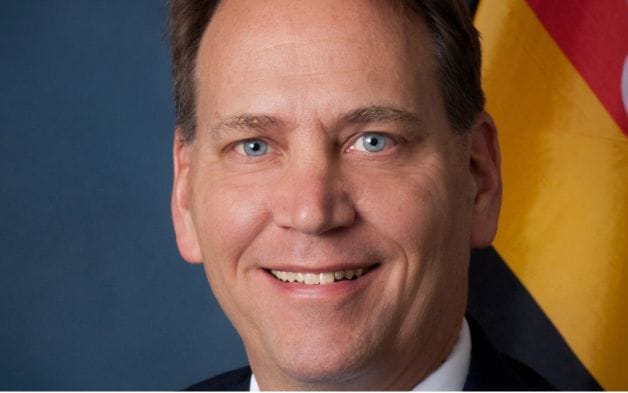
Chief investment officer of the $68 billion fund, Andrew Palmer, says the private equity portfolio, which currently has a 17 per cent allocation against a benchmark of 13 per cent, is a very strong portfolio of high quality managers.

“Our philosophy for this asset class if we can put ourselves with the top managers and diversify by strategy and geography we will be strong. And our managers all did well relative to their peers,” he says in an interview with Top1000funds.com.

The real issue for the fund in PE he says is the portfolio had about 10 per cent in venture and the PE benchmark has about 17 per cent.

“My philosophy of investment is a lot of products have negative skew and you’re lucky to get par back. It’s hard to generate a lot of extra return. We look for opportunities where we can get lots of extra return without corresponding lower return and venture offers that potential for very strong returns,” he says. “The venture benchmark was up 67 per cent last year so if you didn’t have enough or bold enough venture then you didn’t do as well.”

Sponsored Content

Maryland has a target allocation of 13 per cent to private equity but due to the portfolio’s success the allocation keeps increasing.

“You can’t rebalance PE,” Palmer says.

The fund has been building out its venture allocation, with the 10 per cent of PE allocation lifted from 6 per cent a few years ago.

“The challenge is we are a public plan and venture managers are quite secretive and keep information close so there are some challenges with that. We are also large and venture portfolios are often small so it’s hard for us to write enough checks. We have some partners that help us with that and get the right managers, he says. “What is coming in venture is attractive, there is some great stuff coming in consumer tech, business tech, and medical tech.”

The fund works with 45 core managers, and overall have 64 active GP relationships which was the result of a secondaries sale in 2019 that reduced the number of relationships from a high of 94.

“We now work with active managers we have confidence in. That freed up some capital and freed our attention,” Palmer says.

Public equities

The performance of the public equities portfolio is the result of work over the past five years to improve performance.

This included looking at better management of beta exposures and closer management of regional and strategy exposures.

“We were challenged a bit on managing our exposures between regions and different strategies such as small versus large and growth versus value. We didn’t have great systems or the depth of staff to measure that in real time and manage it. So we’ve been working on that,” he says. “We’ve been measuring and managing the beta at the strategy and total plan level so we didn’t have this drag of not having enough exposures.”

Typically the fund has had a growth tilt versus value, and historically a small versus large tilt, but that has been reduced tremendously in the last few years through tactical allocations.

The 36 per cent allocation to equities is split between US equities (16 per cent) and developed international and emerging markets (10 per cent each).

Palmer says the fund only uses active where it can generate excess return which means it has a lot of passive in US equities and is fairly active everywhere else.

It manages a Russell 1000 portfolio inhouse and is contemplating other strategies it can bring inhouse.

“We are hoping to do some active inhouse too,” Palmer says. “It helps us with having more control of assets and a lower cost. But also the skill set to manage assets helps us to be better managers of others.”

In the past year the fund has been slightly over exposed to equities on a tactical basis which has been managed through a mix of managers with different styles as well as a tactical overlay with derivatives to tweak exposures.

“I wanted to have the exposures I wanted to have,” he says.

Manager outperformance

Maryland’s fund managers have performed extraordinarily well, with 13 outperforming the benchmark by more than 4 per cent, six of them outperforming by more than 8 per cent and two outperforming by more than 20 per cent.

Baillie Gifford, one of the fund’s most consistent outperformers, was up almost 95 per cent relative to the benchmark for calendar year 2020.

“We have this mentality where we are looking for managers with the potential to have outsized returns but they have good risk management so there are not big drawdowns,” Palmer says.

In the year to June 30, Palmer says the contribution to excess return came equal parts from stocks and bonds in public markets.

In equities it was the stock selection from managers, and on the bond side it was how the team allocated between different risks, specifically it was overweight spread products and underweight long treasuries with each position contributing about 100 bps in return to the total plan.

Palmers says it is an example of how the fund manages the risks of the plan, which is to try to find places where the distribution of returns is skewed in one way or the other and then maximise or minimise the exposures.

“You can see that in private credit and real estate too. We have been moving to upgrade our risk posture. The private credit portfolio had moved from high yield to a BB/B benchmark. In real estate we allowed our value added and opportunistic private real estate portfolios to mature and give back capital and become more of a core portfolio. We have spent a lot of time putting money into the market.”

In the past year the fund has added $1 billion in real estate commitments to pivot to more risky assets.

Lower return target

But despite the stellar performance for the past financial year, the fund recently reduced its actuarial rate of return, moving from 7.4 to 6.8 per cent for fiscal 2023.

“The large return we had last year pulled returns forward, all the asset classes have lower expectations today than they did a year ago and the change in the actuarial rate reflects that,” Palmer says.

Palmer likens to the situation to the year 2000 when most US public funds were fully funded with big returns achieved during the tech run.

“At the time the actuaries are saying you are too well funded so you have to increase benefits, stop making contributions or lower your assumed rate. It’s the same sort of environment. We’ve had abnormal returns and the right answer was to lower the assumed rate. Those that did in the past are among the better funded funds today. It’s recognition that there might be a bill to pay for those higher returns in the future.”

The fund is undertaking an asset allocation study with its consultant, Meketa, where it is specifically looking at a number of topics including lower interest rates and whether bonds still have the diversifying properties they had before; whether to use leverage; and whether the impact of climate change changes the mix of assets.

“I think a focus on inflation-protected assets and assets that get a lot of return from income might be where we go, it reduces the reliance on bonds.”

Leave a Comment

How CPP is evolving risk management for a faster, more interconnected world

How CPP is evolving risk management for a faster, more interconnected world

In an environment where multiple risks are emerging and their effects are compounding on the portfolio, CPP Investments' chief risk officer Priti Singh says the $572 billion fund is rethinking risk management from the ground up, shifting from reaction to preparation and embedding risk thinking earlier in investment decisions. She speaks to Amanda White about the fund's risk approach.

Sort content by

Why West Virginia’s CIO is worried about its China divestment directive

The $28 billion West Virginia Investment Management Board will divest from Chinese state-owned companies and CIO Craig Slaughter has reservations about the decision. He outlines in an interview with Top1000funds.com about why the directive is an extension of a big threat facing investors: a decline in liberal democracy. 

TRS strikes gold: Tiny allocation crushes its benchmark

This year, TRS doubled its tiny allocation to gold via a special fund that buys gold ETFs and mining companies. The strategy returned nearly 60 per cent, thanks to market conditions including inflation, geopolitics, government debt levels and de-dollarisation pushing gold higher.

LGPS Central doubles in size; looks to add more alternatives

In a rare interview, Jayne Atkinson, chief investment officer of the £100 billion ($132 billion) UK pool LGPS Central, reveals the plan to scale up its offering after almost doubling its assets under management, including expanding alternatives to new allocations in hedge funds, diversified growth funds and insurance-linked securities.

CalPERS bets on outperformance from growing climate allocation

CalPERS' Peter Cashion tells Top1000funds.com how the pension fund's strategy to allocate to climate mitigation, transition and adaptation strategies is allowing it to access an untapped corner of the US market where many investors have retreated because of the policy environment.

Alaska’s APFC mulls the positives of growing its small crypto exposure

The $84 billion Alaska Permanent Fund Corporation is weighing the benefits and risks of increasing its less than 1 per cent allocation to cryptocurrency following positive returns for the sovereign wealth fund. Despite the current policy tailwinds, the investor is wary about the asset class's liquidity and value drivers. 

TPA just a new acronym for ‘common sense’: Pennsylvania PSERS CIO

As CalPERS becomes the first US pension fund to adopt a total portfolio approach, Ben Cotton, CIO of $80 billion Pennsylvania PSERS suggests TPA is just another acronym for something investors should already be doing: making decisions for what is best for the whole portfolio.

Previous



