
Making money from ESG

It is a measure of the experience of the Australian fund, Local Government Super, on ESG that it will instruct its managers on which companies to omit from portfolios. The New South Wales fund started its policy of applying environmental, social and governance filters to its investments by omitting tobacco companies in 2000.

Today, it has progressed to omitting any company involved in armaments, nuclear power, old growth logging or those that derive their income from gambling outlets. Companies in other non-specific areas of unethical, unsustainable behaviours or poor senior management practices will also be omitted or shorted out of portfolios.

Some of this activity is based on its own research, some is from ESG specialists in the area and it means it can tell a firm such as State Street, which runs a passive equity mandate with an ESG filter for the fund, to tailor its mandate to exclude further companies.

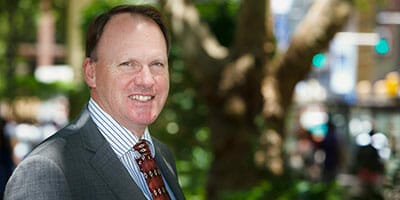
The fund’s chief investment officer, Craig Turnbull, says: “[Our researchers] might say ‘we really think a company is a high risk because of poor governance or board composition’; and if it rates very poorly under our policy, we take that stock out as well. In State Street’s research, they might think the company was fine”.

Currently more than half of the AS$7.5 billion fund is invested in responsible strategies, across the asset classes of Australian and international shares, property, absolute return, private equity and fixed interest and the experience and confidence it has gained in this activity is applied to how it hires fund managers.

“We will only use those that think about ESG factors when making their investment decisions, so that it is making a difference to their portfolio,” says Turnbull. “We like them to report those issues to us too.”

Sponsored Content

In a virtuous circle, the research findings of the managers it hires feeds into the research it uses to omit companies or to short them out of portfolios.

Since 2004 it has shorted out Australian companies with poor ESG practices from any pooled fund it invests in. This is done through a prime brokerage account which allows the fund to track the profit and loss of the activity.

This practice has gained it an average return of 10 basis points over the last 10 years, which has been enough proof of success to extend the practice to international shares, where it has also seen a positive return after two-and-a-half years.

The process of deciding which company to short follows a decision tree.

“We have set it up so there is no one person making these moral and ethical judgments,” he says. “It is either based on the activities the firms are in or in the case of the ESG research, it has to rank to a certain level; then it is just taken out.”

Public displays of moral judgment are also taken where necessary. It became the first Australian super fund to sign the ‘Investor Statement on Bangladesh’, joining over 190 global shareholders and investors, representing more than $US1.5 trillion, in calling on brands and retailers to implement an internationally recognised core labour standard.

The fund also entered into dialogue with Wesfarmers (an Australian conglomerate with ownership of several leading cut price clothing retailers) over the issue.

While LGS can see an investment return from its activities, one of its returns is just a feelgood factor in terms of the support it receives from individual members and councils that represent its employer base, who like the activism their retirement fund is involved with. There is also professional kudos too.

The fund was recently ranked second globally for its sustainable investment practices by the Climate Institute’s Asset Owners Disclosure Project, an award which assesses how 458 of the world’s largest investors are managing the risks and opportunities associated with climate change.


Leave a Comment

Finland’s Elo: Larger equity allocations promise new media scrutiny

Finland’s Elo: Larger equity allocations promise new media scrutiny

As Finland's pension funds prepare to increase their equity allocations to unprecedented levels compared to global peers, they must also navigate a new and unfamiliar risk. Elo's chief investment officer Jonna Ryhänen explains the fund's investment approach going forward and how it will manage stakeholder and media scrutiny as they react to swinging volatility and returns.

Sort content by

Illinois Treasurer Frerichs: Why a sole fiduciary model works

Illinois Treasurer Michael Frerichs bats away criticism that the sole fiduciary model is outdated, arguing it is possible to wear a fiduciary and political hat if your sole purpose is to serve the people of the state.

The value of diversification at Finland’s Varma

Markus Aho, chief investment officer of the €57.4 billion Finnish pension fund, Varma, explains how the fund’s diversification with a large equity allocation balanced by hedge funds, fixed income and real assets has meant it has been resilient to the increasing investment challenges.

NY Common makes further divestments, ups commitment to climate solutions 

The $260 billion New York State Common Retirement Fund will divest and restrict approximately $26.8 million of corporate bonds and actively traded public equities in eight integrated oil and gas companies, including ExxonMobil; and is doubling its commitment to the Sustainable Investments and Climate Solutions program.

Korea Investment Corporation focuses on alternatives push

KIC is looking to boost its alternatives allocation - particularly private credit - both directly and through managers. Influenced by what it sees as an unfolding AI-led industrial revolution it is looking for opportunities in fast-developing sectors including AI, semiconductors and healthcare, and has opened an office in Mumbai.

Denmark’s ATP creates new overlays to manage future bond equity correlation

ATP's Christian Kjær explains the rationale behind two new overlays to better navigate the risk of future correlations between bonds and equities which wrong footed the risk parity investor in 2022.

CalSTRS’ Ailman talks GFC, climate risk and worrying levels of US debt

After 23 years in charge, CalSTRS departing CIO Chris Ailman has more stories from the investment frontline than most. He shares personal recollections of the GFC, his fears of the scale of the climate emergency and why worrying levels of US debt hold new risk and opportunity for investors.

Previous



