

A more structured approach to managing risk in its equities exposure has led Danish fund Lønmodtagernes Dyrtidsfond (LD) to introduce four style buckets for equities – from pure beta through to pure alpha – and a dynamic allocation approach that allows movement between the buckets depending on market conditions.
The fund has also partnered with other Danish pension funds – Sampension and the Medical Doctors’ Pension Fund – in an innovative approach to managing fees. In its passive bucket, it has co-invested in mandates that its Danish pension fund peers have already set up. The mandate with Sampension is a targeted index fund that cuts off the smallest 25 per cent of companies in the index. With the Medical Doctors’ fund, the mandate is an emerging market index fund with an environmental, social and governance overlay.
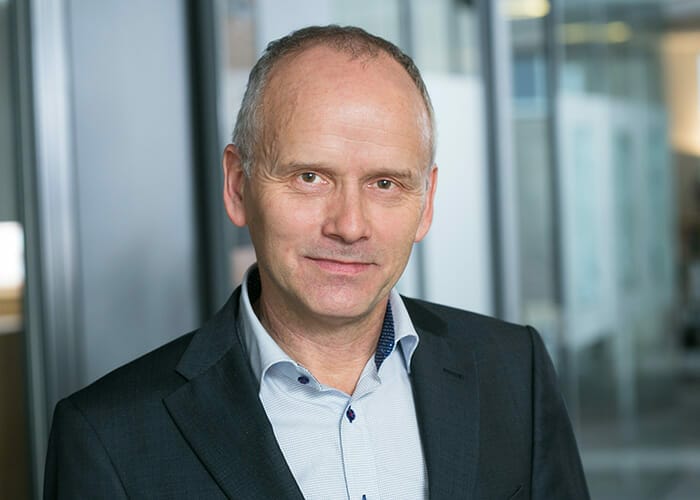
LD is relatively small, with DKK43 billion ($6.5 billion) and collaborating with peers on mandates with external managers is one way it can innovate around fees, chief financial officer Lars Wallberg says.
Collaborating with peers who have gone through the process of mandate design and manager selection allows the fund to reduce costs and time spent on external managers. LD has a clear focus on fees, with a total cost – including administration, management fees and trading fees – of 0.5 per cent of assets.
“Co-investment in passive equities, where we are buying a proportion of the assets, is a very attractive way of investing,” Wallberg says. “We are investing in something that the other pension funds have set up themselves. It’s a win/win; it reduces our costs and we can benefit from the fact our colleagues found the manager and set up the investment guidelines, and we are comfortable the manager is capable. There is no reason for us to set up a fund ourselves. There are significant economies of scale for both of us regarding costs and set up.
“You need to be open and precise as to what your objectives are…Every fund will make their own allocation based on risk profile but there is no reason every fund should invent everything for itself. The risk allocation and monitoring [are] unique to a fund, and should be kept close, but keeping managers to yourself is a losing game. It is more relevant to share knowledge of good managers and spend time on your strategic portfolio.”
In addition, smaller funds benefit from having a collaborator with which to discuss investments.
“We are a very small organisation,” Wallberg says. “In equities, for example, we have only one person monitoring it, so we like collaboration. Our colleagues are more than welcome to invest in our mandates; the firm believes in collaboration.
“For large and growing pension schemes, internal management reduces costs, but for us it is not a strategic opportunity. Ten years ago, we were fully self-managed but identified outsourcing as key. We can be agile in changing allocations, can call managers and reduce or increase mandates at very short notice, and can exit asset classes. It’s easier to call an external manager and reduce by half the mandate. If you had to call internal staff and say to colleagues they’re now managing half the size of the mandate, they would wonder about their jobs.”
From active management to a more varied approach
Like the innovation around management fees, the new approach to equities arose out of a focus on risk management within the equities portfolio.
The fund has traditionally emphasised active management but since the beginning of the year the equities portfolio has been separated into four parts: pure beta, beta plus or factor investing, core alpha and special alpha.
Pure beta is in global developed equities as well as the index funds with slightly higher tracking error, where LD co-invests with its Danish pension peers. On top of the pure beta risk bucket, LD has added a beta plus basket, which is a factor investing strategy with a high weight to value, but also a tilt that can be changed. This was also done with Sampension. The core alpha bucket holds the existing active managers within developed and emerging markets. Finally, special alpha is where managers with significant tracking error reside. This includes Danish equities. The fund has reduced its allocation to domestic equities from 25 per cent to 10 per cent over the past few months.
The four new risk buckets allow for a dynamic approach to equities and the exposures to each bucket can be dialled up or down depending on whether alpha or beta is dominating the market. Since the beginning of the year, about 20 per cent of the equities portfolio has changed from active to passive.
“We have seen a quite significant twist in the overall equities portfolio,” Wallberg says. “We reduced the core alpha bucket a lot as well and have increased the beta exposure significantly. We now have about 45 per cent in beta and beta plus, and 55 per cent of equities in the alpha-generating buckets. This is a significant change.
“It allows us to be more precise about when we take a pure beta exposure, when we take factor-based exposure and when we are getting return from fundamental stock selection. We have to have the discipline in ourselves between the mandates. But we hope it will help us achieve our goal of minimising losses in down markets. We can forgo excess return as long as we mitigate losses in down markets.”
Wallberg says LD had previously achieved “quite a lot of excess return” from equities but it had a large tracking error because of the allocation to Danish equities. The first step in this more structured approach to managing the equities exposure was to reduce tracking error and the volatility of the portfolio. The added benefit was to reduce costs.
The next step will be to work on how to manage the individual parts of the portfolio separately.
“We are finding the right risk metrics to identify the action/inflection points to initiate a change in the allocation; this is a work in progress,” Wallberg says.
In the next few weeks, Wallberg will be leaving LD to start a new job as chief executive of Norliv, which is an association with 300,000 members who are all customers of Nordea Life & Pensions.
He’ll be responsible for the association’s endowment, with a portfolio that invests partly in Nordea Life & Pension and partly in discretionary investments. The majority of returns from the fund are distributed to members as a bonus, with 20 per cent going to a charity focusing on mental health for workers and those in early retirement.








Leave a Comment
You must be logged in to post a comment.
Login