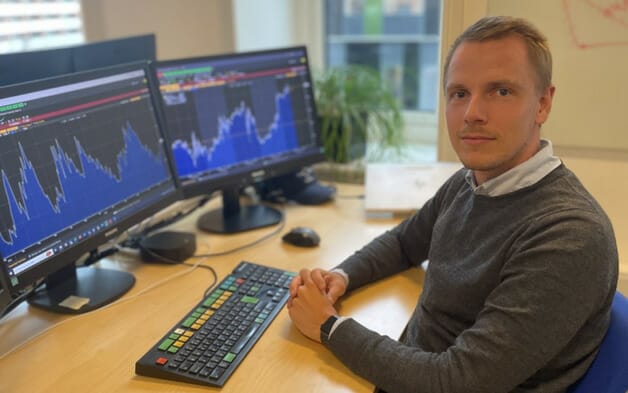

Landmark tech investment boosts Denmark’s Lægernes Pension

Lægernes Pension, Denmark’s DKK100 billion ($14
Continue Reading

A Top1000funds.com subscription unlocks the full article

Join the global institutional investment platform read by the world's largest asset owners, fund managers and consultants.

New here

Create an account

Complimentary to register. We'll verify your details and grant access to the archive, our newsletters and the Asset Owner Directory (enhanced features coming soon).
Register now
Already a member

Sign in

Already activated your account? Sign in to continue reading and access your saved articles, preferences and member-only content.

Leave a Comment

CalPERS’ private markets chief: TPA won’t disrupt PE commitment pacing

CalPERS’ private markets chief: TPA won’t disrupt PE commitment pacing

Anton Orlich, CalPERS' newly minted deputy chief investment officer for private markets, says the fund’s July adoption of the total portfolio approach will not impede the private equity strategy launched in 2022, arguing that short-term relative-value calls made under TPA would be expressed in liquid markets and not by oscillating commitments to private markets. In an interview with Top1000funds.com, Orlich unpacks the asset class’s four-year transformation.

Sort content by

Why transparency is important for CalPERS

Anne Simpson, managing investment director, board governance and sustainability tells Amanda White why transparency is so important at CalPERS and what the fund is doing to improve it.

CalSTRS’ plan for its net zero plan

CalSTRS has been a leading light in ESG integration in the US but its board has been slow to adopt a net zero pledge, with internal debate centred around the most motivating factors to achieve net zero. Now it’s made the pledge it will spend the next 12 months mapping the path to achieve net zero. Amanda White spoke to head of sustainability, Kirsty Jenkinson.

NEST challenges private equity fees

UK pension scheme NEST’s first foray into private equity offers hope for investors looking beyond standard operating models in the asset class. The £20 billion defined contribution fund, currently sifting through 60-odd procurement responses to allocate more than £1 billion at the beginning of next year, is quietly confident it will be able to hammer out a deal with GPs to make the expensive asset class known for 2:20 fees affordable.

Future Fund uses alternatives as a skeleton key to achieve portfolio goals

Absolute return strategies are an important skeleton key to building a resilient portfolio according to Ben Samild, deputy chief investment officer, portfolio strategy at the Future Fund.

Unprecedented opportunity ahead

The climate challenge requires new investment on a staggering scale: new generating capacity, the electrification of everything, emissions-free fuel, carbon capture and sequestration, new supply chains and infrastructure, plus the building of negative emissions technologies. Stanford’s Dr Arun Majumdar explores the opportunities for new investment, the risk return trade-off and how investors should approach the opportunities.

ESG needs better data, better ratings and better products

Mass PRIM is involved in an MIT initiative to improve ESG with better data, ratings and ultimately products. Executive director and CIO, Michael Trotsky, explains how the ambiguity around ESG ratings creates acute challenges for investors trying to achieve both financial and social return.

Previous



