
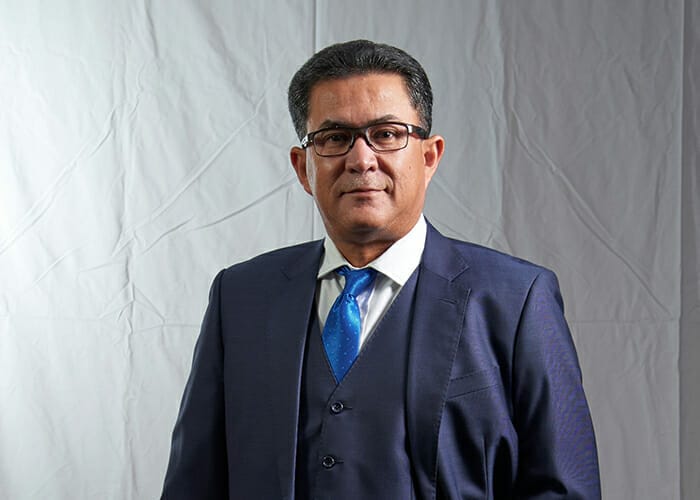

Malaysia’s Kumpulan Wang Persaraan (Diperbadankan) fund for public officials, known as KWAP, will continue to diversify its asset allocation, increasing investment in private equity, real estate and other alternatives.
“We believe a diversified asset mix puts us in better stead to benefit from changing market cycles to ensure sustainability over the long term,” the RM126.8 billion ($28.3 billion) fund’s chief executive, Dato’ Wan Kamaruzaman Bin Wan Ahmad, says in an interview from KWAP’s Kuala Lumpur headquarters. “We have to recognise the fact that the prospect for returns is not as good compared with what we saw in the last 20 years. We expect returns for equity and fixed-income securities to be lower, due to the all-time low interest rates, modest global growth prospects and high valuations of financial assets.”
It’s an outlook that is leading the fund to “explore and widen” its opportunity set, he says.
One reason KWAP can push into long-dated private markets is because the fund, established in 1991, still has no liabilities.
“Once we assume liability obligations, our investment strategy would have to be re-oriented and reconfigured to ensure that we have sufficient funds to manage the real cash-flow demands and pension pay-outs,” he says.
Alternatives including property, private equity and infrastructure account for 4.4 per cent of assets under management.
Alternatives pay off
Most recently, KWAP’s international alternative investments have added most to the portfolio, posting the highest return on investment, at 8.82 per cent, as of September 2016.
Domestic private equity has also been one of the fund’s best-performing allocations in recent years.
This is a factor Dato’ Wan Kamaruzaman, who joined KWAP as chief executive in 2013 following his role as head of treasury at Malaysia’s Employees Provident Fund, attributes to “the turnaround of venture capital”.
Venture-capital returns within the private-equity space outperformed other strategies at a level not seen since the height of the dot.com boom, he says. Yet he remains mindful of the challenges that come with private equity.
“Private equity has a long gestation period and is, in general, a challenging asset class,” he explains. “It creates a natural barrier to entry into this space.”
The challenge, and the opportunity, is to buy at the right price, creating value – something he calls “fixing what needs to be fixed” – and exit at the right time via the right route. He cites KWAP’s sale of a stake in Malaysian power producer Malakoff in its 2015 initial public offering as an example of handling all these factors.
“Done right, private equity can be a lucrative addition to the traditional asset classes in a pension fund, providing the much-needed alpha in this low-return environment,” Dato’ Wan Kamaruzaman says.
Other alternative forays include the fund’s first investment in domestic property, when it acquired land in the heart of Kuala Lumpur city centre in 2015. That investment brought the number of properties KWAP owned or co-owned to 14. Eight are in Australia and three are in Britain.
As of October 2016, assets are split between fixed income at 52.6 per cent, equity at 37.3 per cent, the 4.4 per cent alternatives allocation and a 5.7 per cent allocation to cash. Much of the public equity allocation is actively managed.
“We encourage active management in our public equity portfolio, with stringent risk and compliance monitoring,” Dato’ Wan Kamaruzaman says. “Our team of in-house analysts and experienced portfolio managers conduct in-depth due diligence and research that enable us to identify undervalued stocks with the potential to generate good returns over the long term.”
Eyes on foreign opportunities
KWAP has only about 11 per cent of the fund invested overseas, something Dato’ Wan Kamaruzaman is keen to increase.
“Under our existing strategic asset allocation, we had hoped to increase our overseas investments to 19 per cent of our AUM,” he says. “However, we had to defer this plan in 2014, following government directives. Our international investment would have been much higher than where it is now had our investments abroad resumed according to our transition strategy. We will resume with our international plans once the restrictions are lifted.”
Nevertheless, he insists restrictions do not completely inhibit the fund from investing overseas. Global investment opportunities are looked at on “a case by case” basis, with the most compelling getting approval.
“We are constantly communicating with our stakeholders and relevant authorities whenever we see compelling investment opportunities abroad … So far, we have been able to get the requisite approvals to invest in these specific opportunities.
“In the meantime, we are [also] raising our level of readiness by conducting the necessary groundwork and corresponding measures – research, analysis on investment strategies and asset classes – to ensure that we are already able to execute our investments effectively once the restrictions are lifted.”
Any increase in global investment has to be balanced with the fund’s keen priorities back home.
“KWAP remains committed to supporting the domestic economic agenda to the extent that it will also benefit the fund commercially without compromising our risk appetite,” Dato’ Wan Kamaruzaman asserts. It is a strategy that manifests particularly in KWAP’s proactive role in helping to build a sharia-compliant domestic bond market.
“Consistent with our long-term strategy to convert into a fully sharia pension fund, we have been investing in Islamic bonds underlying our efforts to deepen the country’s capital markets. This change is aimed at attracting more global investors, especially long-term investors like sovereign wealth and pension investors, to invest in the local market and at the same time enhance market vibrancy and boost investor confidence.”
Sharia strategy
KWAP’s steps towards Islamic law include building sharia-compliant portfolios with external managers. The fund has appointed five external fund managers to manage its domestic sharia equity mandate, six external fund managers to manage its domestic sukuk mandates and four external managers for its global sukuk mandates.
“On our internal side, we continue to support sharia instruments and deepen the Islamic capital markets. As of the end of September 2016, our sharia-compliant investment represents 49.7 per cent of the total assets. KWAP’s sister fund, The Employees Provident Fund, is offering an Islamic retirement plan, something KWAP is also considering,” Dato’ Wan Kamaruzaman says.
“KWAP has completed a readiness assessment to set up a sharia fund within KWAP or to convert [the fund] into a fully sharia pension fund. We don’t have a specific timeline for this, as the local and global Islamic finance eco-system must improve and develop further to support our sharia ambition,” he says, linking it to the fund’s own efforts to deepen the local market.
External management, internal expertise
The bulk of the portfolio (85-90 per cent) is managed internally, due to substantial holdings of domestic assets.
“These are areas in which we have strong conviction and expertise,” Dato’ Wan Kamaruzaman says. However, he is in favour of more external management for the diversification and increased opportunity it would bring the fund.
“Using external managers diversifies KWAP’s portfolio, expands the range of investment opportunities available and taps on their expertise,” he explains. “In the long run, we hope to leverage their expertise through these relationships to further develop internal talent, especially in managing more complex investments.”
Using external managers to build internal expertise boosts skills in Dato’ Wan Kamaruzaman’s growing team and helping the fund thrive is his favourite part of the job.
“I truly enjoy sharing my experience in the private sector and capital markets with the young team in KWAP,” he says.








Leave a Comment
You must be logged in to post a comment.
Login