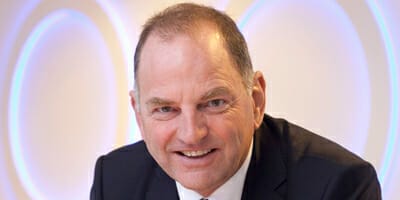

KLM funds ride out de-risking turbulence

Pension funds can face a lot of turbulence in the course of their investing journey and many funds thrown into shortfalls have found the need to de-risk their portfolios.

There might be a few investment officers at those funds casting an enviable eye upwards to the pension fund of Dutch flag-carrying airline KLM. Toine van der Stee, director of the €16.5-billion ($21.2-billion) group of funds says: “We want to take more risk when we can… the way solvency has to be managed in Dutch pension funds, the poorer you are, the less risk you can take on board and the more chance you will stay poor. As the rich can afford to take risk, the rich get richer.”

It is clear which side of that divide the KLM fund finds itself on. While many pension funds around the world are still unable to match their liabilities – figures from JLT suggest there was still a $75-billion combined deficit at the end of 2012 across the pension funds of UK FTSE 100 firms – the KLM funds have healthy coverage ratios of 127 per cent for its largest fund (for cockpit staff) and 116 per cent for the other two major funds (covering ground staff and cabin crew).

Van der Stee says a high level of contributions have helped those coverage ratios.

Furthermore, he can trace the positive results across all the funds (14.8 per cent for the ground staff fund and 13 per cent for the pilots fund) to a decision to up their risk by underweight bonds and make the plunge into overweighting equities in 2011. Equity holdings varied between 34 and 44 per cent of the individual funds at the end of 2011 after the top up, and delivered in excess of 16 per cent last year, allowing KLM to keep its risk-seeking portfolio intact.

Knowing where the break is

Despite their appetite for risk, the KLM funds remain checked by the kind of hedging instruments typical for Dutch funds. Some 75 per cent of the equity risk is covered by equity put options for instance. These dragged results down with a minus 1.2 per cent performance in 2012, but naturally also offer breaks when markets go sour.

Sponsored Content

Currency hedges also lost the funds a little in 2012 but these reverses were compensated for by a 1.7-per-cent yield from interest rate hedges, covering between 45 and 55 per cent of risk in two of the three main funds.

The absence of interest rate hedges in the $9-billion cockpit fund shows that unlike some multi-fund investors, which replicate a single investment strategy, KLM is happy to tinker slightly different approaches to each fund.

Van der Stee explains that the less risk-seeking stance of the cockpit fund, with the lowest equity share and highest real estate holdings (13 per cent at the end of 2011), means there is no need to shackle it with the same level of hedging. “Also, we can afford to take the risk as it has a substantially higher solvency ratio than the other two.”

He also argues that a rise in interest rates “that we don’t want to get hit by”, together with future inflation, are greater risks to the KLM portfolios than even lower interest rates. He is confident that a reduction in government bond holdings as part of the switch to equities in 2011 will help to mitigate that.

Some 20 per cent of the fund assets, around $4 billion, are also held in global inflation-linked bonds.

Should KLM’s real estate holdings continue the 15-per-cent returns they achieved in 2012, they will surely more than cover any remaining inflation risk. The 25-per-cent returns on public real estate (about half KLM’s total in the asset class) were “very nice” says Van der Stee, congratulating his external managers for delivering them. His assessment is that the real estate managers “seem to have picked the right funds – meaning mostly international ones”.

Just a fraction over half the KLM fund’s real estate exposure is European, so there is little exposure to the struggling Dutch real estate sector. The sight of empty buildings from his office in Amstelveen, a usually thriving town just to the south of Amsterdam, suggests Van der Stee does not have to look too far for evidence of its woes.

Beyond hedging and real estate, the KLM funds have resisted the allures of other alternative assets up to now, but Van der Stee says they are “looking into infrastructure, which seems very attractive as a hedge.”

Cruise control

The KLM funds will keep their asset strategy “more or less the same” for the foreseeable future, according to Van der Stee. “We don’t expect a rise in inflation or interest rates in the short term, but it may happen in the medium term, which threatens returns on government bonds,” he says.

Otherwise, Van der Stee confesses to being “moderately optimistic. Of course there are some risks in the European financial markets, but these can be contained to quite some extent.”

The KLM funds’ fixed income strategy appears to have paid off handsomely in 2012, with 14-per-cent returns. Allocating some 20 per cent of the fixed income assets to emerging market and US high-yield debt has worked well, but Van der Stee cautions that there are “two faces” to the good return figures, with liabilities rising last year as interest rates and government bond yields declined further.

Van der Stee oozes contentment when he talks about the funds’ external management. “We have active management in emerging market, small-cap and mid-cap equities as well as emerging market debt, as you need it there, but the rest is passive” he says.

On being asked about his relation to the member base, Van der Stee says “managing a pension fund is very different to flying planes”. The KLM funds anyhow seem fully under control for now with their tried and tested asset mix guiding them.

Leave a Comment

Why NYC pensions CIO hasn’t drunk the ‘TPA Kool-Aid’

Why NYC pensions CIO hasn’t drunk the ‘TPA Kool-Aid’

Three decades of investing have given Monte Tarbox sharp eyes for recognising risk and opportunities, and he’s putting it to use as the new permanent chief investment officer of the $306 billion NYC Bureau of Asset Management. In an interview with Top1000funds.com, Tarbox outlines his vision for the fund, why he’s bullish on infrastructure but “nervous” on PE, and why he hasn’t drunk the TPA “Kool-Aid”.

Sort content by

Hermes taking over the world, one boutique at a time

Hermes Fund Managers, the investment management arm of the BT Pension Scheme in the UK, is following the charted territory of OMERS in Canada and QIC in Australia, and branching beyond the province of its principal client with the aim of being a funds manager for pension funds globally. Head of investment, Saker Nusseibeh, spoke

USS gets strategic and explores global

Taking over from Peter Moon, chief investment officer of the £27 billion ($44 billion) Universities Superannuation Scheme, Roger Gray is the first new CIO at the fund in 17 years. He speaks with Amanda White about viewing the fund through fresh eyes and his ideas for staffing and investment developments. mrec4inarticleinline Sponsored Content scnative1 scnative2

Apples with apples: Teachers’ plan emphasises risk as much as return

“You almost don’t need to say the words, ‘risk management’,” says Barbara Zvan, head of risk and asset mix at the $84.9 billion (C$87.4 billion) Ontario Teachers’ Pension Plan (OTPP), when asked about how closely integrated the investment and risk management teams at the big defined benefit fund are. She talks to Simon Mumme about

Governance changes give BP flexibility in investment decision making

The most recent investment review by the £13 billion ($20 billion) BP Pension Fund, completed last month, didn’t focus on altering investment allocations, rather it examined the way investment decisions are made at the fund. Chief executive, Sally Bridgeland spoke to Amanda White about the governance changes and the new flexibility around investments. Defined benefit

PMT evaluates risk tool kit

Theo Jeurissen, chief investment officer of the Netherlands’ third largest pension fund, the €30 billion ($44 billion) PMT, talks to Kristen Paech about how the fund is re-assessing its risk frameworks post-crisis, and why a low tracking error is the cornerstone of the fund’s investment policy. mrec4inarticleinline Sponsored Content scnative1 scnative2 scnative3

HOSTPLUS to hunt for emerging managers, co-investments worldwide

HOSTPLUS, the A$7 billion ($6 billion) Australian superannuation fund, is known in its home market for seeding promising emerging managers. Now, the fund aims to roll out its incubation program globally. CIO Sam Sicilia told Simon Mumme about the fund’s reasons for backing boutiques, and its hunt for co-investment opportunities in frontier markets. mrec4inarticleinline Sponsored

Previous



