

The €8.7 billion ($10.7 billion) Ireland Strategic Investment Fund is carving out a role as a catalyst for investment in the Irish economy. Since it was established at the end of 2014 from the remnants of the National Pensions Reserve Fund, the sovereign development fund has invested €3.4 billion in sectors such as housing, infrastructure and agriculture, amounting to about two transactions a month and about €600 million to €700 million each year.
But outside ISIF’s growing portfolio lies a much larger pool of capital the fund has drawn to the Irish economy with its ability to enthusiastically lead and comfort other investors.
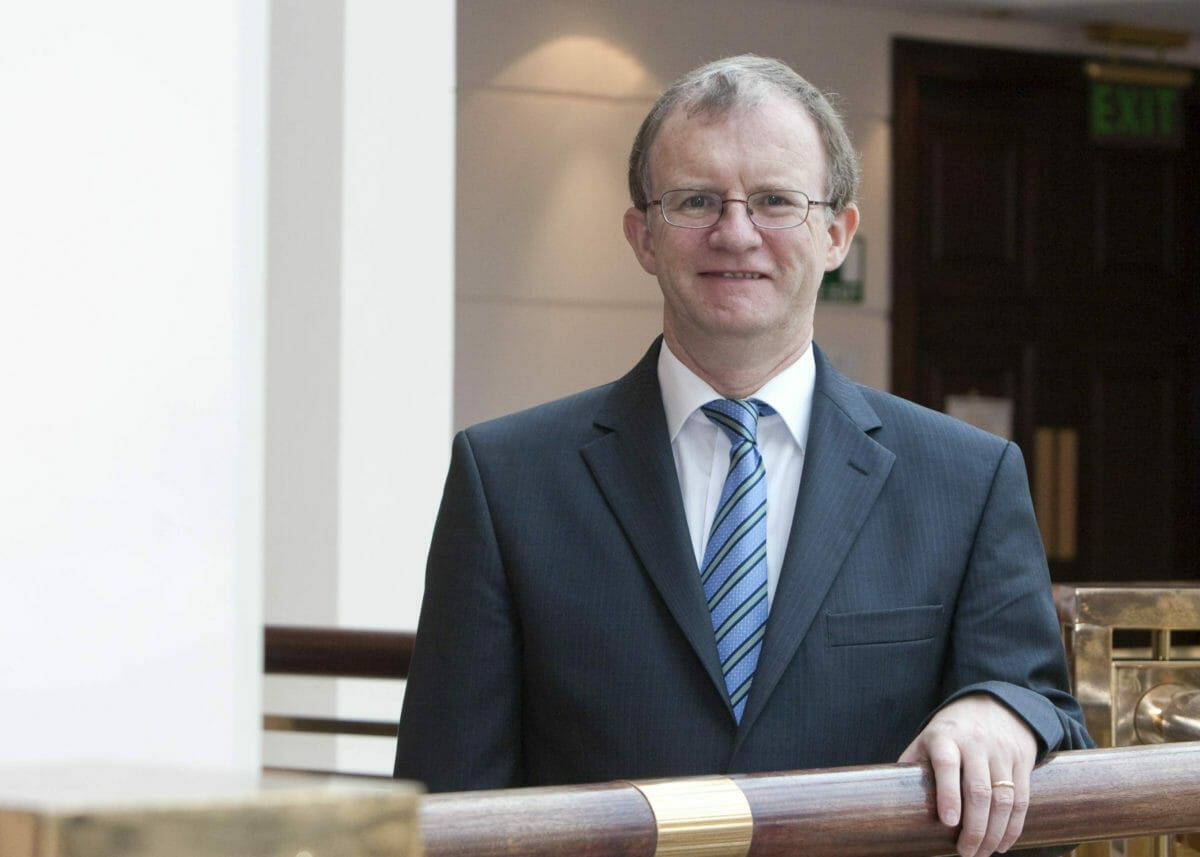
“The total commitment to the economy arising from our €3.4 billion is €9.1 billion,” says ISIF director Eugene O’Callaghan, whose leadership of the fund has built ISIF into one of Europe’s most renowned impact investors.
ISIF’s recent investment in venture-capitalist Business Growth Fund’s new €250 million vehicle targeting equity stakes in Irish small and medium-sized enterprises is a typical example of this catalytic role in action. ISIF’s investment helped draw BGF to Ireland and encouraged Irish lenders Allied Irish Banks and Bank of Ireland to put capital into the fund, too.
“BGF has a business model that works well in the UK and were looking to expand into Ireland,” O’Callaghan says. “At the same time, we were looking to see how we could find a platform or conduit to invest €2 million-€10 million in small-ish businesses. BGF was more comfortable investing in Ireland with us as a substantial investor. Overseas investors who don’t know their way around private-market transactions are reluctant to invest alone, and local investors like pension funds have limited resource capabilities and take comfort in investing alongside our well-resourced teams.”
Long-term and flexible
O’Callaghan leads a team of 45 that oversees a diverse private equity and credit portfolio where every investment must deliver both commercial returns and an economic impact. Last year, the fund returned 3.4 per cent on its Irish investments, which have added €655 million of value since inception in 2014.
Investments are bracketed into three strategic areas: enabling, which includes connectivity, infrastructure or housing assets; growth, which supports the engines of the Irish economy; and leading edge, which comprises stakes in companies involved in life sciences or technology. Investment is split 65:35, between fund and direct investment, respectively.
ISIF considers every investment’s ability to promote “economic additionality”, namely benefits to GDP, while avoiding “dead weight”, meaning investments that don’t affect the economy, and “displacement”, where the investment would simply substitute existing economic activity. For example, avoiding dead weight means ISIF won’t invest in sectors that are already served by private-sector investors or lenders to such an extent that ISIF’s involvement won’t make a difference. Instead, it looks to target important gaps that other investors and lenders aren’t filling.
Seeking out this niche has shaped a strategy that is both long-term and flexible. Demand for long-term capital isn’t always met by banks, which have capital adequacy restrictions, or by private equity, which typically has a three- to five-year time horizon, O’Callaghan says.
“When any risk stretches out to 10 years, there is very little capital available, and we are finding opportunities here,” he explains.
A recent investment in this space included €10 million to finance an upgrade at Shannon Airport.
Opportunities also arise from ISIF’s ability to be flexible. O’Callaghan is equally comfortable investing in low-risk or high-risk areas. ISIF can invest anywhere on the capital structure, from safe and secure senior debt all the way through to junior and mezzanine debt, and can take equity stakes in established or early-stage businesses.
“We can be flexible where typical investors are not flexible, and we offer an alternative to banks that are low risk, and private equity funds, which need double-digit returns,” O’Callaghan says.
He notes this leads to opportunities with medium-risk in the middle of the capital structure.
“There is usually a small amount of high-risk money a sponsor or promoter might have, and senior debt that might be available from banks,” he says. “The piece in the middle, between sponsor equity and low-risk debt, is missing, and we can plug that gap.”
O’Callaghan also believes Brexit will offer some real opportunities for the fund. ISIF isn’t cashing in on the migration of financial services from London to other European capitals, including Dublin, but it does see real opportunity in fintech.
“London has a great fintech sector, and if there is a hard Brexit, I think some of these businesses may relocate to Dublin.”
He is also preparing to invest the fund in Ireland’s food sector as it seeks to diversify away from the UK.
“They need capital to diversify,” he says. “We will invest in the food and agricultural sector to provide long-term, patient capital.”
Ensuring diversification
But ISIF still has about €5 billion to deploy, and O’Callaghan acknowledges that finding investment opportunities in Ireland’s small economy that don’t compete with private capital is challenging; for instance, the fund has dipped out on the lucrative returns in Dublin’s vibrant commercial real estate sector.
“There are some very attractive opportunities in commercial real estate, but there is also a great deal of capital and activity and our investment won’t make any difference,” he explains.
O’Callaghan uses a structured matrix framework to help ensure diversification; investment sectors are juxtaposed against risk categories graded one through five. It means ISIF can easily identify which sectors are not filled and focus activity in those areas, while limiting investments where the matrix is filled. Areas where the fund has almost reached its limits are technology and Irish venture capital, partly because ISIF inherited assets from the Pensions Reserve Fund.
Undeployed capital lies in an externally managed global portfolio targeting a five-year return in excess of the cost of Irish debt, at about 4 per cent. The portfolio is split between cash, bonds and equity based on the liquidity needs of the fund as Irish assets are identified and investment readied.








Leave a Comment
You must be logged in to post a comment.
Login