
Impact: ‘Losing the plot’ or better long-term returns?

Investors contemplating risk, return and impact in their portfolios will have read with a wry smile last week’s criticism of Unilever’s quest for purpose penned by one of the United Kingdom’s most influential fund managers . The consumer goods company is pushing its purpose credentials at the expense of the business, argued Terry Smith in his annual shareholder letter to his retail following.

“A company which feels it has to define the purpose of Hellmann’s mayonnaise has in our view clearly lost the plot. The Hellmann’s brand has existed since 1913 so we would guess that by now consumers have figured out its purpose (spoiler alert — salads and sandwiches),” he wrote, referencing the company marketing its mayo as a solution to food waste because it encourages people to eat leftovers.

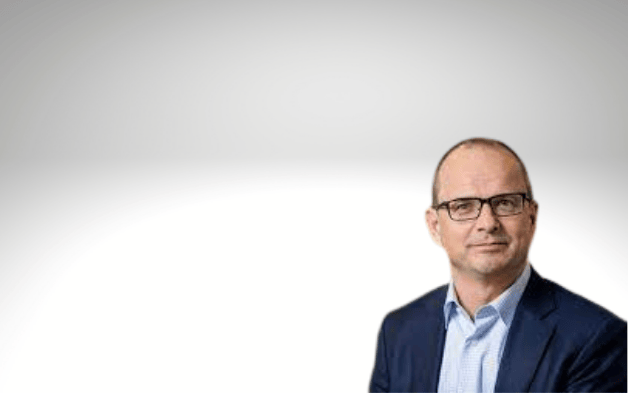
For Piet Klop, the new head of responsible investment at €268 billion Dutch asset manager PGGM where he has worked for the last 12 years, the criticism comes as no surprise. Moreover, he acknowledges the management time that impact investing requires and agrees that in the short-term, Unilever may make more money for shareholders if it abandons complex impact considerations.

Yet he doesn’t buy the idea that steering capital into assets that reduce and mitigate negative impacts and increase the positive will end up costing asset owners. He is adamant that in the long-run, impact will pay since well-managed companies with a clear purpose that mitigate negative outcomes are simply better companies.

“You can’t wish away climate change or water scarcity,” he argues. “And I don’t believe in less return for more impact. Picture a Venn diagram and the circle of financial returns increasingly overlaps with companies’ social utility.”

Active impact

Klop has been one of the main architects of PGGM’s gradual embrace of 3D portfolios shaped around risk, return and impact which began with an actively managed €5 billion impact equities portfolio. Today, although PGGM’s giant portfolio means it will “always do a bit of everything” he does acknowledge a broad direction of travel around impact. So much so the fund is currently planning to tilt its broader passive allocation to companies that have a bigger share of their revenues mapped to the SDGs.

Sponsored Content

Reducing negative impact means the fund is “peeling off” of its traditional passive strategy with exclusions and benchmark adjustments  in a process that triggers obvious questions whether the strategy is still actually passive.

“One could argue that the next logical step is to go active to be able to account for both negative and positive impact,” he says.

Such a move would be in keeping with PGGM long blazing a trail in the area. Like its work measuring impact by pioneering revenue-to-impact modelling in partnership with UBS and others since 2015. The process, which explores the extent to which a company’s revenues map to the SDGs and real-world impacts, is an attempt to provide a solution to limited company reporting on SDGs and climate impacts. Today the proliferation of new companies going further and faster than PGGM developing revenue to impact models, gathering data and producing ratings for investors means PGGM’s work in the area has slowed. It’s an evolution Klop finds particularly satisfying.

“We are the in-house asset manager of the second biggest Dutch pension fund PFZW. We can throw our weight around a bit and point the markets to impact and 3D investing. Once this takes off, we are happy to get out of the way – we are not a data provider and don’t want to be”.

Challenges

Critics are quick to point to a myriad of complexities inherent in impact investment.

In liquid markets its difficult for investors to argue that their capital makes a difference to what a company does and doesn’t do given hundreds of other investors also hold the same security.

The idea of additionality, where investors aim to link the capital they provide to the impact it generates, is easier to support in private markets than in liquid markets. For example, infrastructure and private equity investors are closer to where the action is, have bigger stakes and more influence over what happens in terms of impact.  Still, in today’s world of free money, additionally is a high bar even in private markets.

“With record low interest rates, it’s super hard to maintain that without you something would not have happened,” he says.

But if additionality and affecting corporate change is a bridge too far, impact investors can find success via other routes: simply demonstrating their alignment with companies that generate revenues from solutions to the SDGs.

“Aiming for impact through alignment is no trivial evolution,” he says.

Klop is heartened by the growing number of asset owners signalling to the market that impact matters and by impact leaders going further still, building SDG indexes and tilts towards companies that make a bigger contribution based on revenues to positive real-world outcomes.

Ultimately, he would like to be able to calculate the impact from each euro or dollar invested to truly put impact on a level with risk and return. But until then, constantly improving the measurement of real-world impacts is still encouraging.

Of course Klop has many other priorities alongside integrating impact in his new role where he leads an advisory unit guiding PGGMs different front office investment teams on all things sustainable. His work to better account for climate and ESG risk factors is just one example.

“It’s a big job because everyone wants to be sustainable these days,” he concludes. “I recall the days when people weren’t all that interested in responsible investment and thought it was just something that would make life difficult.”


Asset Owner:PGGM / PFZW

Leave a Comment

How CPP is evolving risk management for a faster, more interconnected world

How CPP is evolving risk management for a faster, more interconnected world

In an environment where multiple risks are emerging and their effects are compounding on the portfolio, CPP Investments' chief risk officer Priti Singh says the $572 billion fund is rethinking risk management from the ground up, shifting from reaction to preparation and embedding risk thinking earlier in investment decisions. She speaks to Amanda White about the fund's risk approach.

Sort content by

Illinois Treasurer Frerichs: Why a sole fiduciary model works

Illinois Treasurer Michael Frerichs bats away criticism that the sole fiduciary model is outdated, arguing it is possible to wear a fiduciary and political hat if your sole purpose is to serve the people of the state.

The value of diversification at Finland’s Varma

Markus Aho, chief investment officer of the €57.4 billion Finnish pension fund, Varma, explains how the fund’s diversification with a large equity allocation balanced by hedge funds, fixed income and real assets has meant it has been resilient to the increasing investment challenges.

NY Common makes further divestments, ups commitment to climate solutions 

The $260 billion New York State Common Retirement Fund will divest and restrict approximately $26.8 million of corporate bonds and actively traded public equities in eight integrated oil and gas companies, including ExxonMobil; and is doubling its commitment to the Sustainable Investments and Climate Solutions program.

Korea Investment Corporation focuses on alternatives push

KIC is looking to boost its alternatives allocation - particularly private credit - both directly and through managers. Influenced by what it sees as an unfolding AI-led industrial revolution it is looking for opportunities in fast-developing sectors including AI, semiconductors and healthcare, and has opened an office in Mumbai.

Denmark’s ATP creates new overlays to manage future bond equity correlation

ATP's Christian Kjær explains the rationale behind two new overlays to better navigate the risk of future correlations between bonds and equities which wrong footed the risk parity investor in 2022.

CalSTRS’ Ailman talks GFC, climate risk and worrying levels of US debt

After 23 years in charge, CalSTRS departing CIO Chris Ailman has more stories from the investment frontline than most. He shares personal recollections of the GFC, his fears of the scale of the climate emergency and why worrying levels of US debt hold new risk and opportunity for investors.

Previous



