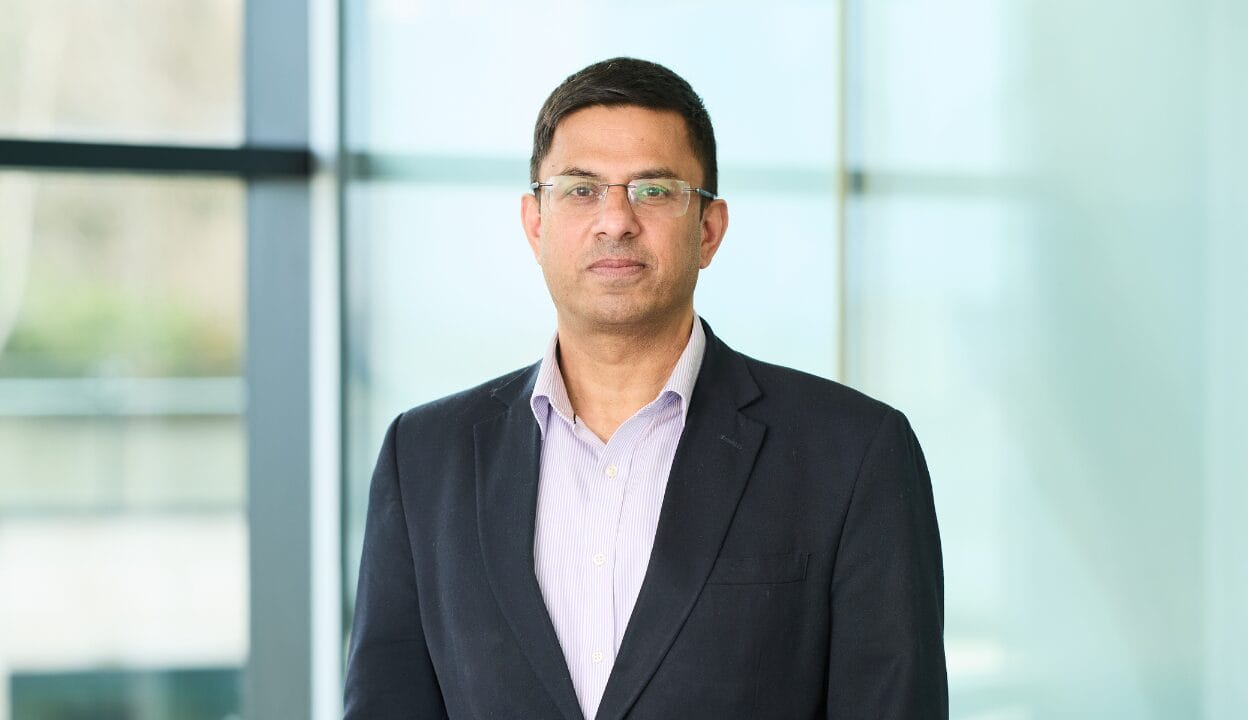
HOSTPLUS to hunt for emerging managers, co-investments worldwide

HOSTPLUS, the A$7 billion ($6 billion) Australian superannuation fund, is known in its home market for seeding promising emerging managers. Now, the fund aims to roll out its incubation program globally. CIO Sam Sicilia told Simon Mumme about the fund’s reasons for backing boutiques, and its hunt for co-investment opportunities in frontier markets.

More than a few successful Australian boutiques owe parts of their fortune to Sam Sicilia.

HOSTPLUS was among the first institutional backers of names that now appear regularly in super fund portfolios: the Paradice mid and large-cap equities funds, the Arcadian long/short fund, Orbis and Greencape. In time, this list could include managers from Hong Kong, the United States, Europe and elsewhere – if Sicilia’s plan to seed emerging managers in offshore markets comes to fruition.

“The case for an international program is good, as it’s no harder and we could be beneficiaries from it,” Sicilia says.

The fund seeds emerging managers with modest mandates between $10 million and $20 million, allowing about 18 months for them to live up to their potential. By doing so, it is exposed to the strong returns usually generated by boutiques and secures capacity with the managers over time, since the initial mandates are often increased when managers ‘graduate’ from the incubation program into HOSTPLUS’ asset class portfolios.

Sicilia is working with asset consultant JANA Investment Advisers to expand the program into offshore markets, and will put the proposal to the HOSTPLUS board later in the year.

Sponsored Content

“We have one international small-cap manager in IronBridge, and we should have another if for no other reason but for capacity. If we do appoint another, it should be funded through incubation,” Sicilia says.

Before joining HOSTPLUS in March 2008, Sicilia worked as an asset consultant for 15 years with Towers Perrin, Frontier Investment Consulting and Russell Investments. He is confident the Melbourne-based JANA is capable of assessing emerging managers around the world.

“I have the ability to say to JANA: ‘Why don’t you research this particular manager in Brazil?’ And they go. It’s no harder to go off and do manager research from Melbourne than it is from the UK or the US.”

He says a global presence does not guarantee consistent flows of essential information between offices in different continents.

“Being global is more than red dots on the map,” he says.

Sicilia arrived at the helm of HOSTPLUS’ portfolios about six months before the financial crisis struck. He says the fund’s average performance in the past year “its balanced option returned -9.5 per cent in the year to August 31” was due to its allocations to unlisted assets.

HOSTPLUS is “positioned for downside protection,” so that it slightly underperforms the median fund in boom times but outperforms in bad market environments. But the crisis tested this design.

“We ended up being at the median,” Sicilia says. “So did we go into panic mode and say: ËœWhy didn’t we outperform by a larger margin?’ ‘No’.

He knew the fund’s underperformance was caused by allocations to unlisted assets, such as property, infrastructure and private equity funds, whose valuations followed the decline of listed markets, but at a lag, weakening performance even as equity markets rallied.

“As revaluations came in we took every hit we could get,” he says.

Throughout July, the first month of the Australian fiscal year, the fund wrote-down all losses it incurred in its unlisted portfolios in June.

“If we had shut the books at 30 June, we arguably would have done 2 per cent better,” he says.

As the crisis deepened, the fund ruled out making dynamic or medium-term ’tilt’ in its portfolios to adjust to the rapidly changing market conditions.

“Dynamic asset allocation really delegates responsibility for that call to another entity, which is something that the board doesn’t want to do,” he says.

Instead, in its annual asset class reviews, HOSTPLUS may decide to not allocate capital to parts of the market in which it is already invested until better opportunities arise.

“As time goes on you find you move away from strategic asset allocation in that asset class,” he says.

The fund is also reluctant to appoint an extensive internal investment team, preferring to keep its resources in the low single digits while making full use of JANA and its team.

“There are 50 people sitting at JANA. We want to work with JANA, rather than replicate them. Asset consultants bring their whole experience set to you. These are lessons you have to learn at your own cost rather than having a consultant,” he says.

In its reviews of investment managers, the fund does not regard recent performance as the primary reason for allocating mandates.

This is because performance alone can’t always reflect a manager’s contribution to the fund’s overall strategy.

“If it was the reason for hiring, it would also be the reason for firing,” Sicilia says.

“When we review fund managers, we very rarely discuss performance because that’s a short-term attitude. What we do discuss is whether the reason for appointing that manager remains, or if there has been a change that makes them not fit for our fund.

“We’re a strong believer in active management. There are as many managers above the median as there are below. So we have to believe that we can pick the above-median managers.”

Sicilia recently hired an investment analyst to assist with day-to-day operational tasks – such as updating the fund’s exposures to particular markets, fielding managers’ requests to amend mandates or to meet regarding new products – so that the CIO can commit time each week to strategic thinking about investment markets.

“Strategic thinking isn’t about manager selection, but about the fundamentals of what’s happening in the investment world and where opportunities might lie, and focusing on research in that area,” Sicilia explains.

“I want to be able to anticipate which asset classes ahead are looking favourable so we can go to the board and say we should be directing more money in this direction, or not in that direction.”

For example, solar energy is an emerging theme in the portfolio. This turned Sicilia’s attention to the photovoltaic cell industry in Spain, where the government subsidises development of the energy source, awarding €320 per megawatt-hour for the first 500 megawatts from new projects.

This helped form the third largest solar energy industry in the world, behind the United States and Germany, and drew Sicilia’s interest, resulting in a research trip.

“We weren’t in Barcelona. We were in something like a lunar landscape. It was hot and we had hard hats on. We were tramping on a 900 metre long solar array field,” he says.

As HOSTPLUS sizes up investment opportunities worldwide, it has eyed co-investments with other institutional funds, targeting unlisted assets in frontier markets.

In such deals, it aims to acquire slices of assets that deliver a reasonably steady income stream over a long time horizon.

“We will never own 100 per cent or 20 per cent of the asset. We might own 1, 2 or 5 per cent, and need another 10 or 20 co-investors,” he says.

Many institutional buyers meant the investment risks and transaction terms were analysed by many eyes “and much thinking”.

“Once an asset comes along, we can call each other and say: ‘Put your hand up if you would like to participate in due diligence’. There is no commitment yet” he says.

HOSTPLUS has spoken with other big Australian industry super funds, such as the $28 billion AustralianSuper, the $21.8 billion UniSuper and $13 billion Cbus, but Sicilia is open to collaborating with any institutional fund with access to an interesting investment opportunity.

“It’s not a club,” he says.

No agreements, such as memoranda of understanding, have been signed among funds: “We just need each other. Otherwise it’s divide and conquer, and we lose out”

He says the economic growth rates in frontier markets could surpass those recorded by today’s developed economies when they underwent transformation, because knowledge and technology have became increasingly globalised.

“It took the United States 200 or so years to get where it is, and China might get there in 30 years, and Vietnam less. One shouldn’t underestimate the exponential rise of that curve,” Sicilia says.

But deals in frontier markets, which can be done on the basis of unfamiliar fiscal and legal procedures, must, like all investments, “satisfy the sleep at night test”.

Leave a Comment

NZ Super cuts benchmark return expectation on US valuation concerns

NZ Super cuts benchmark return expectation on US valuation concerns

A view that the US stock market is overvalued and equity risk premia will be lower over the long term has driven New Zealand Super to lower the return expectations for its reference portfolio following its recent five-yearly review of the benchmark. Co-chief investment officer Brad Dunstan also flags underweight commodity exposure as an area to address and explains why the fund remains sceptical of illiquidity premia despite seeing a growing case for private markets.

Sort content by

Brunel links push into private markets to ‘innovative’ investment model

In the last seven years, the private markets allocation at the UK’s Brunel Pension Partnership has grown to £8 billion ($10.7 billion). The fund's head of private markets Richard Fanshawe charts that growth but warns of a dearth of opportunity in the UK and uncertainties in the transition ahead.

TPA’s flexibility keeps OPTrust focused on ‘the mission that matters’

With investment markets uncertain, being an investor with a global view and the flexibility to take advantage of opportunities has seen OPTrust “doing well”, its chief investment officer James Davis says. An evolution of its total portfolio approach keeps it focused on the key metric that matters to members.

Stable value at TRS proves ballast in extraordinary times

Texas Teacher Retirement System, the $211.6 billion Austin-based pension fund, has an asset allocation that is built to withstand the “extraordinary times” and adverse climate investors face today. The fund's 21 per cent allocation to stable value to stand the test of recession has proven most robust.

Alabama Retirement Systems: Trump’s policies don’t work for pension funds

Alabama Retirement Systems' veteran CEO David Bronner explains how rapid policy changes with little thought to the long-term consequences coming out of the new Trump administration leave the pension fund "flying blind". The fund is prioritising cash.

OPTrust prioritises diversification as tariffs bite

OPTrust's Peter Lindley says staying diversified is the best way for Canadian pension funds to navigate the impact of US tariffs and the looming trade war that has just ratcheted up since US President Donald Trump announced tariffs on Canadian steel and aluminium exports to the US.

Inside NEST’s ‘serendipitous’ deal for IFM stake

NEST’s purchase of a 10 per cent stake in the Australian industry superannuation fund-owned IFM Investors marks the latest development in the trend of pension funds buying into the asset managers they’ve traditionally only allocated to.

Previous