
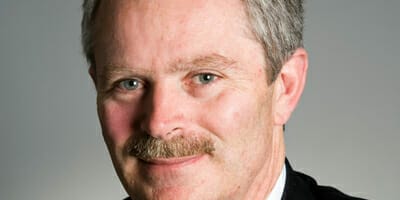

Jim Keohane’s first annual results as chief executive of HOOPP have been satisfying. The fund returned 12.19 per cent in 2011, a result well above its peers. It is 103-per-cent funded, and has reached assets of more than $40 billion for the first time. However, he says the unique investment approach and structure that has allowed the fund to reach these heights has been more than 10 years in the making.
The Healthcare of Ontario Pension Plan (HOOPP) has a large derivatives program, amounting to more than 1500 positions worth about $200 billion. The worth of its net assets available for benefits is $40.3 billion.
This unique approach to investing – using its balance sheet as an asset – has enabled the fund to remain fully funded throughout the global financial crisis, an enviable position among its peers.
Chief executive of the fund, Jim Keohane, who was chief investment officer for 10 years before taking up the top job, says HOOPP is clear about its investment strategy and its strategic advantage as a long-term investor.
“We don’t have any strategic advantage in security selection. Where we do have a strategic advantage is we are creditworthy, have a large balance sheet and low liquidity needs. We can find strategies that we can do that others can’t, and that is often non-traditional,” he says.
According to Keohane, the external environment is in the biggest state of flux since he’s been in the pension business.
“There has been high market volatility, low interest rates and changes in government policy. Pensions are on the front page and will be for some time to come.”
Keohane says the fund has been positioned fairly well in this environment, and some of the actions of the past few years to restructure the portfolio have meant it could take advantage of the opportunities as well.
“We have done a lot of long-term option writing. We saw an anomaly had been created, there had been a lot of annuity sold but they hadn’t hedged them. These options provided equity-like returns with nowhere near the risk.”
Clear objectives: split and divide
The HOOPP investment portfolio is divided into two: a liability-hedging portfolio and return-seeking portfolio.
Within the liability-hedging portfolio there is a large weighting to long-term bonds as well as real-return bonds and real estate. The investment strategy is to hedge the liabilities, but it also turned out to be a source of 2011 returns.
The fund entered the international real-estate market last year, closing its first deals in the UK and the Czech Republic.
In the return-seeking portfolio, managed by Jeff Wendling, the fund gains equity and credit exposures through derivatives.
The structure of HOOPP’s investment process is most akin to the Danish ATP, which also divides its portfolio into two separate portfolios.
The difference is that ATP uses derivatives for fixed-income exposures and cash for equities exposures, while HOOPP does the reverse.
“ATP does the reverse of us. They use interest-rate swaps to hedge the liabilities and use cash to fund the return-seeking portfolio. We do the reverse, use derivatives for equities exposure, because there is not a well-developed interest-rate swap market in Canada.”
The fund has a list of approved counter parties, which Keohane says can be up to 15 investment banks, and it has a team to manage the credit and collateral management very tightly around that. It has also been cutting-edge in setting up the systems to support that.
Over the past few years the previous chief executive, John Crocker, oversaw the spending of more than $100 million in technology.
The result is a sleek operating system for both investment and administration that will save costs in the long run.
“We spent the money to get daily price feeds on everything we trade, we mark to market daily,” Keohane.
He sees this technology and the particular in-house expertise necessary, as one of the barriers to other funds investing the same way.
“Developing some core in-house expertise is a barrier to others investing the way we do. For example, [with] cash management and collateral management and managing the balance sheet, we have a treasury function similar to a bank. The fund started using derivatives in 1999, it’s taken about 13 years to get where we are.”
Keohane says having very clear objectives of what it is trying to achieve is a key driver of the fund’s success.
HOOPP’s vision is that all healthcare workers enjoy a financially secure retirement. Its mission is to deliver on the pension promise, and it is driven by the values of professionalism, accountability, collaboration and trustworthiness.










Leave a Comment
You must be logged in to post a comment.
Login