
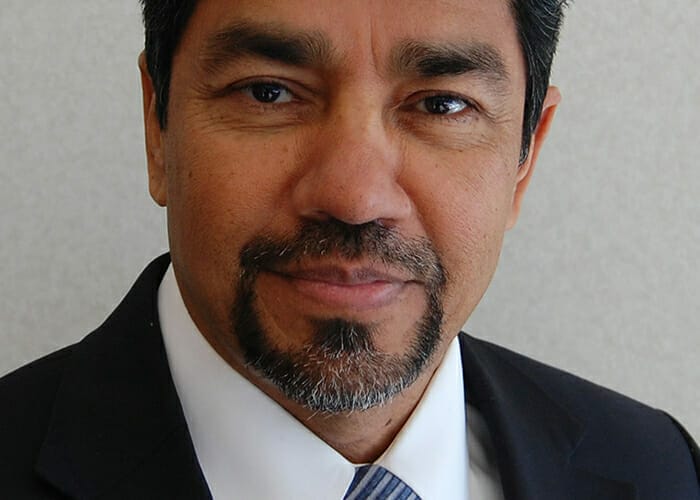

The $12.5 billion School Employees Retirement System of Ohio (SERS) plans to trim its allocation to hedge funds through the course of the year, building on a strategy begun during its last asset liability study three years ago.
“We have had a number of discussions with the board, our staff and consultants and it looks like the current asset allocation is reasonable,” says chief investment officer Farouki Majeed, speaking from the fund’s headquarters in Columbus – Ohio’s capital city. “We do have concerns that the hedge fund allocation of 10 per cent is high, and we might trim this down. But I am not in the camp of eliminating hedge funds altogether.”
In 2013, SERS decided to reduce its hedge fund allocation from 15 per cent of assets to 10 per cent. That money went from hedge funds into real assets and that is the plan this time as well.
Gruelling 2016 for hedge funds, healthcare
The decision follows a gruelling 2016 for SERS’s hedge fund allocation, which was hit particularly hard when Visium Asset Management, the fund’s equity long/short manager specialising in healthcare, folded mid-year.
“It was a disappointing year on account of hedge fund manager underperformance and healthcare was a volatile play,” Majeed says. “Once we realised the problems with Visium, we began to withdraw money; we were never fully exposed right through.”
A UK-based, relative value quant manager for the portfolio also had negative returns, further weighing it down. Yet Majeed still says hedge funds are a vital part of the investment puzzle because of the diversity the allocation brings to the fund.
“The hedge fund and fixed-income portfolios are risk diversifiers because their contribution to total fund risk is lower than their asset allocation; this is the role these allocations play in the portfolio,” Majeed explains, adding that the hedge fund portfolio is bouncing back.
“At the end of December, our five-year net return for hedge funds was higher than its benchmark and well ahead of fixed income. Multi-asset strategies have brought a five-year return of 4.74 per cent, net of fees.”
SERS uses 20 hedge fund managers, reduced from 48 after a policy to allocate more money to fewer managers. This has helped reduce fees, as has negotiating longer lock-ups with high-conviction managers.
The process of reviewing the asset allocation has prompted Majeed and his team to examine introducing target allocations to sub-asset classes, namely high-yield debt, emerging market debt and master limited partnerships (MLPs) in the US – the mid-stream infrastructure asset. However, the review left the CIO unconvinced that separate allocations are necessary.
“Developing niche asset classes makes the policy portfolio more complicated,” Majeed explains. “The optimisation process becomes prone to more errors. There are more inputs, and the more inputs you have, the more likely you are to have errors. I believe less is more.”
He says the fund is now more likely to gain additional exposure to these assets via fixed income in actively managed, opportunistic allocations.
“If you have a target allocation for a fixed amount, you are forced to allocate it, otherwise you have a discrepancy relative to the policy portfolio. I prefer to access these assets on an opportunistic basis.”
Real assets within this opportunistic allocation include high-yielding infrastructure, such as aircraft leasing and oil terminals, and mid-stream MLPs.
“Valuations in MLPs were down 50 per cent in 2015. It was a good time to buy,” Majeed says. Credit strategies in private debt have also proved a rich seam, with SERS investing in funds lending directly to small- and mid-market companies.
“We look at the managers who have had very little or no credit losses,” he explains. “Terms include upfront fees and strict covenants; the loans are highly secured and shorter-term, so not beyond five years. Most are repaid before that anyway.”
SERS assets are split between a 22.5 per cent allocation to domestic stocks, a 22.5 per cent allocation to international stocks, 19 per cent to global bonds, 15 per cent to global real assets, 10 per cent to global private equity, 10 per cent to multi-asset strategies and 1 per cent to short-term securities.
“We are comfortable with this exposure to growth for now,” Majeed says.
REITs in favour
The allocation to real assets comprises property, infrastructure and real-estate investment trusts, in a portfolio that has netted a return of 11.58 per cent over the last three years. The portfolio used to have a heavy allocation to value-added real assets, in a risk-oriented approach with high levels of leverage. Now, 80 per cent of the portfolio is in core assets and the leverage is about 30 per cent on a total portfolio basis. Majeed particularly likes the allocation to income-producing REITs, which account for less than 5 per cent of the allocation to real assets but could, in theory, climb up to 10 per cent.
“REITs have equity-like volatility but offer good returns over a very long period of time,” Majeed says. “Over the long term, they have performed better than private real estate. It is helpful having a liquid component in the real-estate allocation.”
He also notes that accessing real-estate opportunities is becoming more difficult.
“In 2013, it was still a good time to deploy assets, when the allocation was increased from 10 per cent to 15 per cent. Managers could take and deploy money quickly and were also buying assets 25 per cent lower than the high values pre-financial crisis. Right now, the markets are much more richly priced. We will be very selective now.”
Majeed attributes much of the fund’s success to governance. The investment team provides the board with monthly reports, as well as quarterly and annual reviews that include analysis of all asset classes and managers. In return, the board has delegated all investment decisions to the investment staff.
“The delegation the board gives us to invest is crucial to our success, and our governance is a source of alpha,” Majeed concludes. “Not taking every investment decision to the board [allows us to] be opportunistic and nimble.”








Leave a Comment
You must be logged in to post a comment.
Login