
Hedge funds appeal at Ilmarinen as volatility returns

For years Central Bank bond buying has supressed the volatility on which hedge funds thrive. At Finnish pension fund Ilmarinen hedge funds are back in favour, particularly volatility, momentum, and macro strategies that don’t correlate to equities.  

Ilmarinen, the €60 billion Finnish pension insurer founded in 1961, is benefiting from an increased allocation to hedge funds. In recent years, Ilmarinen has grown its allocation to externally managed hedge funds from 1 per cent to around 6-7 per cent, particularly focusing on strategies that don’t correlate with listed equities including different types of volatility, momentum, and macro strategies.

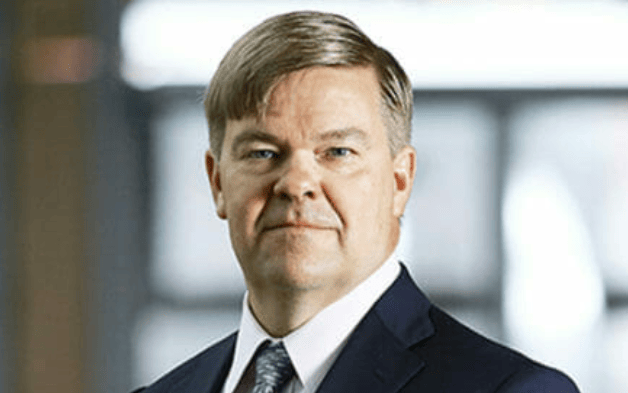
“Some of these have a reasonably low or even negative correlation with equity markets,” says Mikko Mursula, chief investment officer and deputy chief executive at Ilmarinen, explaining that as the environment turns hawkish; inflation edges higher, money policy tightens and investors weigh the risk of recession, active strategies that can navigate asset class volatility appeal.

Mursula doesn’t consider hedge funds a separate asset class, arguing that the wide variety of managers and strategies make it difficult to place the allocation in a single bucket. Alongside the external allocation, Ilmarinen also runs an internally managed hedge fund allocation, although Mursula declines to disclose its size.

Selective approach

In another approach, Ilmarinen is focused on diversification and selective investment in preparation for markedly different performances ahead across countries and sectors and impacting both credit and equity markets. He is also keenly aware of the impact of a probable recession on corporate earnings and margins: investing in companies with strong balance sheets, cashflows and transparent dividends is a priority.

“In recent years, it hasn’t really mattered what sector or equities have been in your portfolio. Going forward, this won’t be the case.”

Sponsored Content

He believes analysts’ estimates that have current corporate earnings growth at between 6-8 per cent are too high given the level of inflation and its forecast impact on global growth and corporate health.

“Average US and European corporate profit margins are near historical highs. Companies are producing very high earnings numbers and if we are heading into a recession these will obviously fall. We just don’t know how much the cut will be.”

Selection at Ilmarinen will also involve steering away from companies and sectors with high levels of leverage. “As rates go higher and credit spreads widen, corporates with high levels of leverage are going to struggle more going forward,” he says. “It is crystal clear that companies, and countries, will need to pay more for their bonds and loans; there will be pressure on margins.”

Heavily indebted European countries like Italy and Greece with vast public sector debt are most vulnerable. “Reading between the lines of the recent ECB meeting, discussions about debt in Italy have already started.”

He is also wary of countries and corporates most exposed to the grain and energy crisis triggered by Russia’s invasion of Ukraine. “The negative impacts of war in Ukraine will hit Europe more than the US,” he says, attributing the 8 per cent fall in the euro versus the dollar from the start of the year (notwithstanding the interest rate differential) as a key sign of European travails.

Positively, he believes that the energy crisis will spur Europe’s transition to green energy sources away from Russian oil and gas. “In the long run I am not worried; the transition will continue and some of these projects will be launched sooner than we thought because Europe needs to get rid of its dependence on Russian oil and gas.”

Roadmaps

Ilmarinen, which targets a net zero portfolio by 2035, has created roadmaps to net zero for its listed equity and domestic real estate portfolios already. By the end of this year, it aims to have completed roadmaps for its corporate bond and foreign real estate allocations that will also include interim targets, actions, and monitoring criteria. “The single biggest challenge decarbonizing the portfolio is how best to evolve methodologies and frameworks and ensuring enough high value data about your portfolio for all asset classes. It requires more and more resources just to follow the latest evolutions.”

Once these two new roadmaps are in place, attention will turn to other sub asset classes including the whole external manager portfolio across equity, fixed income, infrastructure, and private equity.

Thirty per cent of the portfolio is  invested in fixed-income, 50 per cent in equities, 11 per cent in Real Estate and 9 per cent in other investments. Around a quarter of Ilmarinen’s pension assets are invested in Finland. In 2021, Ilmarinen’s investments returned 15.3 per cent, equivalent to €8.1 billion.


Leave a Comment

How CPP is evolving risk management for a faster, more interconnected world

How CPP is evolving risk management for a faster, more interconnected world

In an environment where multiple risks are emerging and their effects are compounding on the portfolio, CPP Investments' chief risk officer Priti Singh says the $572 billion fund is rethinking risk management from the ground up, shifting from reaction to preparation and embedding risk thinking earlier in investment decisions. She speaks to Amanda White about the fund's risk approach.

Sort content by

West Yorkshire prepares to up the pressure on Shell and BP

A new approach to holding the major oil companies to account will see the West Yorkshire Pension Fund, together with a cohort of other UK and European pension funds, demand BP and Shell explain their business plans in a world of declining demand for fossil fuels.

CalPERS board warned of risks in AI investments including China innovation

An investment banking expert has warned the CalPERS board of the risks inherent in AI, emphasising the importance of investors understanding how their exposure to AI is at risk because of Chinese competitors.

Cost, efficiency and less directs: AIMCo’s CIO spells out new strategy

AIMCo's new CIO Justin Lord explains why he is upbeat about investment opportunities and the fund manager's new governance after a tumultuous few years. Prioritising costs, efficiency and cutting back on direct investments in private equity, he articulates the opportunities ahead including in infrastructure and private credit.

NBIM prioritises trading efficiency, AI and culture in three-year plan

The largest investor in the world, Norges Bank Investment Management, is investing in AI to reduce costs, increase trading efficiency, and make better active decisions. The fund has set out its three-year strategy which also includes focusing on targeting managers with more flexibility to express negative views.

Private equity: Arizona’s ASRS argues the case for secondaries

The $50 billion Arizona State Retirement System is pushing into private equity secondaries, actively looking to invest in stakes being overloaded by other LPs, in a strategy that will complement its co-investments program and SMA investments with external managers. It’s looking for opportunities across the US and Europe.

TIFF plays the long game in venture capital

The $9 billion asset manager for 500 US endowments and foundations, TIFF, is famed for its PE and venture capital allocation. Head of private markets Brendon Parry reflects on his priorities, including navigating the winners and losers of AI, and leaning into independent sponsors and relationships with the best managers.

Previous



