
Future Fund jolts out of ‘set and forget’ mode

Australia’s sovereign wealth fund has handed mandates to external active managers and built a dedicated treasury management function, six years after going all-in on passive index strategies. It is is also on the hunt for early stage venture opportunities as it continues to forecast challenging conditions and higher persistent inflation.

Australia’s sovereign wealth fund has handed a handful mandates to external active managers and built a dedicated treasury management function, six years after going all-in on passive index strategies. The A$206 billion ($136 billion at June 30) Future Fund has entered into contracts with specialist global equities over the past two years as it seeks an edge in what it expects to be a challenging environment for investors amid higher persistent inflation.

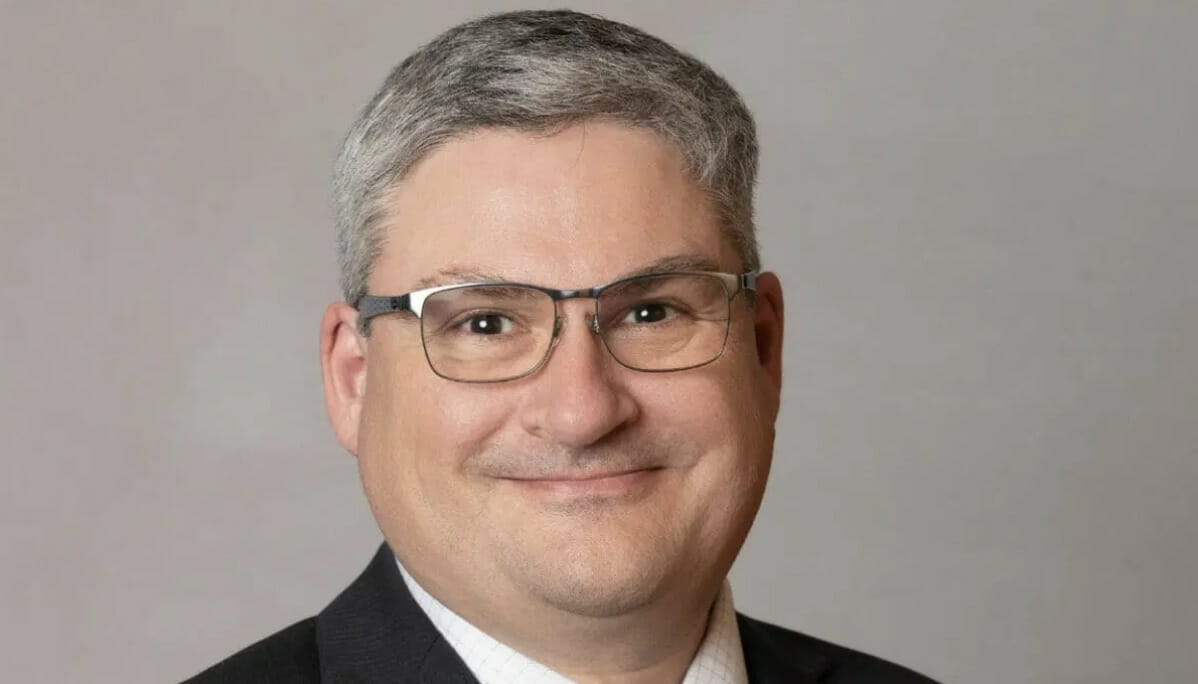
“We have been looking at active management in global equities … where we think there are pockets of opportunity for active managers and we can do that at meaningful scale,” Future Fund CEO Raphael Arndt told Top1000funds.com. “We’re definitely not in ‘set and forget mode’.”

While Ardnt made clear he wasn’t moving entirely out of passive mandates, the comments reflect a major strategic re-direction for the Future Fund, which in 2017 placed the vast bulk of its equities portfolio into low-cost index strategies, concluding it was increasingly difficult to justify the fees asked by active managers, especially in Australian domestic equities (Future Fund revamps equities).

“This is a multi-year strategy and we haven’t lost conviction in that. You don’t move $250 billion worth of capital in six months.”

The sovereign, which must by Australian law publicly disclose the external managers it employs, lists four developed and emerging market managers on its books at March this year (UBS, State Street, Legal & General, Insight and Robeco) and is expected to add more names at its next update.

Sponsored Content

The sovereign has also commenced a project of more actively managing and monitoring liquidity, centralising and establishing a formal treasury function staffed by three full-time equivalents, and investing in software upgrades.

The revelation came as the fund reported what Arndt described as a “solid” result of 6 per cent in the 12 months to June 30, under-performing its target of 6.9 per cent a year. It has returned 8.8 per cent a year over the 10-year horizon and has grown its initial A$60.5 billion ($43.3 billion at April 3 2006) endowment from the Australian government almost fourfold since, with no additional contributions.

Arndt said the sovereign held to the thesis that inflation would be “sticky and sustained”, revealing a more bearish outlook than some global peers, with consensus beginning to emerge that the worst of the post-pandemic inflationary cycle may have passed.

“Favourable investment conditions that drove markets in recent decades have been undergoing profound changes,” Arndt said.

“Markets have been under-pricing the significant economic and geopolitical risk that we have anticipated. “The … portfolio is positioned moderately below neutral risk settings at a time when the economic outlook and the direction of inflation and interest rates make investment returns less certain.”

Nonetheless, he said the fund would actively pursue opportunities, via its specialist managers, including in risk assets, especially venture capital.

“We continue to invest in early stage venture because if anything its becoming more attractive – capital is drying up and it’s actually getting cheaper and more competitive,” Arndt said. “We have high conviction we are investing with the best managers in the world, so we continue to do that.

“[Another] area we are getting quite excited by is pretty boring, vanilla credit, we’re investing in investment-grade credit [that is] … structured and somewhat liquid.

“And even boring old bonds are [looking] not too bad, relative to the risk you’re taking.”

The sovereign earlier this month announced Ben Samild, its former deputy chief investment officer, as the permanent CIO, a role Arndt had been performing since the departure of Sue Brake in June 2022.

Samild, who previously ran the Future Fund’s debt and alternatives strategy, is a noted advocate of its “joined up” strategy, akin to the total portfolio approach.

“You can’t run the kind of investment program we do without the culture of ‘one portfolio’ in place from the beginning,” he told a conference hosted by Top1000funds.com sister publication Investment Magazine Australia in 2021.

Asset Owner:Future Fund

Leave a Comment

How CPP is evolving risk management for a faster, more interconnected world

How CPP is evolving risk management for a faster, more interconnected world

In an environment where multiple risks are emerging and their effects are compounding on the portfolio, CPP Investments' chief risk officer Priti Singh says the $572 billion fund is rethinking risk management from the ground up, shifting from reaction to preparation and embedding risk thinking earlier in investment decisions. She speaks to Amanda White about the fund's risk approach.

Sort content by

Funds SA cuts active risk as CIO puts stable beta first

Australia’s $36 billion Funds SA has slashed tracking error in its equities book and is reorienting its philosophy around stable beta, as chief investment officer Con Michalakis argues the role of alpha in a multi-asset portfolio needs a fundamental rethink.

La Caisse’s oil exit pays off as renewables portfolio pulls ahead of fossil fuels

Divesting from the oil sector has been a boon for La Caisse’s performance, as the Canadian pension giant says its energy investments have earned billions in value-add compared to the benchmark since the inception of its climate strategy. Head of sustainability Bertrand Millot unpacks the fund’s approach in an interview with Top1000funds.com.

OPTrust: hiking rates because of the oil shock is a mistake

To navigate rates and inflation uncertainty, OPTrust is leaning into dynamic portfolio construction, actively managed options, and a total portfolio approach supporting the belief that inflation resilience is built into how portfolios are constructed not an individual asset or exposure.

Nest favours institutional-first managers as retail exodus pressures private credit

Nest, the largest workplace pension in the UK, says that private credit managers who prioritise institutional clients will be more favourably viewed. The £61 billion ($82 billion) fund has awarded a £450 million ($605 million) US direct lending mandate to Crescent Capital this month, citing the manager's institutional-client-first approach as a key attraction.

PKA ups the risk; builds out infrastructure

PKA, one of Denmark’s largest pension service providers, is exploring whether to increase its risk budget by 10 per cent to boost returns. Michael Flycht, deputy director of equities and liquid alternatives at PKA, outlines why the fund is achieving this objective via leverage rather than direct exposures, and where it's allocating towards in hedge funds and infrastructure.

Chicago Teachers leans into diverse managers; exceeds targets

Chicago Teachers is bullish on allocating to diverse managers, more than doubling its target allocation to more than half of the fund's AUM. Its CIO explains how the strategy adds value through access to differentiated strategies and competitive fee structures.



