
Finland’s Ilmarinen prepares to increase risk ahead of new pension rules

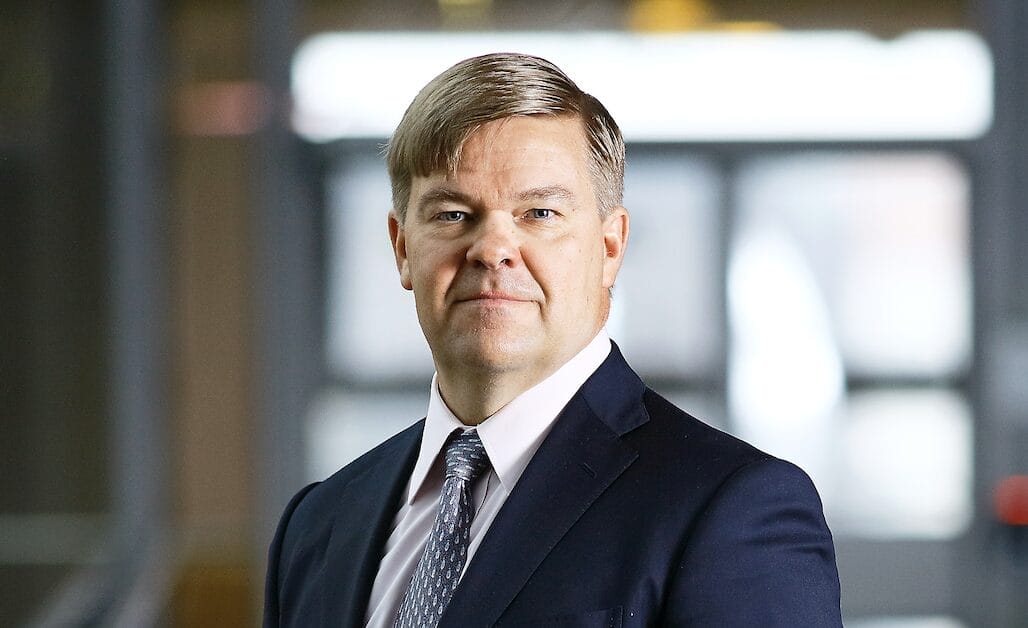
Mikko Mursula

Ilmarinen, Finland’s €63 billion ($73 billion) pension insurer, is laying the ground to increase its equity allocation by as much as 15 per cent in a jump which could see public and private equity, as well as other assets with a higher expected return, ultimately account for up to 65 per cent of the organisation’s total assets under management.

In an interview from Ilmarinen’s Helsinki offices, chief invetment officer Mikko Mursula says the team is busy scenario testing and running simulations, working towards an anticipated two-year deadline to increase risk and with it, long-term returns.

The new strategy is the consequence of pension reform decreed by the Finnish government which is acting on the wishes of labour unions, the owners of Finland’s private sector pension system that includes investors like Varma and Elo.

“The reform improves private-sector pension providers like Ilmarinen’s opportunity to pursue better long-term returns on pension assets by carrying higher risk in investment portfolios,” explains Mursula, who will become president and chief executive of the organisation this summer.

“The unions are the ones who have negotiated the changes – we are just the executor. Our task is to invest pension assets safely and to reach high enough returns within the solvency capital framework.”

To enable Finnish investors to reach the new risk targets, the government is changing the solvency capital framework under which companies like Ilmarinen operate. That framework is specific to Finland, and differs from the EU’s stipulation on how much insurance and reinsurance firms must hold to cover potential losses.

Sponsored Content

Historically, equity is Ilmarinen’s strongest performing asset class and Mursula believes that with a long enough horizon, the increased allocation will bring the higher returns stakeholders seek.

But that is not to say the new asset allocation won’t come without side effects, like a spike in volatility which he warns will show up in choppy annual returns. Witness 2022 when Ilmarinen’s equity investments lost 10.2 per cent versus a 28 per cent gain a year earlier in 2021.

“The volatility of our annual returns will be higher, and it is very important to keep this in mind,” he says.

Another open question hangs over how to allocate the remaining 35 per cent or so of the portfolio to ensure these investments don’t have too much correlation with listed equity.

“We have to harvest correlation advantages with a much smaller portfolio than we’ve done before and we don’t know yet what it will mean,” he says.

Hedge funds hit by macro winds

As the team lays the ground for the new allocation to risk assets, one diversifying portfolio could become more important. In recent years, Ilmarinen has developed an 8-9 per cent multi-strategy, strategic allocation to hedge funds. Wholly outsourced to external managers, it specifically targets correlation advantages.

The recently volatile market has provided a good operating environment for active investors, but Mursula reflects that one of the most challenging strategies in the current climate is macro which has thrown off a disparity between managers and frequent “surprises” because of the impact of tariffs.

“Within macro there are good performers but also bad performers,” he says. “The problem is, we don’t know how tariff policy will play out from one month to the next. If you make a call and take tactical bets, you may be right or wrong. Nobody knows because the information changes all the time.”

The hedge fund allocation is not part of the tactical asset allocation. But like other investors, in today’s investment climate, Ilmarinen has been more active from a tactical perspective across equity, fixed income and FX.

The team always keep the strategic asset allocation – and the fact they are managing money with long-term liabilities – front of mind, but he says in “this kind of environment”, it makes sense to do “a bit more tactically”.

Ilmarinen’s in-house portfolio managers also sit in the asset allocation team, and it falls on them to oversee tactical asset management too. They have been allocated a risk budget within which they can make tactical calls, mostly using derivatives rather than cash.

In FX, recent strategies have included short dollar/long euro positions and long Swiss franc/short dollar, while in equities and fixed income, they are altering exposure across specific stocks, regions and at a country level.

He notes that investors have grown more sceptical of the US in light of the policy backdrop, which has put pressure on the dollar.

“This is the reason investors outside the US are short US dollars –  it wasn’t the case last year or the year before.”

However, he clarifies that any strategy to short the US dollar does not refer to how Ilmarinen is in absolute terms.

“I am referring to our position relative to our benchmark,” he explains. “In the benchmark, we are always long the US dollar. We have got over 30 per cent of our allocation to US dollar assets so ‘going short’ is always relative to benchmark.”

New opportunities in defence

Elsewhere, Mursula reflects that new opportunities in defence will open up following NATO leaders agreeing to increase defence spending to 5 per cent of their countries’ economic output by 2035.

Ilmarinen changed its ESG guidelines in 2024 to open the door to investing more in defence.

However, building up the allocation since then has been difficult because opportunities are thin on the ground. There is a limited universe of public companies in listed markets in Finland, the Nordics or Europe, and the money chasing the sector means many of these companies are valued too highly to make compelling investments. Nor do private markets offer many opportunities, given many of these companies are state-owned.

“NATO’s budget for defence is about to go higher. It means companies need to fulfil demand so we may see investment in defence really start to happen,” he says.

Ilmarinen invests around 20 per cent of its assets in Finland. Of this, around 55 per cent of the global equity allocation is in Finland, but he notes this has fallen compared to what it used to be because of changes to the asset allocation and the declining performance of listed Finnish stocks.

Moreover, he says that many listed Finnish companies derive the vast majority of their annual turnover from overseas. “The business risk is not Finnish-centric,” he concludes.

Leave a Comment

How CPP is evolving risk management for a faster, more interconnected world

How CPP is evolving risk management for a faster, more interconnected world

In an environment where multiple risks are emerging and their effects are compounding on the portfolio, CPP Investments' chief risk officer Priti Singh says the $572 billion fund is rethinking risk management from the ground up, shifting from reaction to preparation and embedding risk thinking earlier in investment decisions. She speaks to Amanda White about the fund's risk approach.

Sort content by

Why West Virginia’s CIO is worried about its China divestment directive

The $28 billion West Virginia Investment Management Board will divest from Chinese state-owned companies and CIO Craig Slaughter has reservations about the decision. He outlines in an interview with Top1000funds.com about why the directive is an extension of a big threat facing investors: a decline in liberal democracy. 

TRS strikes gold: Tiny allocation crushes its benchmark

This year, TRS doubled its tiny allocation to gold via a special fund that buys gold ETFs and mining companies. The strategy returned nearly 60 per cent, thanks to market conditions including inflation, geopolitics, government debt levels and de-dollarisation pushing gold higher.

LGPS Central doubles in size; looks to add more alternatives

In a rare interview, Jayne Atkinson, chief investment officer of the £100 billion ($132 billion) UK pool LGPS Central, reveals the plan to scale up its offering after almost doubling its assets under management, including expanding alternatives to new allocations in hedge funds, diversified growth funds and insurance-linked securities.

CalPERS bets on outperformance from growing climate allocation

CalPERS' Peter Cashion tells Top1000funds.com how the pension fund's strategy to allocate to climate mitigation, transition and adaptation strategies is allowing it to access an untapped corner of the US market where many investors have retreated because of the policy environment.

Alaska’s APFC mulls the positives of growing its small crypto exposure

The $84 billion Alaska Permanent Fund Corporation is weighing the benefits and risks of increasing its less than 1 per cent allocation to cryptocurrency following positive returns for the sovereign wealth fund. Despite the current policy tailwinds, the investor is wary about the asset class's liquidity and value drivers. 

TPA just a new acronym for ‘common sense’: Pennsylvania PSERS CIO

As CalPERS becomes the first US pension fund to adopt a total portfolio approach, Ben Cotton, CIO of $80 billion Pennsylvania PSERS suggests TPA is just another acronym for something investors should already be doing: making decisions for what is best for the whole portfolio.

Previous



