
Federal Thrift integrates new ex-China index; inspires others

The $946.9 billion Federal Retirement Thrift Investment Board (FRTIB) the Washington-based defined contribution plan for US federal civilian employees has finally integrated a new index that excludes China and Hong Kong for its $86.2 billion I Fund after a year-long implementation process.

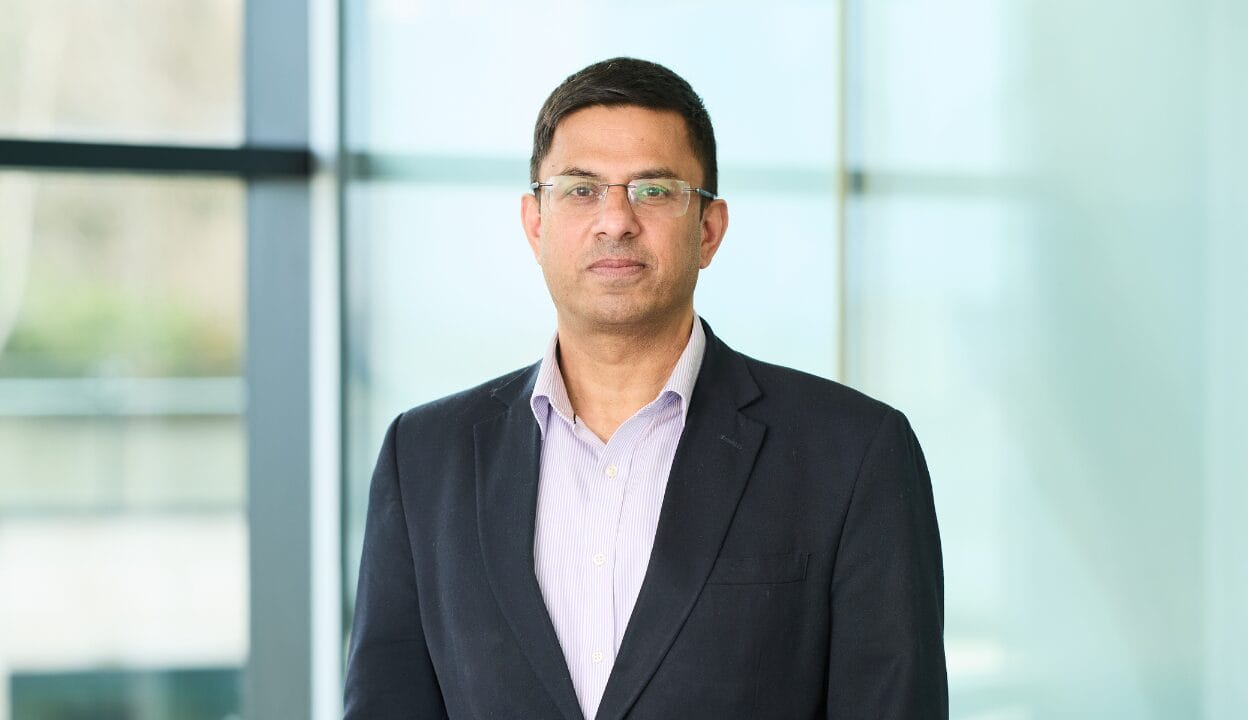
Speaking during FRTIB’s November 2024 investment committee meeting, Sean McCaffrey, CIO of the retirement fund for 7.2 million federal employees said the fund’s investment managers had completed integrating the new index MSCI ACWI IMI ex USA ex China ex Hong Kong, replacing MSCI Europe, Australasia and Far East (EAFE).

FRTIB’s strategy has inspired action from US state treasurers helping oversee other public pension funds in the country. At the end of last year, a coalition of 15 state treasurers issued a joint statement urging state governments to follow FRTIB’s lead and divest their pension funds from the People’s Republic of China (PRC). The letter warns pension fund fiduciaries that “investments in China are no longer prudent investments” continuing, “the time has come to divest from China: investments in China increasingly present red flags.”

FRTIB’s decision to change the index followed a routine view of the four benchmark indexes used across the whole portfolio. Aon, the fund’s investment consultant, wrote at the time that tensions between the US and China, restrictions in tech investment and the export ban of US technology to China, outweighed the benefits of expanding the I Fund to include China or retaining exposure to Hong Kong.

Aon also flagged the risk of unforeseen events incurring transaction costs and causing performance and volatility swings. The announcement of investment restrictions can cause the value of a stock to decline at a time where the investor is forced to sell. Given the asset size of the I Fund, forced selling or restricted investments could incur higher than average market impact costs due to liquidity challenges, wrote Aon.

Tapping additional returns

The decision isn’t only rooted in eliminating China risk. By broadening the index, FRTIB aims to expand investment opportunities and improve the I Fund’s risk-return profile. The new index provides exposure to 5,621 large-, mid-, and small-cap stocks in 21 developed markets and 23 emerging markets, representing 90 per cent of non-US market capitalisation. The adjustment to the I Fund will more than double the number of countries included in the fund, and will change the number of equities by 700 per cent.

Sponsored Content

In contrast, the old index provided the fund with exposure to 798 large- and mid-cap stocks in 21 developed markets, representing 55 per cent of non-US market capitalisation.

The new index is also expected to outperform on a risk-adjusted basis over the long term: historical analysis shows the risk-adjusted returns for the new index have exceeded those of the MSCI EAFE Index over the past 20 years.

During the transition period, the managers followed unique transition benchmarks they developed with MSCI. However from now each manager’s performance will only reflect the new index. To implement this change, the fund’s managers BlackRock and State Street independently coordinated with MSCI to develop transitional benchmarks.

The bulk of FRTIB’s assets (43 per cent) are invested in the $415 billion Common Stock Index Investment Fund (C Fund). Other funds comprise the $110.6 billion Small Capitalisation Stock Index Investment Fund (S Fund) and the $34.8 billion Fixed Income Index Investment Fund (F Fund) Around $299.8 billion is invested in a G fund, an internally managed passive Treasuries allocation.

Until 2021, BlackRock ran four key funds. However, following a consultation in 2015 that flagged concentration risk FRTIB hired State Street Global Advisors to reduce its vulnerability to BlackRock suffering a black swan event following a series of RFP’s.

Leave a Comment

Finland’s Elo: Larger equity allocations promise new media scrutiny

Finland’s Elo: Larger equity allocations promise new media scrutiny

As Finland's pension funds prepare to increase their equity allocations to unprecedented levels compared to global peers, they must also navigate a new and unfamiliar risk. Elo's chief investment officer Jonna Ryhänen explains the fund's investment approach going forward and how it will manage stakeholder and media scrutiny as they react to swinging volatility and returns.

Sort content by

NYSTRS defends defined benefit funds

The defined-benefit New York State Teachers’ Retirement System is defending its 8 per cent assumed rate of return at a time in the US when the limelight is focussed on pension fund structural issues.    mrec4inarticleinline Sponsored Content scnative1 scnative2 scnative3

Washington takes risks within wider framework

The $71 billion Washington State Investment Board has made a renewed commitment to overweighting emerging markets and private equity, but a comprehensive enterprise-wide risk management framework will help ensure the inherent risks of that strategy remain in check.mrec4inarticleinline Sponsored Content scnative1 scnative2 scnative3

Texas explores technology system roadmap

The Teacher Retirement System of Texas is part way through a state-side tour to visit other state pension funds that have implemented new technology systems, as it decides the best path for its own system review.mrec4inarticleinline Sponsored Content scnative1 scnative2 scnative3

For VFMC, alternatives boom in the gloom

The $31 billion Australian government-backed asset manager, VFMC, has reaped big rewards from its belief in the hedge fund managers it backed five or more years ago, reports Simon Mumme.mrec4inarticleinline Sponsored Content scnative1 scnative2 scnative3

AP1 doubles alternatives

The Swedish AP1 will nearly double its alternatives allocation in the coming months with plans to invest up to $1.5 billion in hedge funds for the first time.mrec4inarticleinline Sponsored Content scnative1 scnative2 scnative3

Beating risk with alternatives

In an attempt to reduce tail risk, a large US west coast endowment allocated up to 15 per cent to a Man Investments’ portfolio of alternative strategies that includes global macro and managed futures.mrec4inarticleinline Sponsored Content scnative1 scnative2 scnative3

Previous