
EAPF leads climate-change push

The UK’s £3.5 billion ($4.7 billion) Environment Agency Pension Fund, a local government defined benefit scheme for members of the public body charged with looking after England’s environment, has a global reputation for integrating climate risk into its portfolio. Its investment philosophy is shaped around three key themes – to invest responsibly, de-carbonise and engage. Now the fund is stepping up those efforts and calling on others to do the same.

The EAPF wants better disclosure and tangible action from the whole financial industry to provide more support for asset owners seeking to manage the financial implications of climate change.

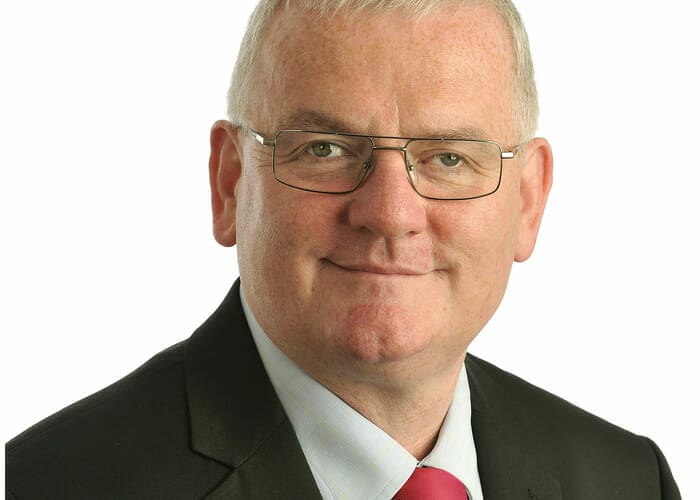
“The industry needs to step up to challenges posed by a changing climate and the impacts of the transition [to a low-carbon economy]. We need more action and we need it now,” says Emma Howard Boyd, chair of both the Environment Agency and the EAPF investment committee.

From next April, the EAPF will begin to pool its assets into the £28 billion ($37 billion) Brunel Pension Partnership, one of the eight asset pools forming from 89 local government pension funds with collective assets under management of £200 billion ($269 billion). The funds are joining up to cut costs and create savings through their collective buying power.

Most of the EAPF’s local authority fund peers have not matched its efforts at integrating environmental concerns. Now, this could begin to change. The sector’s umbrella, the Local Authority Pension Fund Forum, with help from EAPF executives, has just issued a Climate Change Investment Policy Framework, giving all the funds clear climate risk guidelines for the first time.

LAPFF chair Kieran Quinn says, “Our new framework provides much-needed guidance for pension funds, to minimise adverse financial impacts and maximise long-term economic returns for beneficiaries.”

Sponsored Content


EAPF leads the charge

Changes at the EAPF include the fund pushing for better disclosure from investee companies, asset managers and other partners by “actively supporting the adoption” of the Task Force on Climate-related Financial Disclosures’ TCFD recommendations. The fund will also work with partners spanning investment consultants, actuaries, credit ratings agencies, external audit and risk advisers to ensure their advice, tools, processes, skills and knowledge are “fit for purpose” to support their clients.

The EAPF also will use the Transition Pathway Initiative – a tool that allows investors to track how the highest-emitting global companies are preparing for the transition to a low-carbon economy – to help it evaluate how aligned its listed equity portfolio is with a de-carbonising marketplace. This will guide the fund’s priorities for engagement with companies from now on. The EAPF co-founded the TPI last year.

The call for action from the EAPF comes as the fund updates its Policy to Address the Impact of Climate Change, first published in October 2015. The document will now incorporate new guidance from The Pensions Regulator and the Law Commission that states pension fund trustees must consider environmental, sustainability and governance factors in their decision-making processes, too.

“Our updated policy sets the pace for pension funds that need to keep up a strong financial performance in the race to a low-carbon economy,” Howard Boyd says.

The EAPF will also integrate the United Nations’ sustainable development goals into its portfolio.

A deep dive into water risk – one of the SDGs – will be a first priority. The fund will work with CDP, formerly the Carbon Disclosure Project, to target a 20 per cent increase in the response rate of its listed companies to CDP’s Water Program by 2020. It will also target a 20 per cent reduction in the portfolio’s water impact relative to the MSCI All Country World Index over the same timeframe. The EAPF has already written to about 160 companies in which it holds a stake, encouraging them to provide water risk information to the market via CDP.

“We are on target to deliver all our climate goals by 2020, but need more disclosure from companies and the financial sector if we are going to meet our objective to be 2°C (or below) compatible,” says Faith Ward, chief responsible investment and risk officer at the Environment Agency.

LAPFF’s guidelines

Given EAPF’s expertise, it is no surprise that executives from the fund helped the LAPFF draw up its climate change framework. The guidelines urge funds to enshrine their climate policies into their investment beliefs, put in place targets and reporting processes, and review their climate strategies every three years.

It suggests active management of carbon risk with tilts towards low-carbon companies. It also encourages funds to beef up their oversight of investment managers by monitoring them “on their approach to climate change as part of the regular review process”. The framework also recommends scenario analysis to estimate the relative performances of asset classes and sectors under various circumstances. When a scenario is considered “robust and meaningful” in an ESG context, it should be applied to the asset allocation, the framework states.

Private markets hold most opportunity

Funds will find more climate-related investment opportunities in private equity, private debt, infrastructure and real assets than in public markets, the framework notes, adding that “this has asset-allocation implications, due to the illiquidity and complexity of some of these asset classes”.

The framework also advises funds to do more to integrate climate risk into their often “significant” property portfolios, given that buildings are responsible for more than one-third of total greenhouse-gas emissions in the UK. For directly held properties, it suggests funds work with property management teams on focus areas such as “energy management and owner-occupier relations to reduce these emissions”.

Direct engagement

LAPFF also urges local authority pension funds to engage with companies directly, collaboratively, via processes like TCFD, and through their fund managers. And it calls for funds to apply a similar strategy for engaging with policymakers and regulators “to address market failures and to provide an appropriate strategy and policy framework, which encourages the transition to a low-carbon economy”.

LAPFF’s Quinn says, “Local authority pension funds are enthusiastic about their responsibilities. This offers them a toolkit and is also a way of handholding. It is not prescriptive but it is very good guidance.”


Leave a Comment

Long term lens shields Colorado from private credit jitters

Long term lens shields Colorado from private credit jitters

As concerns in private credit mount, Colorado PERA CIO and COO Amy McGarrity says the pension fund isn’t seeing any strains in its growing allocation to the asset class, arguing that long-term investors are shielded from the risks because they can lock up their capital to weather market cycles.

Sort content by

France’s FRR ups risk in line with longer term investment horizon

Fonds de reserve pour les retraites (FRR), France’s €21 billion ($24 billion) pension reserve fund, has increased its weighting to equity in line with a new strategic asset allocation to reflect the investor's longer return horizon. It is also eyeing more unlisted assets including private equity, private debt and infrastructure.

University of California: Less is more and simple is better in investing

Jagdeep Singh Bachher, the CIO who oversees the University of California's $198 billion in pension and endowment assets, says that he wants to keep investment simple as the fund removed its hedge fund allocation completely, conceding "it’s not one of the things we are good at doing".

CalPERS finds continuity in climate of uncertainty

Investors are grappling with a multi-regime change that is manifesting in trade and geopolitical upheaval and a rise in real interest rates. But at a recent meeting, the CalPERS board heard that US equities remain top performers and the dollar, though weaker, is still historically strong and wil remain so.

GPIF pins active equity overhaul on ‘scientific’ manager selection

A quest for manager and fund strategy diversification has led the world's largest pension fund, Japan’s Government Pension Investment Fund, to reach a decade-high allocation to active global stocks. Its active equity portfolio now consists of 103 funds, increasing fivefold compared to 2020 when it only invested in 20.

UPP: Canadian investor looks outside US markets

Canada's University Pension Plan is eyeing new risks and opportunities triggered by policies from the Trump administration, like additional taxes for US investments and a surge of public spending on defence and infrastructure in Germany. It is also fine-tuning its roster of active managers.

Alpha at North Dakota: Tracking error key to portfolio construction

The $8 billion North Dakota Department of Trust Lands is rolling out a core-satellite approach to portfolio construction in a bid to control tracking errors. But CIO Frank Mihail explains that in some asset classes like infrastructure, the process is more complicated.

Previous



