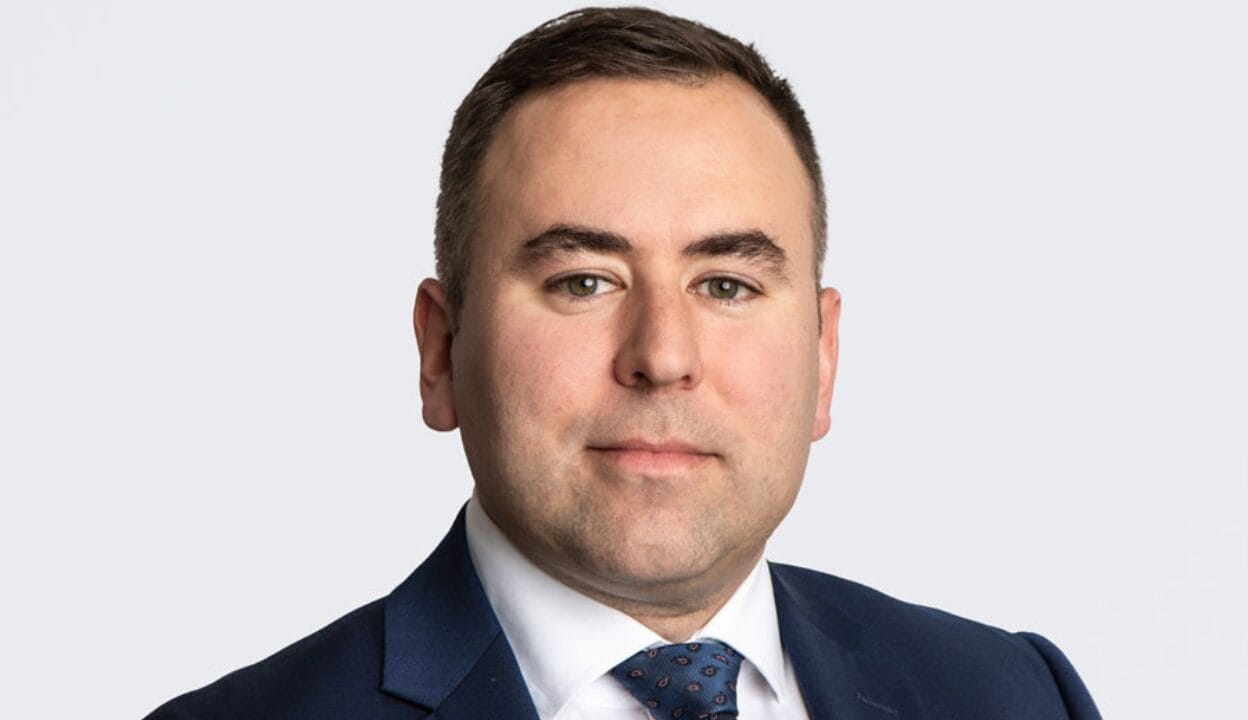

Cost, efficiency and less directs: AIMCo’s CIO spells out new strategy

Efficiency, cost savings and less direct investment in private equity are key tenets of investment strategy at C$182 billion ($133 billion) Alberta Investment Management Corporation (AIMCo) under the leadership of new chief investment officer, Justin Lord.

Lord has been at AIMCo for 14 years, climbing the ladder to lead the public markets division before he was promoted to the helm in July last year, tasked with steadying the ship after a tumultuous 2024 when the provincial government of Alberta terminated the entire 10-member board and its CEO Evan Siddall citing underperformance and rising costs. [See Chaos at AIMCo as politicians take control].

In an interview from AIMCo’s Edmonton offices, Lord tells Top1000funds.com that centralising the investment process has been a key focus in his first six months as CIO, particularly around liquidity management in a quest to boost efficiency across the platform, add value and increase investment performance for the pension funds, endowments and insurers AIMCo serves.

“Sometimes efficiency is the easiest form of alpha,” he says.

Liquidity management supports both efficiency and the ability to allocate capital when attractive opportunities arise, he continues.

Positioning the portfolio

Lord is comfortable with AIMCo’s current liquidity levels in the context of today’s valuations and does not view markets as broadly overvalued. Still, he notes that the rapid evolution of AI presents both significant opportunity and emerging risk, and is an area the investment teams are monitoring closely alongside inflation, geopolitical volatility and trade uncertainty.

Sponsored Content

These risks aside, he believes three main factors will support asset values and markets in 2026.

AI and the proliferation of technology across industries will continue to drive capital expenditure and support growth and earnings expectations in large cap equities; a shift in monetary policy as the Federal Reserve moves to cut rates will impact asset values and fan favourable fiscal and regulatory conditions that support global economic activity.

“These factors – AI, lower rates and favourable fiscal and regulatory conditions – will ensure the continuation of earnings growth, certainly in public equities,” he reflects, adding that tactically, AIMCo remains close to home in its target asset mix.

“Where we see opportunities to deviate from our target asset allocation include infrastructure, pockets of private credit in respect to current credit spreads, and also, to some extent, real estate over the next couple of years.”

Perhaps one of the most significant changes is underway in private equity where AIMCo will increasingly chip away at direct investment in favour of fund and co-investments in a strategy designed to better tap the benefits of collaboration with private equity partners. In 2023, around 36 per cent of the private equity program was in direct and co-investments and around 64 per cent in funds.

Direct investment requires AIMCo’s own due diligence yet leading private equity firms have developed sophisticated operating platforms with expertise in areas like digitisation, supply chain management, AI applications and nurturing talent that help create value in the underlying portfolio companies on the platform, he says.

“Through fund and co-investment, we can tap into GP management capabilities that successfully operate the underlying business.”

Lord believes the diversification benefits of private equity are particularly pronounced today given private equity has underperformed public markets and benchmarks. “We view private equity as a diversified return generator in the portfolio but even more so today given the backdrop of concentration and current valuations in large cap, liquid public markets.”

He’s also bullish on opportunities and returns picking up as liquidity returns to private equity in general.

Like in private equity, he believes private credit represents a significant growth opportunity but given tighter spreads and increased competition, is being selective in this key driver of long-term value.

While other Maple 8 institutions develop a total portfolio approach, Lord explains that AIMCo’s key objective is to meet the management of individual client portfolios. Because each one has a unique and different objective, risk appetite and nuance to consider, it makes TPA challenging.

“If anything, TPA is at a client level at AIMCO where we are focused on portfolio management for individual clients to reflect their circumstances regarding risk, portfolio construction and strategies like rebalancing and hedging,” he says.

Costs were also at the heart of the decision to scale back AIMCo’s international expansion and close recently opened offices in Singapore and New York. [See AIMCo sheds more costs with NYC, Singapore offices the latest casualties]

Lord maintains that AIMCo can provide value to its clients and access to opportunities without boots on the ground in these locations. Offices in Edmonton, Calgary, Toronto and London secure the coverage and access to the curated relationships AIMCo seeks in the US, Europe and Asia, he says.

“A geographical footprint divided between Calgary, Edmonton, Toronto and London is optimal to continue to deliver opportunities.”

He does float the idea, however, of “additional internalisation” of AIMCo’s public markets operations in Alberta and Toronto. London primarily houses private asset class teams.

Lord points to high client satisfaction scores as proof that AIMCo’s investment strategy and refreshed governance is delivering for client funds.

The recent confirmation of former Alberta civil servant Ray Gilmour as CEO is a force of stability rather than symbolic of the asset manager being drawn closer to the government and political pressure.

“With the board and executive positions filled, including the recent announcement of Ray Gilmour’s permanent appointment as our CEO, there is certainly a sense of optimism within the organisation to start the year.”

Lord is also quick to rebuff any suggestion that the asset manager will bow to political pressure to invest more in Alberta: risk and return priorities must be met before investing more in AIMCo’s backyard.

“AIMCo is operationally independent from the government through all aspects of our business. Particularly as it relates to our autonomy over investment decisions which are guided by our internal processes, sound financial principles and our clients’ long-term objectives,” he concludes.

Asset Owner:AIMCo

Leave a Comment

How CPP is evolving risk management for a faster, more interconnected world

How CPP is evolving risk management for a faster, more interconnected world

In an environment where multiple risks are emerging and their effects are compounding on the portfolio, CPP Investments' chief risk officer Priti Singh says the $572 billion fund is rethinking risk management from the ground up, shifting from reaction to preparation and embedding risk thinking earlier in investment decisions. She speaks to Amanda White about the fund's risk approach.

Sort content by

UK fixed income investor PIC ponders the long term risk of government debt

Rob Groves, CIO of the UK's Pension Insurance Corporation, describes a cautious, heavily regulated strategy focused on fixed income. PIC is on the look out for undervalued corporate credit opportunities appearing in the current market, but few opportunities have appeared yet.

Spain’s Pensions Caixa 30: A complex world requires systems leadership

Yolanda Blanch, chair of Spain’s largest corporate pension fund Pensions Caixa 30, explains the importance of fostering an atmosphere of collaboration, communication and trust in pension fund management.

APG’s Wuijster reflects on investing more in defence

APG Asset Management, the largest pension fund provider in Europe, considers the arguments for investing more in defence alongside positioning the portfolio for more impact and infrastructure investment.

Afore SURA: Mexico’s pension fund muscles in on the big deals

CIO Andrew Moreno charts the growth of $60 billion SURA Mexico, which sits on 20 limited partner advisory committees and has helped steer government policies. It is opening the door to strategies that would normally be out of reach for Mexican savers, some of whom only have $5000 in savings.

Mercer global CIO flags ‘crisis of confidence’ in US market

The global CIO overseeing Mercer's $600 billion OCIO unit, Hooman Kaveh, has been advising clients to rethink the role of US assets in their portfolios by diversifying currency base and incorporating more active management. Speaking to Top1000funds.com, he warns of a “crisis of confidence” in the world’s largest capital market.

Previ: How high interest rates put profitability before diversification

Brazil's high interest rates mean the nation's oldest pension fund, Previ, has put profitability before diversification for years. CIO Claudio Goncalves is determined to change that, and is about to green light new allocations to US equity.

Previous



