
Coal pension burns for cash flow

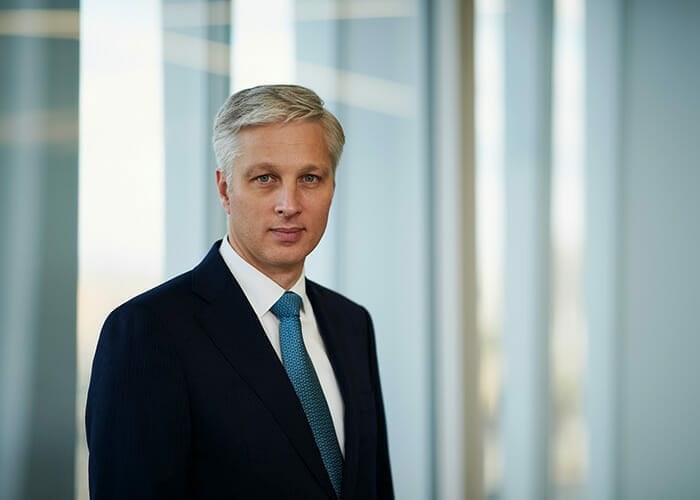
Stefan Dunatov, Chief Investment Officer at Coal Pension Trustees Services, on 18 October 2016 in London, United Kingdom.

Investment strategy at the United Kingdom’s Coal
Continue Reading

A Top1000funds.com subscription unlocks the full article

Join the global institutional investment platform read by the world's largest asset owners, fund managers and consultants.

New here

Create an account

Complimentary to register. We'll verify your details and grant access to the archive, our newsletters and the Asset Owner Directory (enhanced features coming soon).
Register now
Already a member

Sign in

Already activated your account? Sign in to continue reading and access your saved articles, preferences and member-only content.

One response to “Coal pension burns for cash flow”

  1. Is it correct to describe cash flow investments as “illiquid”? This implies they are not as good as investments that are “liquid”. Is that implied judgment prudent for pensions that are investing to generate adequate cash flows, forever, in order to keep their actuarial risk pools properly full and flowing, forever? I understand that liquidity is the raison d’être of securities trading. If you buy something at one price in hopes of selling it at some unknown future point in time to some unknown future buyer for an unknown but hoped-for higher selling price, you certainly do need a liquid market in which to sell. If you invest in enterprise cash flows, directly, in order to generate cash flows sufficient to support good stewardship, indefinitely, how important to that investment is a market-clearing price?

Leave a Comment

Ohio STRS warns of higher US recession risk; prioritises liquidity

Ohio STRS warns of higher US recession risk; prioritises liquidity

The State Teachers Retirement System of Ohio has warned of a “material” increase in US recession risk compared to last year as the fund braces for a wider, “negatively skewed” distribution of outcomes in the next 12 months. It came as the mature plan, which is 81 per cent funded, is tilting to fixed income and new asset classes like liquid alternatives over equities.

Sort content by

CalPERS mulls leverage

The board of the United States’ largest pension fund calls in the experts as it considers applying leverage in its portfolio, part of efforts to improve a 68 per cent liability-funding ratio.

The governance-performance link

Academics at Switzerland’s University of St. Gallen find that governance is positively related to both excess and risk-adjusted net returns but only marginally related to funds’ asset choices.

GPIF, ADIA: complex success

Japan’s GPIF has only recently moved into equities, while ADIA has a rich history of investing in a variety of asset classes. The returns of both giants show the benefits of diversification.

Fund braces for geopolitical risk

SEB has restructured its risk factor portfolio and raised the allocation to senior secure loans within its large alternatives portfolio. The changes address rising global uncertainty.

Sampension seeks more control

As the Danish labour market pension fund puts more into alternatives and illiquid assets, it is also in talks with managers to increase its control over investment decisions and lower its costs.

Allocation changes are optional

The $12.5 billion School Employees Retirement System of Ohio decided realigning its portfolio was a better path to its goals than new asset allocation, CIO Farouki Majeed writes.

Previous



