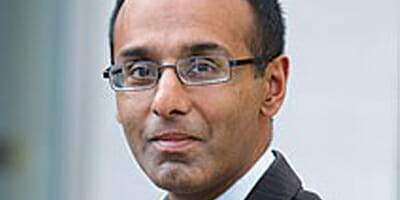

Centrica focuses on dynamic decision making

For the Centrica pension fund, which adopts a liability-matching portfolio approach, last year was busy for appraising new opportunities arising out of the fact banks are no longer lending. This year its focus is on being more dynamic. Amanda White spoke to chief investment officer of the £5.5 billion ($9 billion), Chetan Ghosh.

The Centrica pension fund adopt a liability-driven approach, with a separate hedging portfolio, and growth portfolios which have slight adaptations for the three underlying pension schemes.

Fundamentally, instead of a strategic asset allocation as an investment objective, the investment committee sets a liability-related target.

“We are trying to set the optimal portfolio to best capture forward looking returns anywhere in the world in any market. We are conscious of our risk parameter so all the hedging must bring investments back to permitted boundaries,” Ghosh says. “It’s best ideas adjusted for risk.”

The fund targets excess returns over gilts which must be done within permitted volatility boundaries relative to how gilts move.

The allocations are driven by the best way to achieve return targets and investments are allocated to asset classes on a bottom up basis, aggregating up to percentage holdings in return-seeking and liability-matching, rather than the other way around.

Sponsored Content

At the moment across three schemes 20 per cent is allocated to liability-matching assets and 80 per cent in growth above the risk free.

Last year the fund looked at the top-down philosophical view, which matched with the bottom opportunities, of exploiting opportunities due to the fact banks are not, or can’t, lend anymore.

Some of the investments the fund assessed, and adopted, included mining loyalties, and social housing.

“Both of these played to the bank financing theme. Mining companies can’t get the financing they used to, and in social housing banks have pulled new finance. In liability matching we want long-dated cash-flow generating assets and these fit,” says Ghosh, who was educated at The Kings College, University of London where he received a First in Maths.

Within the growth portfolio bank financing was also a theme with the fund looking at niche, illiquid credit opportunities including direct lending, mezzanine financing and senior loans.

Within equities the fund appointed three new global unconstrained mandates as well as frontier equities and small cap.

The fund outsources all investment, and only has an internal team of three looking after operations and administration, managers monitoring and project research into new asset classes as well as the generation of new ideas.

One of the defining characteristics of its outsourced model is it works closely with managers, both for new ideas, but also to tailor mandates and opportunities.

For example Ghosh and his team have liked the insurance theme for some time, and the fund finally allocated to insurance-linked securities, but after a long search to find the right manager.

“We have liked it for a while but it took us a long time to find the right manager with the right fees,” he says. “We removed the performance fee as we think for that asset class it is not appropriate.”

Forming a network of trusted partners in asset management and banking for the generation of new ideas was one of Ghosh’s first priorities when he came on board in 2009.

“I wanted to build a network of trusted partners in the asset management and banking communities so we were not overly reliant on our consultant,” he says.

“We say the door is open if you have something relevant, but if you abuse that then the door will shut on you,” he says, adding that managers have all had a respectful manner in presenting their ideas.

“The last 10 things we have done have come from the internal team, through this process, rather than from the investment adviser,” he says, adding the consultant, Mercer, is still very much on board.

Since 2009 the governance of the fund has also evolved, with trustees setting liability related objectives. The advantage of this approach, Ghosh says, is that trustees are not in decision paralysis.

The fund has three independents on the investment committee which the team believes makes it easy to process ideas, which the CIO implements.

And there are mechanisms in place to converse between meetings, so that investment decisions can be made quickly.

“In the UK traditional pension schemes haven’t sought to be dynamic, but it is a priority in 2014 to enhance how dynamic we are. We want to focus on taking advantage of extreme valuations of asset classes or sub asset classes,” Ghosh says.


Leave a Comment

How CPP is evolving risk management for a faster, more interconnected world

How CPP is evolving risk management for a faster, more interconnected world

In an environment where multiple risks are emerging and their effects are compounding on the portfolio, CPP Investments' chief risk officer Priti Singh says the $572 billion fund is rethinking risk management from the ground up, shifting from reaction to preparation and embedding risk thinking earlier in investment decisions. She speaks to Amanda White about the fund's risk approach.

Sort content by

West Yorkshire prepares to up the pressure on Shell and BP

A new approach to holding the major oil companies to account will see the West Yorkshire Pension Fund, together with a cohort of other UK and European pension funds, demand BP and Shell explain their business plans in a world of declining demand for fossil fuels.

CalPERS board warned of risks in AI investments including China innovation

An investment banking expert has warned the CalPERS board of the risks inherent in AI, emphasising the importance of investors understanding how their exposure to AI is at risk because of Chinese competitors.

Cost, efficiency and less directs: AIMCo’s CIO spells out new strategy

AIMCo's new CIO Justin Lord explains why he is upbeat about investment opportunities and the fund manager's new governance after a tumultuous few years. Prioritising costs, efficiency and cutting back on direct investments in private equity, he articulates the opportunities ahead including in infrastructure and private credit.

NBIM prioritises trading efficiency, AI and culture in three-year plan

The largest investor in the world, Norges Bank Investment Management, is investing in AI to reduce costs, increase trading efficiency, and make better active decisions. The fund has set out its three-year strategy which also includes focusing on targeting managers with more flexibility to express negative views.

Private equity: Arizona’s ASRS argues the case for secondaries

The $50 billion Arizona State Retirement System is pushing into private equity secondaries, actively looking to invest in stakes being overloaded by other LPs, in a strategy that will complement its co-investments program and SMA investments with external managers. It’s looking for opportunities across the US and Europe.

TIFF plays the long game in venture capital

The $9 billion asset manager for 500 US endowments and foundations, TIFF, is famed for its PE and venture capital allocation. Head of private markets Brendon Parry reflects on his priorities, including navigating the winners and losers of AI, and leaning into independent sponsors and relationships with the best managers.

Previous



