
ATP returns hit again by large allocation to bonds

ATP, the DKK 693.3bn ($102 billion) Danish pension fund returned just 3 per cent in its return seeking allocation in the first half of this year, buoyed by its foreign and Danish equity portfolios but pulled down by rising interest rates negatively impacting the large allocation to bonds.

ATP’s complex portfolio comprises an investment or return seeking portfolio (20 per cent of AUM) and a large hedging program that guarantees pensions for the fund’s five million beneficiaries.

An internal loan from the hedging portfolio gives the investment team more funds to invest while a large part of the interest hedging consists of interest rate swaps which do not tie down liquidity. The high cost of borrowing attributed to its use of leverage also ate into returns, costing the portfolio DKK2.8 billion ($0.41 billion)

Current assets under management are down from DKK 710bn ($105 billion) at the end of the first quarter of this year.

Why risk parity is still important

Portfolio construction in the return seeking allocation is based on risk parity where allocations comprise equity, interest rates, inflation and other risk factors – namely illiquid risk factors and an allocation to long/short hedge funds or alternative risk premiums. The strategy sells itself on an ability to function well in almost any market environment due to the balance between different asset classes.

However, the strategy faired particularly badly in 2022 when the correlation between bonds and equities resulted in the investment portfolio shedding -40.9 per cent, equivalent to 54.5 billion kroner ($7 billion).

Sponsored Content

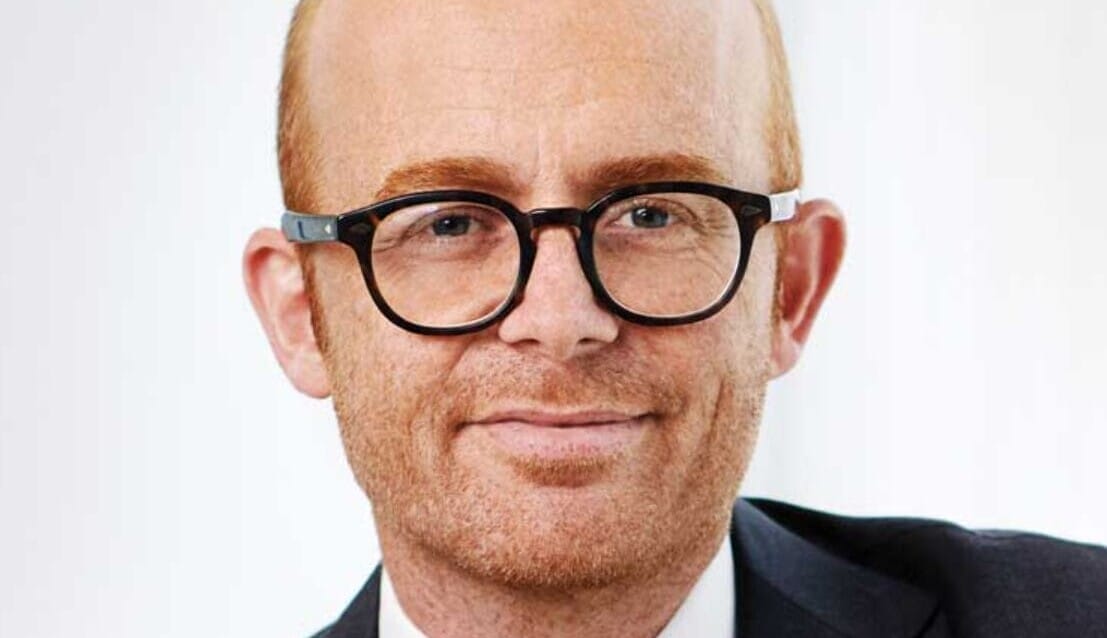
Despite a growing number of questions about the strategy where vocal critics include Jesper Rangvid, Professor of Finance at Copenhagen Business School, ATP’s chief executive Martin Præstegaard told Top1000funds.com that risk parity continues to perform well.

He said ATP remains guided by the fundamental belief that a properly diversified portfolio levered to an acceptable level of risk is the best path to deliver the required expected return over time.

“ATP’s investment strategy for the bonus potential (investment portfolio) differs from market rate products by operating with a higher risk level and a different distribution of risk,” he explained.

He said that ATP has a far more equal distribution between equity and interest rate risk than the traditional market-rate product of other Danish pension funds.

“Overall, this means that ATP performs relatively well when bonds have positive price movements, while ATP performs relatively poorly when equities do very well – precisely because ATP has more bonds and fewer equities in comparison.”

He acknowledged that in the first half of 2024 it has not played to the fund’s advantage to have a high share of interest rate risk in the portfolio. “Inflation fell more slowly than expected in the first half of the year and central banks have therefore been more reluctant to lower interest rates.”

Over the past 10 years, ATP has generated a return of DKK 117bn ($17 billion) in its investment portfolio.

“ATP focuses on creating security in our pensions, and our investment strategy delivers that security year after year,” he said.

ATP is in the process of introducing two new overlay strategies in its investment portfolio to better manage unwelcome correlations between bonds and equities.

New overlays, mostly developed since 2022, will be rolled out through 2024.

In another defence of the strategy, Præstegaard highlighted its low costs.

ATP’s administration activity expenses in H1 2024 totalled DKK 18 per member or 0.03 per cent of the aggregate assets. This is similar to last year and still low in both a Danish and international context.

Asset Owner:ATP

Leave a Comment

The Austin advantage: Texas Teachers talks optimism, innovation and growth

The Austin advantage: Texas Teachers talks optimism, innovation and growth

Jase Auby, TRS's celebrated CIO, explains why TPA doesn't fit with its culture; why community push back on data centres could turn out to be an investor advantage, and argues the case for continuing to invest in fossil fuels. Top1000funds.com sat down with the CIO in his Austin office for an all-encompassing conversation.

Sort content by

Long-term social investment, Milan style

Italy boasts relatively few institutional investors, but the Milan-based Fondazione Cariplo shows that new investing standards can still be set in the home of the renaissance. The €7-billion ($9.3-billion) foundation’s most coveted investment work is its pioneering Italian funds in social housing – an asset area that has been touted in larger markets as an

Full throttle, part time at BP fund

Sally Bridgeland, chief executive of BP Pension Trustees, the £18.5-billion ($28.7 billion) pension fund for employees of one the world’s biggest oil companies, only works part-time. She made the decision after a near-fatal skiing accident when she says her life passed before her. She is BP’s first group leader to do so and is evangelical

Rapid evolution for Spanish fund

Spain is a country of high geographic diversity where barren plains meet lush mountains and quiet old villages dot the landscape between vibrant, majestic cities. Fittingly perhaps, the country’s largest occupational pension investor Fonditel shines out as a highly sophisticated investor among an underdeveloped pension landscape. The €3.9-billion ($5.2-billion) fund – that mostly covers employees

Connecticut fund manager seeks cash flow

United States equities and real estate were the strongest suits at the $26-billion Hartford-based State of Connecticut Retirement Plans and Trust Funds (CRPTF) out of an entire portfolio that posted 11.6 per cent in the fiscal year ending June 2013. Now the manager of Connecticut’s six retirement plans and nine trust funds is developing opportunistic

Oregon State Treasury unwinds and adjusts

Oregon State Treasury, which runs $80 billion worth of state investments including the $62-billion Oregon Public Employees Retirement Fund, is preparing the portfolio for a new dawn. John Skjervem, chief investment officer of the treasury’s investment division, sees the speed and extent of the recent sell-off in fixed income as “a shot across the bow”

M&S fund: a template for de-risking

Deficit and underfunding at the £6.7-billion ($10.4-billion) pension fund for employees of United Kingdom retailer Marks and Spencer had long weighed down one of the high street’s best known names. But a sustained, conservative investment strategy characterised by a “keen focus on risk management” and “an understanding of the scheme’s liabilities” has helped to turn

Previous




