
AP4: Why a dynamic, shorter term allocation is paying off

Volatile markets have provided a rich hunting ground and opportunistic best ideas have come thick and fast for AP4’s new five-pronged global allocation made up of systematic equity, currency and rates, asset allocation, hedge funds/external mandates and analysis. Magdalena Högberg explains the risks and opportunities of the best ideas allocation.

Last year, AP4, the SEK548.2 billion ($56.7 billion) Swedish buffer fund, launched a new global asset allocation to harness its rich internal resources to invest more dynamically and shorter-term.

Since then, volatile markets have provided a rich hunting ground and opportunistic best ideas have come thick and fast for the five-pronged allocation made up of systematic equity (including defensive equity and environmental factor strategies) currency and rates, asset allocation, hedge funds/external mandates and analysis.

For example, higher interest rates have allowed AP4 to switch between equity and rates to various degrees. The team have profited from curve bets in fixed income, taking positions on the curve steepening and flattening at points in the year, as well as around long-end US interest rates moving up and down.

Currencies have provided a rich seam like when the usual correlation between the US dollar and Swedish Krona changed: since January this year the Swedish Krona has appreciated around 5 per cent and 12 per cent against the EUR and USD respectively.

Swedish real estate also threw open a window of opportunity in 2023 (a few months before the new asset allocation was formerly established) when it was hit by negative sentiment that caused a dislocation of the pricing in credit markets.

Sponsored Content

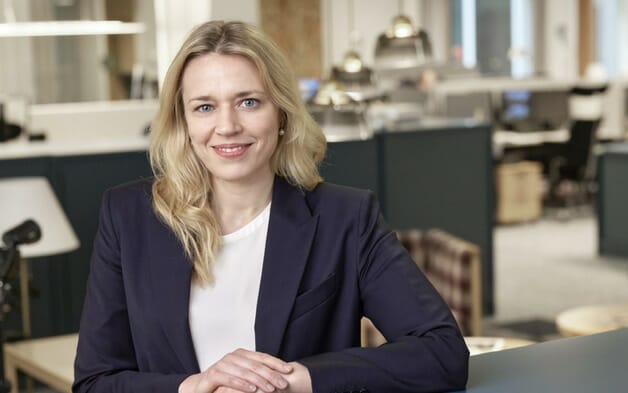
“We reasoned that the expected return in credit would be greater than what we could achieve in equity and sold the equity portion of the portfolio and bought credit instead,” says Magdalena Högberg, head of asset allocation, liquid markets and analysis (ALMA) at AP4 in conversation with Top1000funds.com.

Currencies and rates have provided particularly strong returns, but Högberg says AP4 hasn’t yet revealed first-year returns. Still, although the risk budget is opportunistic and will vary over time, she believes that given what is going on in financial markets, the allocation is coming into its own and she hopes her 20-person team will get more resources as the merger of the AP funds progresses.

The team has covered its open positions and is hiring a quant analyst after the summer.

The mandate captures either relative value trades within an asset class like a best ideas portfolio or takes positions across asset classes where AP4 can provide its long term, patient capital to the market at times of stress, explains Högberg who closely follows similar allocations at peer funds like AP3 and New Zealand Super where a strategic tilting allocation has become one of the investor’s top-performing programs since it was introduced in 2009 contributing approximately NZ$4.6 billion ($4.2 billion) to date.

“The relative value portfolio within the asset allocation mandate provides a way for our internal PMs to add or size up relative value trades,” she explains. “We also complement the idea generation with ideas from a dedicated team of analysts that are supported by our robust internal technical platform to capture the returns from markets behaving in interesting ways, dislocations and/or volatility.”

A typical investment will have a life of between six months to three years. Given AP4’s operational strategic asset allocation is 10 years, these positions are more short-term, but Högberg insists AP4’s edge does not lie in short-term tactical asset allocation and trading. The portfolio is merely dynamic and shaped around a medium-term outlook that takes advantage of cycles.

What are the risks?

The risk of events not playing out to plan is high. Strategies combine a quant fundamental approach with macroeconomic scenario analysis that seeks to map out ways the world could evolve. Positions depend on, say, the Fed lowering rates or inflation being high, and often require catalysts.

Moreover, successful prediction is a tricky business. Witness how although tariffs were widely predicted, the strength of Trump’s policy caught the market unaware.

“Going into April, the risks of tariffs affecting the world in some way we couldn’t foresee was high so we reduced the size of our positions as well as the overall equity risk in the portfolio. After the tariffs were announced we tried to see if the markets had gone too far, and what new positions would be most beneficial to our portfolio,” she recalls.

Another risk lies in hidden correlations. The team looks at positions from standard and statistical risk models to identify patterns to try and ensure positions don’t overly rely on, say, equity going up. Another risk comes from tying-up capital for too long in low conviction trades that utilise the risk budget and could limit dry powder on hand to take advantage of other opportunities that could be more profitable for the portfolio.

“It’s an opportunistic portfolio, so you need dry powder to step in when you see something enticing from a risk reward perceptive. We have to make sure that we have the best ideas available to us in the portfolio,” she says.

Developing an internal quantitative platform

The team has developed an internal quantitative platform that it uses for decision making based on statistics as well as time series modelling that incorporates views, and updates the models as new information arrives in the market. Specific models, or signals, also seek to incorporate things in the macro-economic environment like a spike in recession risk or signals that flag comparisons with other types of market environments.

“The quantitative platform and signals are not something we use to automatically take positions on. It’s more of an idea generation feature that identifies interesting deviations from fair value that we can analyse from a more fundamental perspective,” she says.

The model is also evolving. For example, the platform now complements time series models with one-country models, and the team is incorporating more currency models with a focus on combining long-term models like fair value using purchasing parity with short-term single country models where the team can capture other things driving returns to capture carry signals in emerging markets.

“We want to be more dynamic at identifying the regimes currencies sit within,” she says, explaining that multiple drivers influence currency markets from speculators and corporate hedging strategies to interest rate differentials or geopolitical risk. “The AP4 team has spent a lot of time on developing new, more fast-moving modules for G10 currencies and we are are now looking at ways to better trade emerging market currencies and capture signals in emerging markets.”

Asset Owner:AP Fonden 4 (AP4)

Leave a Comment

How CPP is evolving risk management for a faster, more interconnected world

How CPP is evolving risk management for a faster, more interconnected world

In an environment where multiple risks are emerging and their effects are compounding on the portfolio, CPP Investments' chief risk officer Priti Singh says the $572 billion fund is rethinking risk management from the ground up, shifting from reaction to preparation and embedding risk thinking earlier in investment decisions. She speaks to Amanda White about the fund's risk approach.

Sort content by

Dutch fund tackles the cost and time of shifting to DC

The clock is ticking for Dutch fund PWRI to transition to a new DC scheme in line with pension reform. Imke Hollander explains why the pension fund is unlikely to invest more in risk assets and flags mounting costs in the transition, particularly in fees paid to advisors.

LACERA adds downside protection as equity markets look unsustainable

The $77 billion LACERA has positioned for the downside, launching a new asset allocation that pivots towards diversification and downside risk, adding to hedge funds and investment grade bonds. Top1000funds.com talks to CIO, Jonathan Grabel.

Giants APG and GPIF collaborate on infra

Two of the biggest pension funds in the world, the Dutch APG and Japan’s GPIF, have joined forces to invest in large scale infrastructure deals. The move comes as APG Asia head Thijs Aaten says he envisages more than half of the fund’s real assets will be in Asia.

CalSTRS’ sustainability strategy: Net zero and investing in opportunities

CalSTRS’ net zero strategy has provided a new level of focus and anchor for the 220-person investment team. Kirsty Jenkinson, investment director for the sustainable investment and stewardship strategies at the fund, explains its evolution including integrating climate scenarios into its asset liability modelling study.

Denmark’s PenSam introduces new climate index to solve tech tilt

A new climate index at Danish investor PenSam aims to solve the overweight to tech stocks, a common problem for sustainable investors give the sector is low emitting and solving many of the challenges of climate change.

TfL explains why hedge funds provide essential diversification

Padmesh Shukla, chief investment officer of the £14 billion Transport for London Pension Fund explains why he believes hedge funds are a crucial element to a diversified portfolio.

Previous



