

Alecta, Sweden’s largest occupational pension provider, will celebrate its centenary next year. Through the years the SEK730 billion ($89 billion) fund has witnessed every type of investment idea and decades of bull and bear markets. It’s a perspective that has come to inform a strategy centred on the old-fashioned idea of buying carefully selected, quality investments.
The Stockholm-based fund, which manages pension assets for 2.3 million individuals and 33,000 corporate clients from across Sweden, abandoned index-heavy investment management a decade ago.
It doesn’t really invest in funds or alternatives and doesn’t use any managers in equity or fixed income; and only a handful in real estate, but that is changing.
It opts instead for a Sweden-centric, active, in-house strategy where just under half the assets are in interest bearing investments – half of which are in Sweden – with the remainder split between a 42 per cent allocation to shares and a 9 per cent allocation to real estate. Keeping it simple, and costs low, are central themes.
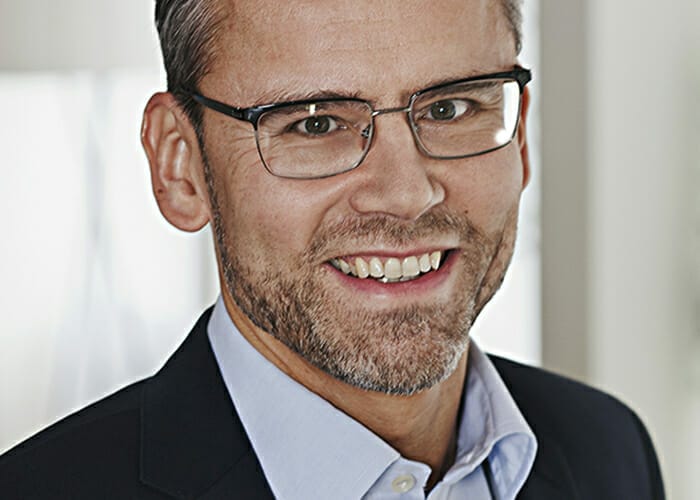
“We believe that market prices are not always efficient and that an active, or selective, investment approach pays off over time,” explains Per Frennberg, deputy chief executive officer and head of investment management at the fund. He holds a PhD in finance from Lund University and began his journey at Alecta 21 years ago.
“It also reduces risk if you have scrutinised each investment before you enter [into] it. It’s about consistency, accountability and, of course, cost efficiency. We want to be accountable for every individual investment; and we also have high ambitions when it comes to ethics and sustainability; and want that integrated in our investment process. With our size, the economies of scale are tremendous.”
The fund has internal costs of less than 3 basis points of assets under management.
At the end of 2015, Alecta had just over 100 listed companies in the portfolio, in often substantial holdings, in a concentration that allows the deep analysis and effective monitoring Frennberg seeks.
“As a very large investor we have almost a duty to be capable of valuing every investment we consider. If we can’t, who can? When it comes to the depth of our analysis, it’s not so much about digging very deep into the accounting, or doing extensive industry analysis. It’s more about having a consistent approach with a standardised checklist ultimately combined with personal judgement,” he says.
High level of scrutiny
The fund recently increased its exposure to US equities, with American companies now amounting to 24 per cent of the total share portfolio; with 40 per cent in Swedish companies. Alecta’s level of scrutiny does limit the fund’s investment universe, simply because of the depth of research required.
“It is not so much a limit as to where we can invest, but rather how many potential new investments we can consider over a year,” he says.
“We have no predetermined huge allocation to Swedish assets. If we couldn’t find interesting opportunities in Sweden we wouldn’t invest here. As we grow it’s quite likely that the share of domestic assets will go down gradually. The benefits are that we usually get better informed on Swedish assets which improves the results over time, but also to some extent that we invest in the future of the society where our clients operate and live.”
It’s a sense of duty as a responsible owner that drives Alecta’s increasingly prominent environmental, corporate and social governance strategy. All investments are confined to companies that follow international conventions which Sweden has joined.
“Our focus is not so much on excluding but rather on what to avoid – bad management, outdated business models and so on – and constructive dialogue with companies in the case of environmental, corporate and social governance-related issues,” Frennberg says.
A key aim of 2016 is to vote at the annual general meetings of all of the companies in the portfolio.
Airports boost Alecta’s domestic real estate
The thread to streamline and create economies of scale that runs through the fund is behind Alecta’s recent decision to sell its entire UK and US direct real estate allocations.
The real estate portfolio had been divided between a 50 per cent allocation to Swedish real estate with the remainder in the US and UK.
“We want to reduce our operational risks and to further trim our cost efficiency,” Frennberg says. “These allocations were a small part of Alecta, despite being successful. We reached a critical point whether to keep it, or not, and real estate markets are strong at the moment.”
He says “lots of people” are interested in the 42 assets split between both countries. The indirect real estate allocations Alecta is holding on to comprise joint ventures and fund and company structures. The reason they are not being sold is easy to guess: “They are more cost efficient,” Frennberg says.
Alecta’s domestic real estate was boosted last year with the acquisition of some 20 airport properties via a company jointly-owned by Alecta and Swedavia, a state-owned airport operator. All Alecta’s directly-owned Swedish properties, including Alecta’s head office, are powered from renewables.
About 90 per cent of the fund’s assets are in a defined benefit plan, with the remainder in a smaller, but growing, defined contribution scheme.
The portfolio returned 5.9 per cent last year with an average annual return for the past five years of 7.4 per cent. With a solvency level of 171 per cent at the end of 2015, Frennberg is in a comfortable position ahead of next year’s celebrations in March.
“It will be a modest celebration; low cost. It won’t be like a bank would celebrate a centenary – although we have more capital.”








Leave a Comment
You must be logged in to post a comment.
Login