
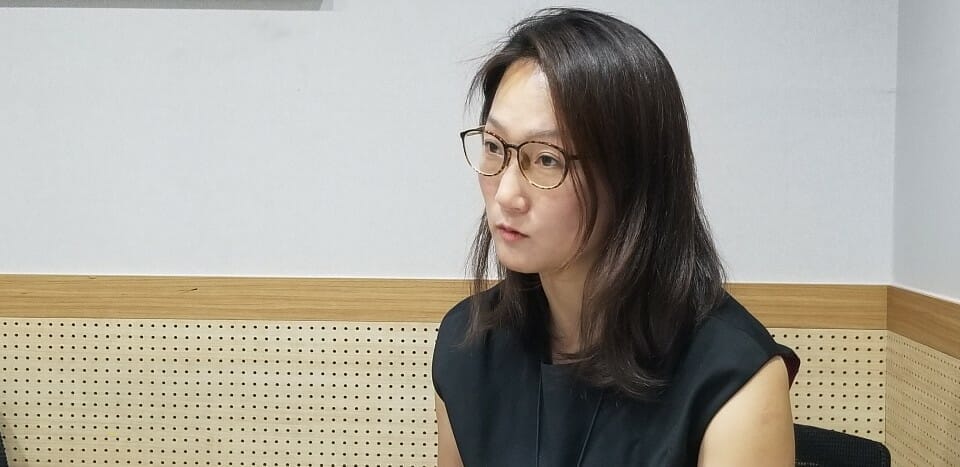

“It was a painful process,” says Yoo Kyung Park, head of responsible investment and governance for APAC at APG Asset Management, recalling the largest pension provider in the Netherland’s bruising engagement and ultimate decision to divest from South Korea’s state-owned utility Korea Electricity Power Company (KEPCO).
“Our hope was that if we could change KEPCO even slightly, we would have an impact on South Korea’s scope 2 emissions. But engagement wasn’t going anywhere, and we could no longer call ourselves a responsible investor by continuing to hold shares in the company.”
Unable to make any progress engaging the monopoly owner of the majority of South Korea’s 50-odd coal-fired power plants to limit and exit overseas coal and fossil fuel exposure; disclose its own emissions, or put in place emission reduction targets, APG sold its last remaining share in the company earlier this year, already whittled down from an original $138 million stake. The final trigger was KEPCO’s decision to go ahead with the construction of new coal-fired power plants in Indonesia and Vietnam, says Park in an interview from APG’s Hong Kong office.
Her experience offers an illuminating window into the challenges and frustration of engaging with companies unwilling to change in an attitude she links to KEPCO’s state-ownership and the absence of what she calls any “commercial sense” of the climate emergency.
KEPCO’s senior management is constantly replaced resulting in short CEO tenures that prevent any accountability or governance structure for investors to grip.
She found board members at the utility and its subsidiaries unclear of their role, while investor relations teams never passed on APG’s calls for engagement. Requests to meet KEPCO’s CEO, board members and the audit committee (important because APG wanted to see how the company was factoring in risks including carbon pricing and stranded assets into its financials) all fell on deaf ears. Four letters to the CEO and chairman went unanswered, as did any number of emails.
The only long-standing and enduring figurehead at the company was the government, yet Park says it was never wholly clear which government department was responsible for the company. Calls for engagement with 20 different government ministries were all ignored.
“We just hoped that someone would pick up” she says, describing a lack of response that runs counter to President Moon Jae-in’s public espousing of South Korea’s commitment to reduce carbon emissions and show climate leadership.
“We found the part of the government linked to KEPCO ownership doing something very different to the public face; there were different signals depending on which part of government you spoke to.”
APG wasn’t working alone. In a two-pronged approach Park worked on her own and with other investors including Sumitomo Mitsui Trust Asset Management, Church Commissioners for England and Legal and General Investment Management under the Climate Action 100+ umbrella.
Here engagement priorities included putting pressure on KEPCO to limit and exit overseas coal and fossil fuel exposure and disclose its emissions reduction targets with a detailed breakdown of emissions at parent level and from its independent power producers. Other requests included aligning KEPCO’s corporate disclosure with TCFD recommendations and raising emissions reduction targets beyond South Korea’s Nationally Determined Contribution (NDC)
South Korea’s own institutional investors were notably absent from the fight, says Park. South Korea’s $783 billion National Pension Service, which has an estimated 7 per cent stake in KEPCO, is governed by laws that make engagement hard, she says. Additionally, the so-called 5 per cent rule which stops asset owners which collectively own more than 5 per cent of a company’s shares from acting in concert, stalls collective action.
Elsewhere, she observes a cultural resistance to engage.
“In the Netherlands, asset owners that are not active on responsible investment issues will be criticised by society at large. In Asian culture, asset owners don’t want to be seen as too active.”
Moreover, exposure to KEPCO provides sought-after exposure to one of the South Korea’s few, sizeable, defensive companies.
However, she is encouraged by the work Korea’s National Pension Service is doing with local asset managers.
“They are working behind the curtain, tightening their brief with local asset managers around ESG, and whatever they do, will have a big impact on the whole market.” In its latest (2020) annual report, NPS writes that its FMC (Fund Management Committee) had decided to “exit from coal finance to reduce carbon emissions.”
Continuing, “NPS will stop investing in the construction of new coal power plants at home and abroad and plans to establish phased implementation measures as a preparation stage to apply negative screening.” The pension plan has commissioned a study to gather stakeholder opinion to guide implementation.
APG’s KEPCO saga is in marked contrast with her experience engaging with South Korea’s chaebol, the large business conglomerates controlled by founding families like Samsung.
“At least chaebol have one person responsible, and they will be there for ever,” she says. For example, APG’s engagement with SK Innovation, a sprawling holding company with a refining and petrochemicals arm, began from a low base four years ago at the same time as its engagement with KEPCO.
“SK Innovation pushed back, saying they understood what we were saying, but that it was difficult for them to incorporate a carbon strategy because it would affect their main business of refining,” she recalls.
Today the company has a climate strategy, emission reduction targets and management buy-in. “We were able to engage with the long-standing owner of the business. He cared about his reputation, and because the owner of the company moved on climate all the other executives had to buy in. It’s really a governance issue.”








Leave a Comment
You must be logged in to post a comment.
Login