CPP most transparent fund: GPTB

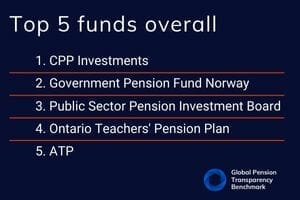
CPP Investments has topped the list of the most transparent funds according to the Global Pension Transparency Benchmark, which has revealed the scores of the 75 underlying funds from 15 countries for the first time.

The GPTB, a collaboration between Top1000funds.com and CEM Benchmarking, measures the transparency of disclosures of 15 pension systems across the value generating measures of cost, governance, performance and responsible investments.

The scores for the countries are amassed by looking at the largest five asset owners in each country. The scores of these asset owners have been revealed for the first time.

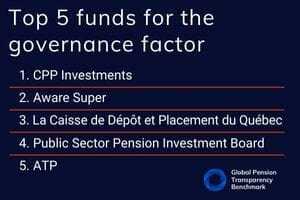
CPP Investments emerged with the best score overall and also the best score for governance disclosures.

Three Canadian funds featured in the top five of the best overall funds. Canada also topped the country list in 2022 for the second year in a row.

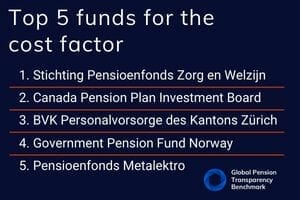
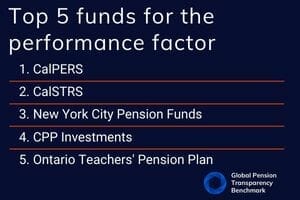
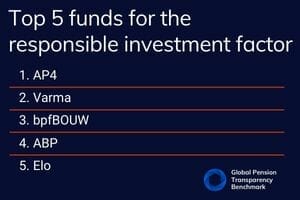
The Dutch fund, Stichting Pensioenfonds Zorg en Welzijn (PFZW), topped the list for cost; CalPERS for performance; and Sweden’s AP4 was the best fund for transparency of disclosures related to responsible investment.

Sponsored Content

The GPTB provides an insight into the disclosure practices of asset owners around the world with a focus on transparency.

The Global Pension Transparency Benchmark is a world first global standard for pension disclosure, bringing a focus to transparency in a bid to improve pension outcomes for members.

Revealing the underlying fund scores aims to focus on best practice and encourage improvement on transparency of disclosures.

Head of business development at CEM Benchmarking, Mike Heale, says transparency is the right thing to do and the smart thing to do.

“Congratulations to the top-ranking funds on the GPTB for leading the way on transparency and communication quality,” he says.

The top five funds overall and by factor are listed below and the full list with search functionality can be found here.

Click here for analysis of all the country results.


The GPTB measures whether pension organisations are disclosing what they do and how they are generating value for stakeholders clearly, completely, and concisely. Disclosures continue to be scored across four equally weighted factors: cost, governance, performance, and responsible investing, with more than 10,000 data points analysed across the 15 countries and 75 funds.

Click here for the full methodology.

 

Leave a Comment

CPP Investments, NBIM reflect on lessons from a 5-year transparency journey

CPP Investments, NBIM reflect on lessons from a 5-year transparency journey

The Global Pension Transparency Benchmark has been a driving force in improved transparency of disclosures and reporting among global asset owners. As the project comes to its close after five years, two leading funds reflect on why transparency has been a clear focus for their organisations. 

Sort content by

GPTB highlights transparency gaps

The Global Pension Transparency Benchmark has revealed the need for serious improvement in pension transparency across the globe.

Benchmark will help build trust

Transparency is an important link in improving pension delivery, and the Global Pension Transparency Benchmark will help lift transparency standards and ultimately trust in pension institutions, according to its advisory board.

Pension transparency needs a benchmark

A new Global Pension Transparency Benchmark – the first formal collaboration between Top1000funds.com and CEM Benchmarking - will launch in February 2021 ranking countries, via their underlying pension funds, on four factors: governance and organization; performance; costs; and responsible investing.

Asset owners report half of all costs

Asset owners are reporting only half of their true total costs according to analysis by CEM Benchmarking exclusively for Top1000funds.com. This means tens of billions of dollars across the industry is not being reported. The authors look at case studies and make suggestions for industry best practice.

Canadians more complex than first glance

The Canadian model, revered world over for its supreme pension management, is not low cost despite that being one of its oft-described traits. New research by CEM Benchmarking and McGill University shows that these funds are cost efficient, rather than being low cost. Their aim is to be high net performers, not low cost.

What past market crashes teach us

Looking back at the portfolios of large institutional investors during and after the dot.com crash and the GFC, CEM Benchmarking, reveals commonality in the portfolios that thrived. For both events the top quartile returns were more than 2 per cent higher than the bottom quartile. Analysing the asset allocation and behaviour of investors showed two clear themes: top quartile performers had more defensive allocations pre-crash; and rebalancing is a tailwind for performance.