
Allocation changes are optional

Farouki Majeed

Having recently concluded an asset liability review that lasted several months, I recommended to our board that the current policy allocation be retained without changes. Our consultant concurred and the board agreed. During my 25 years in this business, this is the first time I can recall that the asset allocation remained unchanged following the periodic review.

There is always a temptation to make changes to produce a new and improved asset allocation, even though the benefit may be negligible or marginal at best. In fact, in my prior assignment at CalPERS, we found that retaining the 1993 policy through 2010 would have produced a higher return and lower risk than the actual policy, with all the changes, during that period.

Our goals for the recent asset allocation review were as follows:

  1. Increase the risk diversification of the portfolio
  2. Increase the yield component of the returns
  3. Reduce costs
  4. Reduce the downside risk to the funding ratio
  5. Avoid unnecessary complexity.

While we knew it would be difficult to achieve all five, we wanted to accomplish as many as possible.

Weighing the pros and cons

The School Employees Retirement System of Ohio is a $12.5 billion defined benefit public pension fund. The level of risk in our portfolio, as measured by standard deviation within the mean variance framework, seemed appropriate for the long-term funding goals. However, in the current environment, the expected return at this risk level is lower than the fund’s actuarial interest rate. Increasing the risk of the portfolio to reach for a higher return was not prudent, as it also would have increased the downside risk to the funding ratio. Lowering the risk was not an option either, as even lower expected returns would diminish funding progress. Therefore, staying at the current risk level seemed appropriate.

Sponsored Content

Next, we asked whether a mix of alternative assets could produce a higher expected return at the preferred risk level. Our consultant generated some alternatives with higher returns, between 10 and 30 basis points, with marginal increases in the Sharpe ratios.

To generate this higher return, the consultant included niche assets such as high-yield bonds, emerging-market debt and master limited partnerships with highly constrained allocations to each. In the end, the higher return and higher yield came with higher complexity and less risk diversification, as these assets are all equity-like in their risk characteristics. Also, we didn’t believe they would play a distinctive enough role in the portfolio to qualify as a strategic asset class. We do have exposure to these investments within broader asset classes, but not as a policy allocation.

Because the return assumption has the greatest margin for error, our conviction on these marginal return increases was low. We have higher conviction in the volatility estimate than the return estimate. Deploying new money into these assets at current high valuations in this late-cycle phase was too risky. So aiming for the marginal increase in returns was not worthwhile.

There are two risk-diversifying assets in our mix: fixed income and hedge funds. Hedge funds are a part of our Multi Asset Strategies (MAS) portfolio. Fixed income and MAS have risk contributions that are lower than their weights in the portfolio. All the other assets – public equities, private equity and real assets – are growth oriented, have risk characteristics similar to equities, and have risk contributions that are higher than their weight in the portfolio.

Increasing the fixed income allocation in this environment of rising rates and low expected returns was not promising. Another option was to reduce the 10 per cent allocation to MAS because of its higher fees, but the downside was that we would lose its risk-diversification benefits. In addition, the MAS portfolio has higher net returns than fixed income, with similar volatility. Retaining the MAS allocation improved the efficiency of the portfolio.

Same allocation policy, better efficiency

After assessing all of this information, we decided to keep our existing asset allocation for now. We’ll continue to review it annually; however, we believe we can try to achieve some of our goals by improving the efficiency of the structures within the strategic asset classes.

We are continuing to realign our MAS portfolio by including low-fee options, such as dynamic risk parity and specific liquid alts, without reducing its diversification benefit. Fees are now 1.4 per cent and 17 per cent for the MAS portfolio and we believe we can go lower. We have modified our fixed income structure to include a separate US Treasuries portfolio that can serve as a risk hedge in a market downturn. Allocations to private credit as an opportunistic strategy outside of our policy portfolio also have produced a higher yield than traditional bonds.

I believe we are achieving some of our goals without changing the allocation policy, through better portfolio construction. In this process, we are focusing on defining the role of each strategic asset class in the total fund and aligning the structure with the role. For example, MAS is meant to be a risk diversifier and to generate higher returns than fixed income with similar or lower risk. Our ultimate goal is to refine portfolio construction and management to deliver enhancements when the policy asset allocation may have reached an optimal plateau.

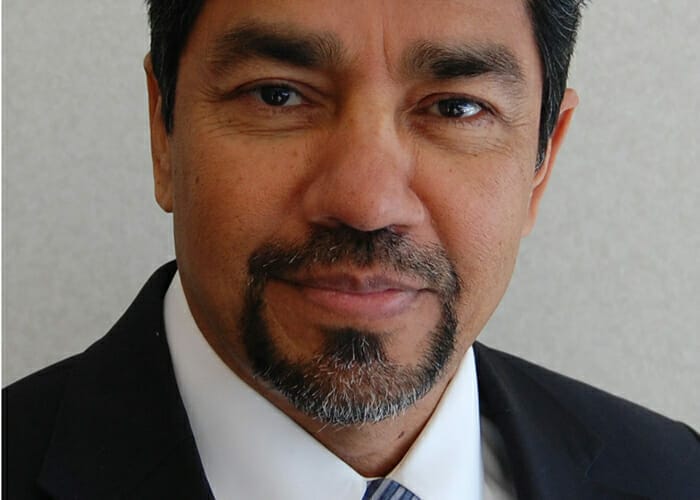
Farouki Majeed is the chief investment officer of the School Employees Retirement System of Ohio.

Leave a Comment

Long term lens shields Colorado from private credit jitters

Long term lens shields Colorado from private credit jitters

As concerns in private credit mount, Colorado PERA CIO and COO Amy McGarrity says the pension fund isn’t seeing any strains in its growing allocation to the asset class, arguing that long-term investors are shielded from the risks because they can lock up their capital to weather market cycles.

Sort content by

Maryland’s record year prompts actuarial rate reduction

Maryland State Retirement  and Pension System is the latest fund to record an historical performance for the 2021 financial year, returning a best ever 26.7 per cent. Again public and private equities were the star performers with an exceptional 51.85 per cent return in private equity and 44.54 per cent in public equities  But in recognition there might be a bill to pay for those higher returns in the future the fund has lowered its actuarial rate of return.

POBA performance reflected in funding level

The $15 billion fund for Korean public officials, POBA, has reached new heights including a diversified, resilient portfolio, full funding and a stellar return due to a global alternatives program. Amanda White spoke to CIO Dong Hun Jang.

Future Fund adds risk and generates best-ever return

The Future Fund, Australia’s A$196.8 billion sovereign wealth fund raised its risk profile in the year to June 30, resulting in the fund’s best-ever one-year result of 22.2 per cent.

CalPERS’ new asset allocation to take on more risk

The largest pension fund in the United States, the $469 billion CalPERS, is in the middle of an asset liability modelling exercise to set a new asset allocation by June 2022. Chief executive Marcie Frost says it’s the most significant decision the board makes with regard to the investment portfolio and that achieving a return target of 6.8 per will require “pushing everyone’s risk appetite”.

CalPERS reduces equities universe

In the first story of an exclusive series examining investment portfolio innovation at CalPERS, Amanda White looks at the global equities portfolio where the universe of stocks was recently halved.

APG positions for a digital future

APG, the biggest pension provider in Europe, is positioning itself as a digital pioneer with investment in the large-scale use of data, workflow automation and digital analytical platforms. A leader in funds management, most notably sustainability, it is once again a frontrunner by embracing technology.

Previous



