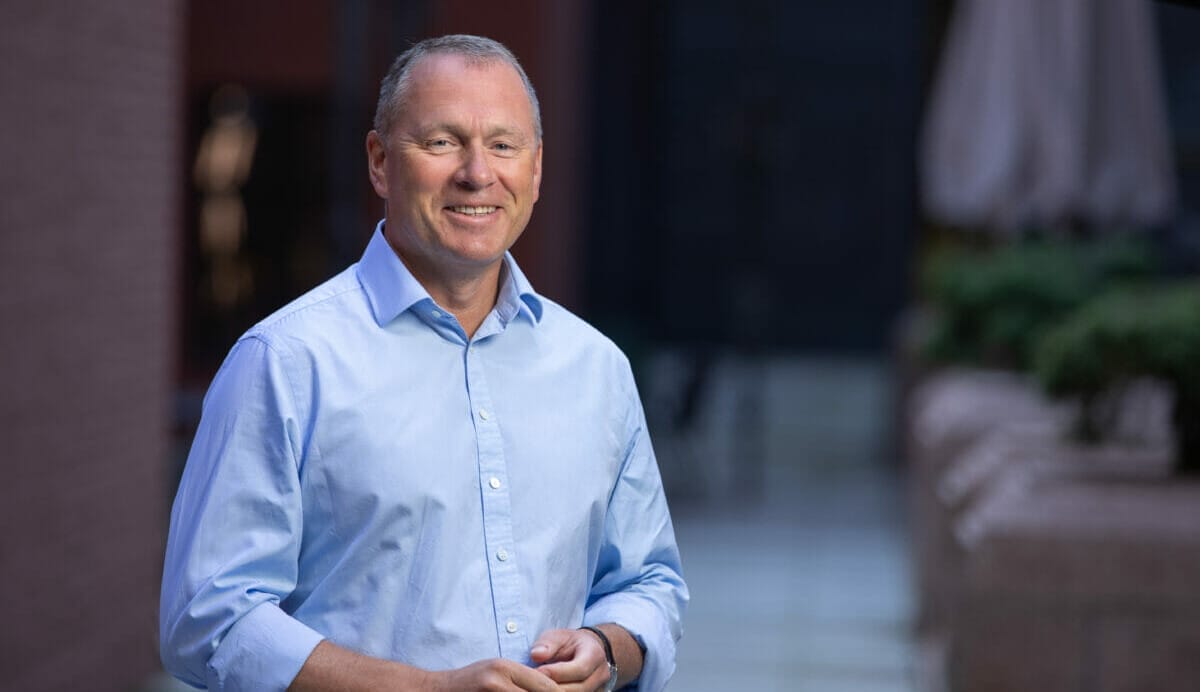

Why Norges Bank leads the world in transparency

Nicolai Tangen

When Top1000funds.com interviewed Nicolai Tangen i
Continue Reading

A Top1000funds.com subscription unlocks the full article

Join the global institutional investment platform read by the world's largest asset owners, fund managers and consultants.

New here

Create an account

Complimentary to register. We'll verify your details and grant access to the archive, our newsletters and the Asset Owner Directory (enhanced features coming soon).
Register now
Already a member

Sign in

Already activated your account? Sign in to continue reading and access your saved articles, preferences and member-only content.

One response to “Why Norges Bank leads the world in transparency”

  1. Mike Clark

    Well yes, they are very transparent. Good.

    But I am afraid they do not always benefit from the advice their transparency permits.

    Please have a look at those very modest return reductions in thier climate scenario work. Climate scientists do not know whether to laugh or cry.

    So far Norges have been deeply resistent to any engagement (even pro bono!) on this issue. Sad.

Leave a Comment

CalPERS’ private markets chief: TPA won’t disrupt PE commitment pacing

CalPERS’ private markets chief: TPA won’t disrupt PE commitment pacing

Anton Orlich, CalPERS' newly minted deputy chief investment officer for private markets, says the fund’s July adoption of the total portfolio approach will not impede the private equity strategy launched in 2022, arguing that short-term relative-value calls made under TPA would be expressed in liquid markets and not by oscillating commitments to private markets. In an interview with Top1000funds.com, Orlich unpacks the asset class’s four-year transformation.

Sort content by

Liquid asset: Investing in water is good for returns, good for the planet

Water is a finite and scarce commodity, and institutional asset owners have a big part to play in ensuring the long-term conservation and management of water resources – not only for their direct beneficiaries, but also for the long-term good of the planet and future generations.

Utah’s URS: Why fossil fuels and alt energy hold key to climate crisis

US public funds should stop wasting time on thinly veiled political activism, ditch ESG conferences and repurpose most of their sustainability staff, says URS’ CIO John Skjervem. Instead they should invest in proven energy investments and move from either/or to both/and which allows fossil fuels to jostle alongside alt energy.

Transition risks of net zero

The transition to net zero is well underway, but i Continue Reading A Top1000funds.com subscription unlocks the full article Join the global institutional investment platform read by the world's largest asset owners, fund managers and consultants. New here Create an account Complimentary to register. We'll verify your details and grant access to the archive, our

Net-Zero Asset Owner Alliance chair calls for more action from governments

Five years after signing up to net zero, climate-conscious asset owners have a message for governments: act now, or put global prosperity at risk. As policymakers, investors and climate action advocates descend on NYC for Climate Week, chair of the Net-Zero Asset Owner Alliance, Günther Thallinger, reflects on the progress.

CFA’s tools for tackling net zero provoke investing infrastructure re-think

Foundational research by CFA Institute aims to prompt the best minds in the asset management and asset owner communities to consider how to better consider climate risk. Institute chief executive Marg Franklin says governance, organisational design and systems thinking will be core elements of how the industry evolves its thinking and

Synthetic biology can save us – if it gets the capital it needs

In years gone by, governments underwrote the development of new technologies before opening the doors to the private sector to exploit the applications. Today, the private sector is the primary source of R&D funding, and foundational research in technologies such as biotech are struggling to attract capital.

Previous



