
Under-priced climate risk plagues pension portfolios

Climate risk remains systematically under-priced, the world isn’t on course to meet net zero and investors must prepare for the risks of climate and environmental change.

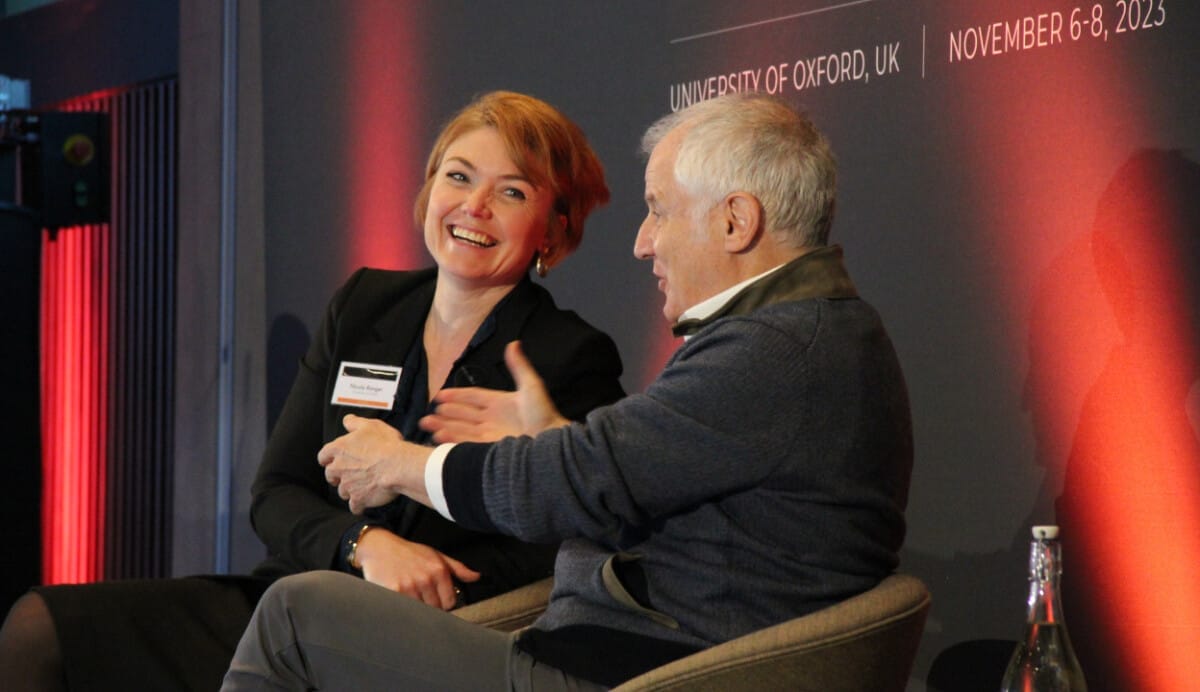
So warned Nicola Ranger, executive director of the Oxford Martin Programme on Systemic Resilience and a senior research fellow at the Institute for New Economic Thinking at Oxford Martin School, opening the second day of Sustainability in Practice at the University of Oxford. She said that climate risks are coming thick and fast, with a direct impact on assets, labour productivity, patterns in demand, supply chains and markets.

Ranger urged asset owners to re-evaluate climate risk and bring this analysis into their decision-making. For example, few asset owners report on the physical risk of climate change in their portfolio.

“Not managing this risk means the wider economy is not getting the economic signals it needs to create changes. Financial institutions need to price risk properly, and signal to the wider economy that it needs to adapt.”

If governments and countries meet all their pledges, she predicted global warming could be capped at 1.8 degrees, below the threshold for catastrophic tipping points. But she also described a much more pessimistic view based on progress to date and the fact global emissions keep climbing and still haven’t peaked. “We are not on course.”

The risks of climate change are already visible. For example, high temperatures is causing deaths, disrupting transport networks and leading to floods and drought as rainfall patterns change, impacting agricultural systems. She flagged implications for water-dependent industries and big increases in volatility of commodity prices. “Sixty percent of our food comes from five countries,” she said, predicting shocks to supply chains and impact on sovereign credit ratings.

Sponsored Content

Investors have a role to mobilize finance across geographies, countries, sectors, infrastructure and agriculture. But she warned that many investment decisions are not building resilience. For example, new infrastructure investment doesn’t always consider climate-related risk. “We are still building physical infrastructure that economies depend on, but we are not doing it in a way that is considering climate risk, risking both investors and society,” she said. Similarly, she flagged the much of the estimated annual $6 trillion invested in agriculture doesn’t consider future climate risks.

Ranger urged asset owners to take a holistic approach to managing risk and align their portfolios with resilience. They should ensure they “do no harm” and manage risk in their own portfolio to ensure it doesn’t create risks for society. For example, she said water companies have a significant impact on water scarcity.  Elsewhere she noted that data centres are exposed to climate risk like heat, and they are also water dependent. Adaption can bring returns from investing in new technology, but adaptation also incurs long term costs. For example, retrofitting buildings requires upfront investment.

“We, as a society, are mismanaging climate risk. We are putting insufficient emphasis on our safety and not properly valuing the impact of climate change or logging or exploitation of the soil. Many things doing that are impacting environment that are impacting on us.”

Leave a Comment

CalPERS’ public and private equity reset shapes performance

CalPERS’ public and private equity reset shapes performance

CalPERS is continuing to reap the benefits of a sweeping overhaul of its public and private equity programs, with the two asset classes, which are the biggest components in the portfolio, powering a 14.8 per cent return for the $637 billion fund in the last reporting period.

Sort content by

How UK’s LGPS still has a long way to go creating a Canadian model

The UK’s new Chancellor of the Exchequer Rachel Reeves just returned from a trip to Toronto where was gleaning ideas from Maple 8 bosses on how to emulate a “Canadian style” pension model. But it will require a governance overhaul to create a Maple 8 in the UK.

Vale Greg Bright, father of Australia’s financial trade press

Veteran journalist, publisher and entrepreneur Greg Bright has died aged 70. Bright was a founder of Conexus Financial, publisher of Investment Magazine, Professional Planner and Top1000funds.com. He also created and managed a range of other titles in a career spanning more than four decades.

Ever wondered what it’s like to experience a global FIS event?

For 15 years we have been hosting asset owners from all over the world on leading university campuses, giving delegates an immersive educational experience and challenging them to think bigger. Check out this video for a taste of this unique experience.

NBIM transparently explains half year results

The semi annual report of Norway’s sovereign wealth fund is testament to its commitment to transparency, unambiguously outlining the half year results which came in 0.04% under benchmark. The fund did benefit from a nearly 15% exposure to tech stocks, but was let down by returns in renewable energy infrastructure.

Better performance and alignment of purpose: The benefits of TPA

A total portfolio approach aligns investment implementation with the purpose of being a fiduciary, rather than short term or relative performance. Not only that, there is huge upside performance from the approach, the source of which is not what you might think according to Sue Brake.

How the tech surge has hit active management at Denmark’s AP Pension

The active equity strategy of Denmark’s €23 billion AP Pension – which focuses on a narrow exposure to a small set of high conviction, quality companies - has been hit by the surge in tech stocks, none more so than Nvidia. Investment director Pernille Jessen explains the problem.

Previous



