
Under-priced climate risk plagues pension portfolios

Climate risk remains systematically under-priced, the world isn’t on course to meet net zero and investors must prepare for the risks of climate and environmental change.

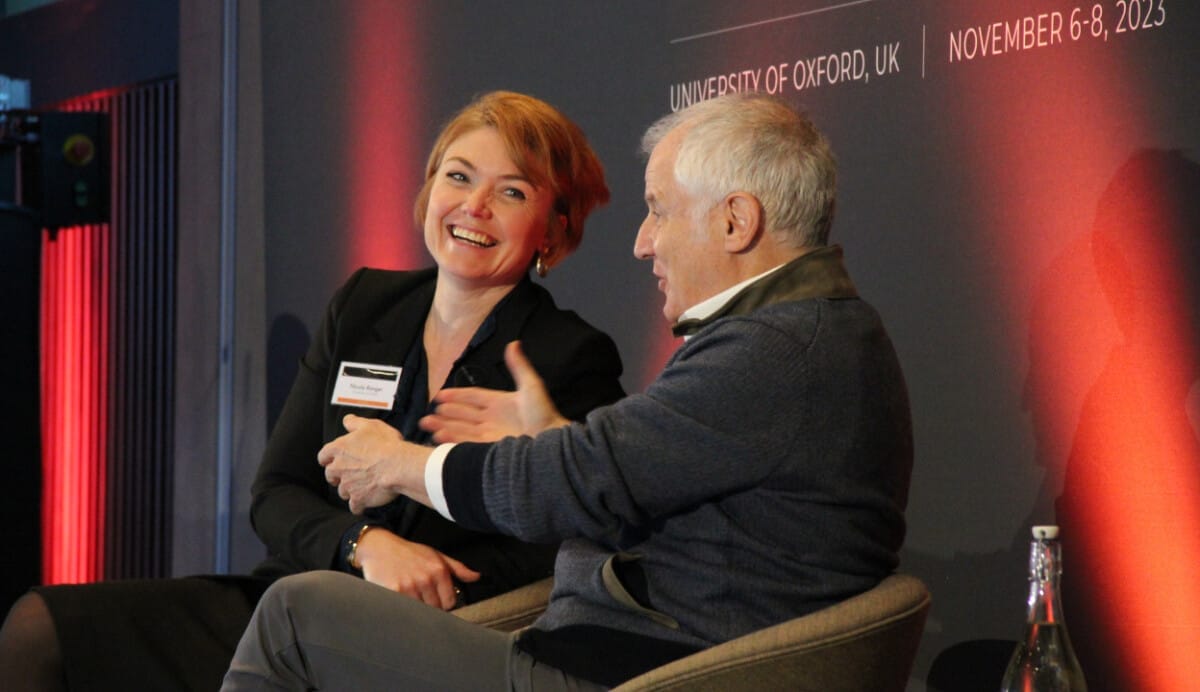
So warned Nicola Ranger, executive director of the Oxford Martin Programme on Systemic Resilience and a senior research fellow at the Institute for New Economic Thinking at Oxford Martin School, opening the second day of Sustainability in Practice at the University of Oxford. She said that climate risks are coming thick and fast, with a direct impact on assets, labour productivity, patterns in demand, supply chains and markets.

Ranger urged asset owners to re-evaluate climate risk and bring this analysis into their decision-making. For example, few asset owners report on the physical risk of climate change in their portfolio.

“Not managing this risk means the wider economy is not getting the economic signals it needs to create changes. Financial institutions need to price risk properly, and signal to the wider economy that it needs to adapt.”

If governments and countries meet all their pledges, she predicted global warming could be capped at 1.8 degrees, below the threshold for catastrophic tipping points. But she also described a much more pessimistic view based on progress to date and the fact global emissions keep climbing and still haven’t peaked. “We are not on course.”

The risks of climate change are already visible. For example, high temperatures is causing deaths, disrupting transport networks and leading to floods and drought as rainfall patterns change, impacting agricultural systems. She flagged implications for water-dependent industries and big increases in volatility of commodity prices. “Sixty percent of our food comes from five countries,” she said, predicting shocks to supply chains and impact on sovereign credit ratings.

Sponsored Content

Investors have a role to mobilize finance across geographies, countries, sectors, infrastructure and agriculture. But she warned that many investment decisions are not building resilience. For example, new infrastructure investment doesn’t always consider climate-related risk. “We are still building physical infrastructure that economies depend on, but we are not doing it in a way that is considering climate risk, risking both investors and society,” she said. Similarly, she flagged the much of the estimated annual $6 trillion invested in agriculture doesn’t consider future climate risks.

Ranger urged asset owners to take a holistic approach to managing risk and align their portfolios with resilience. They should ensure they “do no harm” and manage risk in their own portfolio to ensure it doesn’t create risks for society. For example, she said water companies have a significant impact on water scarcity.  Elsewhere she noted that data centres are exposed to climate risk like heat, and they are also water dependent. Adaption can bring returns from investing in new technology, but adaptation also incurs long term costs. For example, retrofitting buildings requires upfront investment.

“We, as a society, are mismanaging climate risk. We are putting insufficient emphasis on our safety and not properly valuing the impact of climate change or logging or exploitation of the soil. Many things doing that are impacting environment that are impacting on us.”

Leave a Comment

What comes next for US-China relations

What comes next for US-China relations

Investors should expect more friction between Washington and Beijing over technology and Taiwan in the years ahead, according to Jake Sullivan, former national security advisor to Vice President Biden during the Obama administration. Meanwhile, the rise of middle powers is a geopolitical theme to watch.

Sort content by

Why China could trigger a Taiwan crisis without firing a shot

Former US deputy national security adviser Matt Pottinger has warned that China could spark “a very serious crisis” in Taiwan without even resorting to a full-scale war – an escalation he said could occur within the current Trump administration. 

Wisdom: The jewel in the dirt-pile of intelligence

In his regular column for Top1000funds.com, Tim Hodgson, co-founder of the Thinking Ahead Institute at WTW, reflects on the dangers of unconstrained action, the limits of efficiency, and why long-term sustainability may depend on knowing when not to act.

When states lose the ability to govern, populism rises

Stephen Kotkin, global geopolitical expert and Stanford academic, has warned that there is an “increasing governability challenge in high-income democracies” where government departments face declining capacity to perform core functions due to complex regulatory systems and bureaucratic tasks. 

Inside NBIM’s AI playbook to hone investment edge

Norges Bank is a lean organisation despite managing a $2.2 trillion portfolio. Across the fund’s four global offices, there are only 700 staff, or $3 billion per person, which is why it has made pursuing AI-driven efficiency a core organisation initiative – and a non-negotiable requirement for its employees. 

Investors unpack regime-based portfolio thinking 

Funds are operating in an extraordinary environment, with Scott Chan, chief investment officer of CalSTRS, saying he has never witnessed so many “large shifts stacked on top of the other” in his investment career. Amid the change, investors are increasingly shifting to a scenario and regime-based asset allocation.  

AI investors face post-Moore’s Law reality

Mark Horowitz, a leading computer scientist and electrical engineer at Stanford University, has declared that Moore’s Law is “basically over”, which will have significant ramifications for artificial intelligence investors who are counting on more computing power to feed into more complex models.  

Previous



