
Under-priced climate risk plagues pension portfolios

Climate risk remains systematically under-priced, the world isn’t on course to meet net zero and investors must prepare for the risks of climate and environmental change.

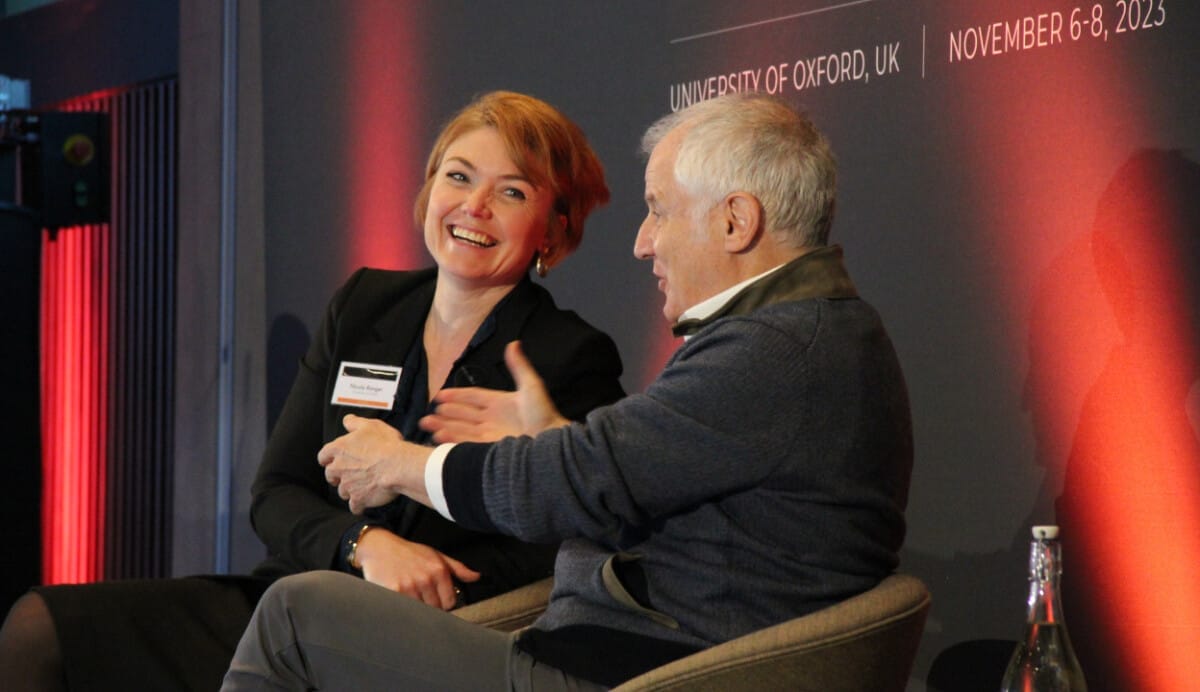
So warned Nicola Ranger, executive director of the Oxford Martin Programme on Systemic Resilience and a senior research fellow at the Institute for New Economic Thinking at Oxford Martin School, opening the second day of Sustainability in Practice at the University of Oxford. She said that climate risks are coming thick and fast, with a direct impact on assets, labour productivity, patterns in demand, supply chains and markets.

Ranger urged asset owners to re-evaluate climate risk and bring this analysis into their decision-making. For example, few asset owners report on the physical risk of climate change in their portfolio.

“Not managing this risk means the wider economy is not getting the economic signals it needs to create changes. Financial institutions need to price risk properly, and signal to the wider economy that it needs to adapt.”

If governments and countries meet all their pledges, she predicted global warming could be capped at 1.8 degrees, below the threshold for catastrophic tipping points. But she also described a much more pessimistic view based on progress to date and the fact global emissions keep climbing and still haven’t peaked. “We are not on course.”

The risks of climate change are already visible. For example, high temperatures is causing deaths, disrupting transport networks and leading to floods and drought as rainfall patterns change, impacting agricultural systems. She flagged implications for water-dependent industries and big increases in volatility of commodity prices. “Sixty percent of our food comes from five countries,” she said, predicting shocks to supply chains and impact on sovereign credit ratings.

Sponsored Content

Investors have a role to mobilize finance across geographies, countries, sectors, infrastructure and agriculture. But she warned that many investment decisions are not building resilience. For example, new infrastructure investment doesn’t always consider climate-related risk. “We are still building physical infrastructure that economies depend on, but we are not doing it in a way that is considering climate risk, risking both investors and society,” she said. Similarly, she flagged the much of the estimated annual $6 trillion invested in agriculture doesn’t consider future climate risks.

Ranger urged asset owners to take a holistic approach to managing risk and align their portfolios with resilience. They should ensure they “do no harm” and manage risk in their own portfolio to ensure it doesn’t create risks for society. For example, she said water companies have a significant impact on water scarcity.  Elsewhere she noted that data centres are exposed to climate risk like heat, and they are also water dependent. Adaption can bring returns from investing in new technology, but adaptation also incurs long term costs. For example, retrofitting buildings requires upfront investment.

“We, as a society, are mismanaging climate risk. We are putting insufficient emphasis on our safety and not properly valuing the impact of climate change or logging or exploitation of the soil. Many things doing that are impacting environment that are impacting on us.”

Leave a Comment

NZ Super cuts benchmark return expectation on US valuation concerns

NZ Super cuts benchmark return expectation on US valuation concerns

A view that the US stock market is overvalued and equity risk premia will be lower over the long term has driven New Zealand Super to lower the return expectations for its reference portfolio following its recent five-yearly review of the benchmark. Co-chief investment officer Brad Dunstan also flags underweight commodity exposure as an area to address and explains why the fund remains sceptical of illiquidity premia despite seeing a growing case for private markets.

Sort content by

Oregon PE revamp shakes off GFC legacy

Oregon Investment Council has committed to investing $3 billion a year in private equity, with the smooth pacing strategy part a response to the fund’s overweight position to poor performing vintages as a result of its allocations before and after the GFC. The investor is also focusing on manager relationships with a focus on accessing new relationships and upsizing the best existing ones; and a new strategy that sees no provider in charge of more than 5 per cent of the portfolio.

Recession likely in six months: index

There is a 70 per cent chance a recession will occur in the next six months according to a new index measuring the state of the economy that uses a statistical method first applied to analysing human skulls.

Scientific Beta critiques TEG benchmarks

Scientific Beta has critiqued the proposals of the TEG on climate benchmarks, arguing they are unduly influenced by commercial interests and do little to discourage greenwashing or support decarbonisation efforts in the real economy.

Minnesota to expand private markets

A strategic and long-term focus sees the Minnesota State Board of Investment CIO, Mansco Perry, adopt a patient and encouraging approach when it comes to climate change and diversity. The $104 billion fund is also looking to expand its allocation to private markets, and double its internal team.

ABP’s climate neutral plan for 2025

The largest pension fund in Europe, the €450 billion Dutch ABP, set out its sustainability and responsible investment plan for 2025 last month. The plan sets out long-term objectives – in line with the goal of a climate-neutral economy by 2050 – as well as the short-term steps to achieve that.

China’s opportunity

The crisis in China is far from over. But the Sustainable Finance Institue’s Huang Zhong and Cary Krosinsky, author of the upcoming Modern China: Financial Cooperation for Solving Sustainability Challenges, argue it is never too early to look at what went wrong. They argue if the Chinese government and its ruling party applied some basic sustainable investment principles, it would have taken a very different approach towards critical stakeholders such as Dr. Li and potentially avoided some of the negative consequences.

Previous



