
Under-priced climate risk plagues pension portfolios

Climate risk remains systematically under-priced, the world isn’t on course to meet net zero and investors must prepare for the risks of climate and environmental change.

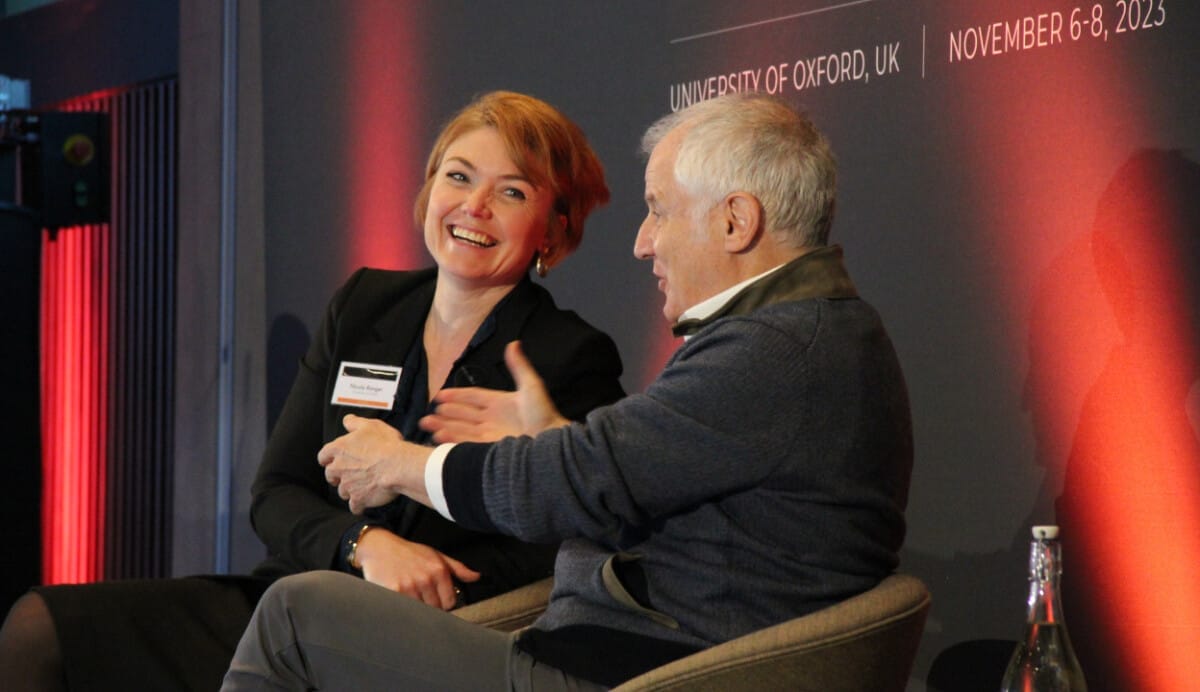
So warned Nicola Ranger, executive director of the Oxford Martin Programme on Systemic Resilience and a senior research fellow at the Institute for New Economic Thinking at Oxford Martin School, opening the second day of Sustainability in Practice at the University of Oxford. She said that climate risks are coming thick and fast, with a direct impact on assets, labour productivity, patterns in demand, supply chains and markets.

Ranger urged asset owners to re-evaluate climate risk and bring this analysis into their decision-making. For example, few asset owners report on the physical risk of climate change in their portfolio.

“Not managing this risk means the wider economy is not getting the economic signals it needs to create changes. Financial institutions need to price risk properly, and signal to the wider economy that it needs to adapt.”

If governments and countries meet all their pledges, she predicted global warming could be capped at 1.8 degrees, below the threshold for catastrophic tipping points. But she also described a much more pessimistic view based on progress to date and the fact global emissions keep climbing and still haven’t peaked. “We are not on course.”

The risks of climate change are already visible. For example, high temperatures is causing deaths, disrupting transport networks and leading to floods and drought as rainfall patterns change, impacting agricultural systems. She flagged implications for water-dependent industries and big increases in volatility of commodity prices. “Sixty percent of our food comes from five countries,” she said, predicting shocks to supply chains and impact on sovereign credit ratings.

Sponsored Content

Investors have a role to mobilize finance across geographies, countries, sectors, infrastructure and agriculture. But she warned that many investment decisions are not building resilience. For example, new infrastructure investment doesn’t always consider climate-related risk. “We are still building physical infrastructure that economies depend on, but we are not doing it in a way that is considering climate risk, risking both investors and society,” she said. Similarly, she flagged the much of the estimated annual $6 trillion invested in agriculture doesn’t consider future climate risks.

Ranger urged asset owners to take a holistic approach to managing risk and align their portfolios with resilience. They should ensure they “do no harm” and manage risk in their own portfolio to ensure it doesn’t create risks for society. For example, she said water companies have a significant impact on water scarcity.  Elsewhere she noted that data centres are exposed to climate risk like heat, and they are also water dependent. Adaption can bring returns from investing in new technology, but adaptation also incurs long term costs. For example, retrofitting buildings requires upfront investment.

“We, as a society, are mismanaging climate risk. We are putting insufficient emphasis on our safety and not properly valuing the impact of climate change or logging or exploitation of the soil. Many things doing that are impacting environment that are impacting on us.”

Leave a Comment

Returns, resilience and reinvention: What private markets’ top brass are worried about

Returns, resilience and reinvention: What private markets’ top brass are worried about

Senior executives from some of the world's largest private market managers gathered in Berlin this month with a collective understanding: managers who move slowly on AI face not just weaker returns but the risk of owning businesses that have been competitively displaced before they can exit.

Sort content by

Society isn’t working: Larry Summers

Former Treasury Secretary, Larry Summers, questioned the successful functioning of US democracy and America’s continued ability to “lead the world”.

FIS 2020: Positioning portfolios

For some investors, plunging equity valuations in March were an opportunity to ‘get back in’ at reasonable prices. More recently the rapid recovery has been a cause to position conservatively once again.

FIS 2020: The policy response

FIS 2020 will discuss how the unprecedented government stimulus in response to the pandemic could affect investor returns and specific allocations. Areas of concern include a sharp rise in zombie companies kept afloat by government support.

FIS 2020: A sustainable recovery?

In our second feature looking ahead to FIS 2020, we highlight how the conference will focus on growing calls for a sustainable recovery and purposeful companies. Nobel prize winner Esther Duflo will talk on solutions to inequality, magnified during the pandemic.

FIS 2020: Deglobalisation and politics

In the first of four articles looking ahead to FIS 2020, we highlight how the event will focus on de-globalisation and geopolitical stress, particularly the deteriorating relationship between China and the US. Elsewhere, FIS delegates will hear how asset owners are positioning their portfolios in today's challenging environment.

Kotkin’s mega trends: Deadends & despair

Political regimes around the world are stuck in a series of dead-ends and despair. Most importantly, the China-US relationship has hit a brick wall as their fundamentally different values and interests clash. Deterrents and robust policy is the only way forward, says Stephen Kotkin, professor in history and international affairs, Princeton University.

Previous



