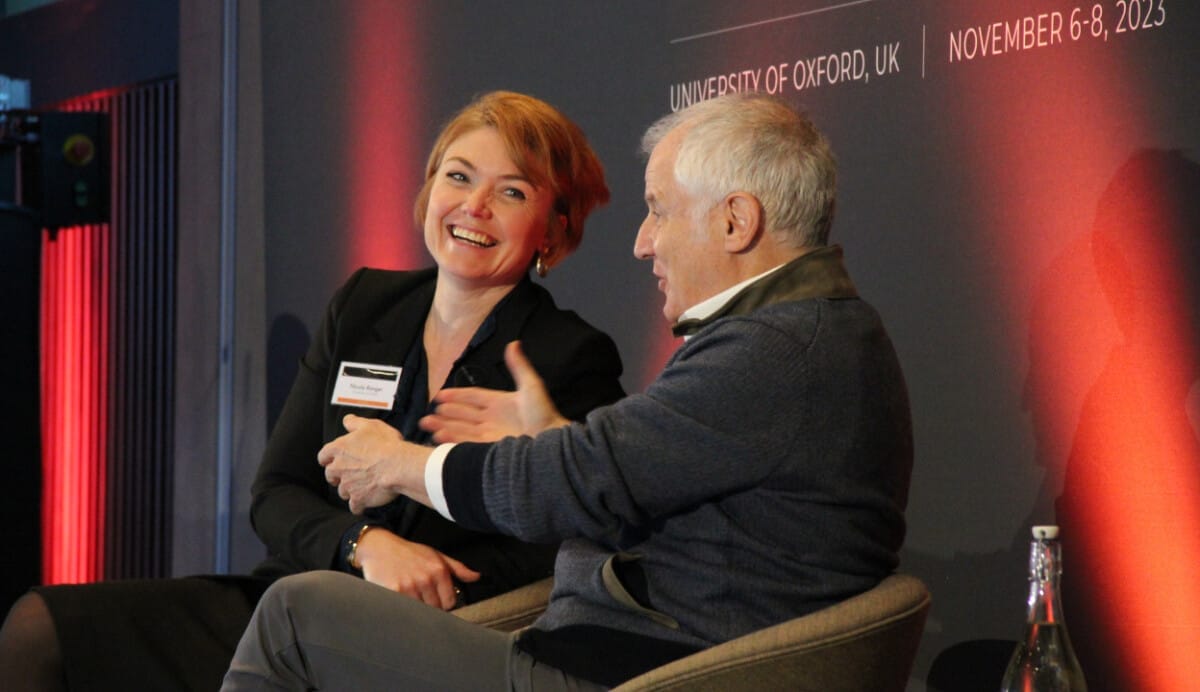

Under-priced climate risk plagues pension portfolios

Climate risk remains systematically under-priced, the world isn’t on course to meet net zero and investors must prepare for the risks of climate and environmental change.

So warned Nicola Ranger, executive director of the Oxford Martin Programme on Systemic Resilience and a senior research fellow at the Institute for New Economic Thinking at Oxford Martin School, opening the second day of Sustainability in Practice at the University of Oxford. She said that climate risks are coming thick and fast, with a direct impact on assets, labour productivity, patterns in demand, supply chains and markets.

Ranger urged asset owners to re-evaluate climate risk and bring this analysis into their decision-making. For example, few asset owners report on the physical risk of climate change in their portfolio.

“Not managing this risk means the wider economy is not getting the economic signals it needs to create changes. Financial institutions need to price risk properly, and signal to the wider economy that it needs to adapt.”

If governments and countries meet all their pledges, she predicted global warming could be capped at 1.8 degrees, below the threshold for catastrophic tipping points. But she also described a much more pessimistic view based on progress to date and the fact global emissions keep climbing and still haven’t peaked. “We are not on course.”

The risks of climate change are already visible. For example, high temperatures is causing deaths, disrupting transport networks and leading to floods and drought as rainfall patterns change, impacting agricultural systems. She flagged implications for water-dependent industries and big increases in volatility of commodity prices. “Sixty percent of our food comes from five countries,” she said, predicting shocks to supply chains and impact on sovereign credit ratings.

Sponsored Content

Investors have a role to mobilize finance across geographies, countries, sectors, infrastructure and agriculture. But she warned that many investment decisions are not building resilience. For example, new infrastructure investment doesn’t always consider climate-related risk. “We are still building physical infrastructure that economies depend on, but we are not doing it in a way that is considering climate risk, risking both investors and society,” she said. Similarly, she flagged the much of the estimated annual $6 trillion invested in agriculture doesn’t consider future climate risks.

Ranger urged asset owners to take a holistic approach to managing risk and align their portfolios with resilience. They should ensure they “do no harm” and manage risk in their own portfolio to ensure it doesn’t create risks for society. For example, she said water companies have a significant impact on water scarcity.  Elsewhere she noted that data centres are exposed to climate risk like heat, and they are also water dependent. Adaption can bring returns from investing in new technology, but adaptation also incurs long term costs. For example, retrofitting buildings requires upfront investment.

“We, as a society, are mismanaging climate risk. We are putting insufficient emphasis on our safety and not properly valuing the impact of climate change or logging or exploitation of the soil. Many things doing that are impacting environment that are impacting on us.”

Leave a Comment

NZ Super cuts benchmark return expectation on US valuation concerns

NZ Super cuts benchmark return expectation on US valuation concerns

A view that the US stock market is overvalued and equity risk premia will be lower over the long term has driven New Zealand Super to lower the return expectations for its reference portfolio following its recent five-yearly review of the benchmark. Co-chief investment officer Brad Dunstan also flags underweight commodity exposure as an area to address and explains why the fund remains sceptical of illiquidity premia despite seeing a growing case for private markets.

Sort content by

Car industry divided by race to zero

The car industry is a stark case study in the unstoppable momentum in a race to zero that will leave behind old-school manufacturers. According to champion of COP26, Nigel Topping, Detroit’s car manufacturers risk Armageddon by staying in the fossil fuel industry while European and Chinese.

Time to change the curriculum

Finance education needs to move away from neo-classical economics towards a more holistic approach including sustainability, philosophy and ethics. Robeco is actively engaging with leading universities in The Netherlands to change the curriculum.

COVID-19 hits retirement system adequacy

COVID-19 has exacerbated retirement insecurity and governments need to use this as an opportunity to examine their system inadequacies and make improvements according to David Knox, partner at Mercer and author of the annual Mercer CFA Institute Global Pension index which measures adequacy, sustainability and integrity of 39 retirement systems.

Verification essential for more impact

A new impact investing verification, which uses the same level of rigor that institutional investors approach the due diligence of fund managers, promises to unlock capital flows into impact and build the necessary scale with integrity needed to address the urgent social, environmental, and economic challenges.

Economic future very precarious: IMF

The global macro-economic future remains precarious amongst huge uncertainties according to the head of the capital markets department at the IMF, Tobias Adrian, who warns of fragilities including the disconnection between the real economy and financial markets, and growing debt, as potential interruption to future growth.

Exploring big ideas with Marisa Hall

Pension funds need a generation of investment professionals that are willing to be brave and less conservative than their predecessors if they are to move to the systems level perspectives on investment that is required for better returns and societal outcomes.

Previous



