
Under-priced climate risk plagues pension portfolios

Climate risk remains systematically under-priced, the world isn’t on course to meet net zero and investors must prepare for the risks of climate and environmental change.

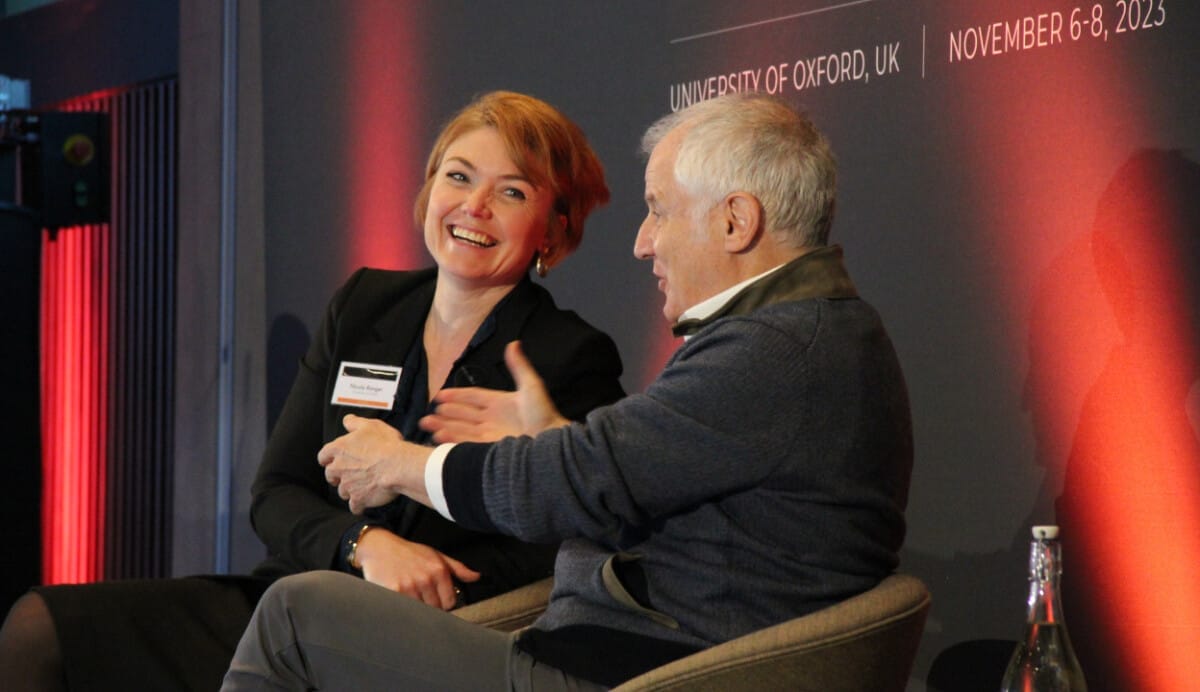
So warned Nicola Ranger, executive director of the Oxford Martin Programme on Systemic Resilience and a senior research fellow at the Institute for New Economic Thinking at Oxford Martin School, opening the second day of Sustainability in Practice at the University of Oxford. She said that climate risks are coming thick and fast, with a direct impact on assets, labour productivity, patterns in demand, supply chains and markets.

Ranger urged asset owners to re-evaluate climate risk and bring this analysis into their decision-making. For example, few asset owners report on the physical risk of climate change in their portfolio.

“Not managing this risk means the wider economy is not getting the economic signals it needs to create changes. Financial institutions need to price risk properly, and signal to the wider economy that it needs to adapt.”

If governments and countries meet all their pledges, she predicted global warming could be capped at 1.8 degrees, below the threshold for catastrophic tipping points. But she also described a much more pessimistic view based on progress to date and the fact global emissions keep climbing and still haven’t peaked. “We are not on course.”

The risks of climate change are already visible. For example, high temperatures is causing deaths, disrupting transport networks and leading to floods and drought as rainfall patterns change, impacting agricultural systems. She flagged implications for water-dependent industries and big increases in volatility of commodity prices. “Sixty percent of our food comes from five countries,” she said, predicting shocks to supply chains and impact on sovereign credit ratings.

Sponsored Content

Investors have a role to mobilize finance across geographies, countries, sectors, infrastructure and agriculture. But she warned that many investment decisions are not building resilience. For example, new infrastructure investment doesn’t always consider climate-related risk. “We are still building physical infrastructure that economies depend on, but we are not doing it in a way that is considering climate risk, risking both investors and society,” she said. Similarly, she flagged the much of the estimated annual $6 trillion invested in agriculture doesn’t consider future climate risks.

Ranger urged asset owners to take a holistic approach to managing risk and align their portfolios with resilience. They should ensure they “do no harm” and manage risk in their own portfolio to ensure it doesn’t create risks for society. For example, she said water companies have a significant impact on water scarcity.  Elsewhere she noted that data centres are exposed to climate risk like heat, and they are also water dependent. Adaption can bring returns from investing in new technology, but adaptation also incurs long term costs. For example, retrofitting buildings requires upfront investment.

“We, as a society, are mismanaging climate risk. We are putting insufficient emphasis on our safety and not properly valuing the impact of climate change or logging or exploitation of the soil. Many things doing that are impacting environment that are impacting on us.”

Leave a Comment

PMT talks infra equity and how to balance stock concentration risk

PMT talks infra equity and how to balance stock concentration risk

Scenario testing has put inflation risk front and centre at PMT, the Netherlands’ third largest pension fund, and it's driving the investor to take stock of the inflation protection it gets from infrastructure. In an interview with Top1000funds.com, chief investment officer Hartwig Liersch unpacks the risk, as well as another initiative where it's balancing concentration risk in the equity allocation without hurting returns.

Sort content by

Limited talent pool hits diversity

Asset owners increasingly encourage their asset managers to improve diversity, but both owners and managers report the need to grow diverse talent coming into the investment industry, according to recent research.

The roads from Glasgow stretch out in front of us

COP26 has had many critiques and Roger Urwin's review, in this article, gives it just over half marks. The phrase ‘good COP, bad COP’ summarises it well and how to view it depends on framing and context.

Why engagement fails: APG and South Korea’s KEPCO

APG's Yoo Kyung Park offers insights into the challenges of engaging with state-owned monopolies and why APG finally threw in the towel with South Korea's KEPCO.

ATP pushes green bond due diligence to counter greenwashing

Danish pension fund, the DKK 925 billion ($140 billion) ATP, is protecting against greenwashing in its growing allocation to green bonds with a variety of in-house screening processes.

South Africa’s GEPF gets tough on the PIC

Africa's largest pension fund has redrawn its mandate with its asset manager PIC introducing a clause around consequence management that leaves the PIC liable in the event of inappropriate investment decisions. Elsewhere the fund has just raised the ceiling on its ability to invest more overseas.

Investor support key to success for the International Sustainability Standards Board

Professors at Oxford University, Richard Barker and Bob Eccles, outline the key factors for success of the International Sustainability Standards Board, which was announced at COP26. They say investors need to visibly and vocally encourage both companies and regulators to support the ISSB. 

Previous



