
Under-priced climate risk plagues pension portfolios

Climate risk remains systematically under-priced, the world isn’t on course to meet net zero and investors must prepare for the risks of climate and environmental change.

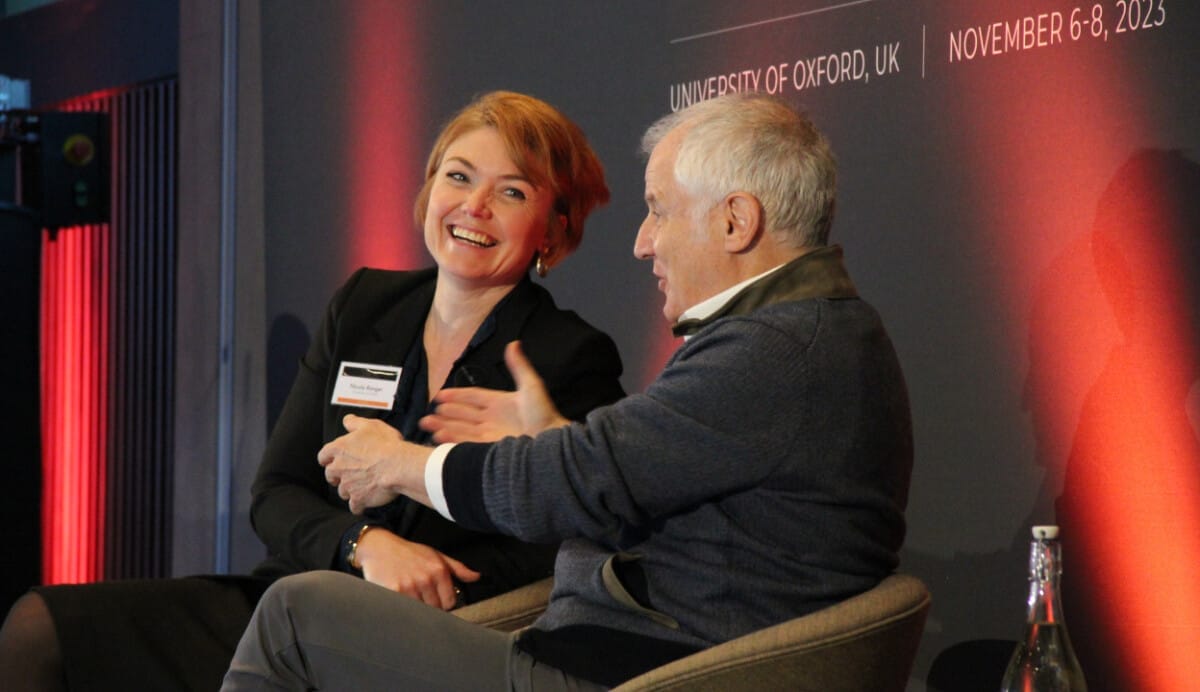
So warned Nicola Ranger, executive director of the Oxford Martin Programme on Systemic Resilience and a senior research fellow at the Institute for New Economic Thinking at Oxford Martin School, opening the second day of Sustainability in Practice at the University of Oxford. She said that climate risks are coming thick and fast, with a direct impact on assets, labour productivity, patterns in demand, supply chains and markets.

Ranger urged asset owners to re-evaluate climate risk and bring this analysis into their decision-making. For example, few asset owners report on the physical risk of climate change in their portfolio.

“Not managing this risk means the wider economy is not getting the economic signals it needs to create changes. Financial institutions need to price risk properly, and signal to the wider economy that it needs to adapt.”

If governments and countries meet all their pledges, she predicted global warming could be capped at 1.8 degrees, below the threshold for catastrophic tipping points. But she also described a much more pessimistic view based on progress to date and the fact global emissions keep climbing and still haven’t peaked. “We are not on course.”

The risks of climate change are already visible. For example, high temperatures is causing deaths, disrupting transport networks and leading to floods and drought as rainfall patterns change, impacting agricultural systems. She flagged implications for water-dependent industries and big increases in volatility of commodity prices. “Sixty percent of our food comes from five countries,” she said, predicting shocks to supply chains and impact on sovereign credit ratings.

Sponsored Content

Investors have a role to mobilize finance across geographies, countries, sectors, infrastructure and agriculture. But she warned that many investment decisions are not building resilience. For example, new infrastructure investment doesn’t always consider climate-related risk. “We are still building physical infrastructure that economies depend on, but we are not doing it in a way that is considering climate risk, risking both investors and society,” she said. Similarly, she flagged the much of the estimated annual $6 trillion invested in agriculture doesn’t consider future climate risks.

Ranger urged asset owners to take a holistic approach to managing risk and align their portfolios with resilience. They should ensure they “do no harm” and manage risk in their own portfolio to ensure it doesn’t create risks for society. For example, she said water companies have a significant impact on water scarcity.  Elsewhere she noted that data centres are exposed to climate risk like heat, and they are also water dependent. Adaption can bring returns from investing in new technology, but adaptation also incurs long term costs. For example, retrofitting buildings requires upfront investment.

“We, as a society, are mismanaging climate risk. We are putting insufficient emphasis on our safety and not properly valuing the impact of climate change or logging or exploitation of the soil. Many things doing that are impacting environment that are impacting on us.”

Leave a Comment

The Austin advantage: Texas Teachers talks optimism, innovation and growth

The Austin advantage: Texas Teachers talks optimism, innovation and growth

Jase Auby, TRS's celebrated CIO, explains why TPA doesn't fit with its culture; why community push back on data centres could turn out to be an investor advantage, and argues the case for continuing to invest in fossil fuels. Top1000funds.com sat down with the CIO in his Austin office for an all-encompassing conversation.

Sort content by

Investors prioritise governance, tilts and liquidity

In a wide-ranging session at the Fiduciary Investors Symposium at Chicago Booth School of Business investment executives from HOOPP, CalSTRS, USS and Cbus reflect on the need for strong governance in the current climate, diversification and liquidity.

Superior return, risk metrics driving rising allocation to private markets

Some of North America’s largest funds – including British Columbia Investment Management Company, CalPERS and Maryland State - are ramping up their allocations to private markets, building in-house talent to take advantage of private equity and co-investment deals.

CalPERS gearing up for global push into private markets

Building the expertise for direct investment in global real estate and infrastructure is a priority for the new CIO of the United States’ largest pension fund. Nicole Musicco spoke to Amanda White in an exclusive interview at the Fiduciary Investors Symposium.

Fed has inflation and recession risk under control

Raghuram G. Rajan, Professor of Finance at the University of Chicago and former Governor of the Reserve Bank of India, argues that Federal Reserve policy suggests inflation will start to come down. He reflects on the toxic risk of high levels of leverage combining with asset declines.

Private credit investors ready for next cycle

While many allocations struggle in a downturn, it presents opportunities in private credit some of which are already starting to appear.

Why the world is approaching an inflection point on climate investing

A push towards standardised data and more appropriate incentives is bringing greater amounts of private sector capital into play on the path towards net zero emissions by 2050.

Previous