
PGB talks private equity fees as Dutch funds feel the squeeze

Private equity performance fees are a growing source of consternation among Dutch pension funds where some have been stung for billions in fees despite beneficiary payments lagging roaring inflation and Europe’s cost of living crisis.

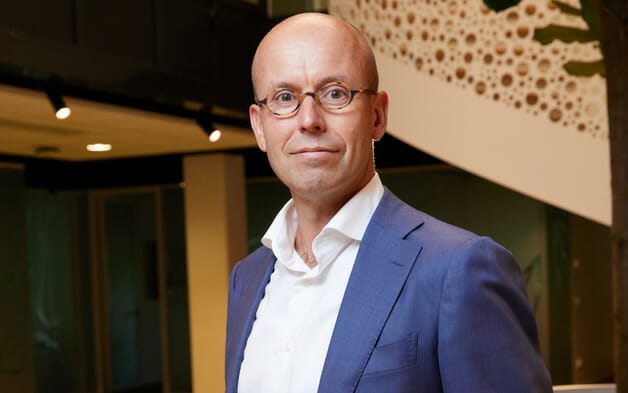
“Private equity fees are a difficult topic,” admits Harold Clijsen, chief executive of PGB Pensioendiensten, pension provider for Pensioenfonds PGB (PGB), the Netherlands €34.8 billion ($35.2 billion) industry-wide pension fund.

PGB targets a 7.5 per cent allocation to private assets of which only 2.5 per cent is in private equity, focused on European and US small and mid-cap buyouts.

That relatively small allocation means PGB’s current total fee spend across the whole portfolio is only 43 basis points, well under its maximum permitted budget of 55 basis points that must include all transaction and performance fees, and which shapes a highly selective budget allocation.

But other funds are suffering a much bigger hit. Civil service pension fund ABP, one of the biggest pension funds in the world, paid €2.8 billion ($2.84 billion) in costs to private equity funds last year yet has only recently increased beneficiary payments for the first time since 2008.

Elsewhere, the €277.5 billion ($281.3 billion) healthcare scheme PFZW paid €1.26 billion ($1.28 billion) in performance fees to its private equity managers in 2121, equivalent to two thirds of total asset management costs thanks to private equity’s 2-20 model comprising a fixed 2 per cent management fee and a 20 per cent performance fee.

Sponsored Content

Clijsen is supportive of fixed fees (especially for smaller private equity mangers) arguing they are an important element to successfully running investee companies.

But he questions performance fees particularly given limited partners’ ability to drive them down when so many investors are chasing illiquid allocations.

“The problem is the performance fee which kicks in hard,” he says. “But we don’t have much pricing power because all the money in the world is looking for profitable investments.”

For now, he’s still convinced private equity is worth the cost because of the returns.

“In the end you have to consider net return after fees and last year’s performance showed private equity does add value to the portfolio.”

Still, strategy at PGB is shaped around lowering the fee spend wherever possible including prioritising re-ups in funds PGB is already invested in to cut out the advisor fee, as well as co-investments beside fund managers and with other pension funds to lower the fees attached to advice and monitoring.

PGB’s growing scale also works in its favour. Back in 2005 PGB only invested on behalf of one industry fund. Now it represents 4,000 employers across 16 different industries and assets under management have grown to €34 billion from €11 billion.

“We are large enough to be an interesting client,” says Clijsen. “Our partners know we are there for the long run and this makes us attractive to do business with. We also tend to invest in follow-up funds but that said, when a large part of the team or key personnel leaves the company, that could trigger a change of mandate.”

Clijsen rules out developing an internal private equity team even though PGB runs its matching portfolio inhouse and he believes inhouse management is the most effective solution to high private equity fees. All the return-seeking allocation is outsourced, and PGB would struggle to compete for private equity talent; investing in European and US private equity also requires a team on the ground, he reasons.

Return seeking allocation

Away from private equity, other corners of the return-seeking allocation are also attracting his attention. He is concerned about the impact of stagflation crimping growth in the listed equity allocation and impacting beneficiary pay-outs.

“We need returns from equity and other assets in order to grow capital and achieve indexation. When inflation is high, people expect to get compensated because of the increased cost of living. But increasing compensation is difficult in a recession or zero growth environment. We were able to increase pensions with 3 per cent this year.”

One approach designed to cushion the portfolio from falls in equity include an equity hedging strategy using options to protect the downside.

“When equity is more expensive in relation to yields and momentum turns negative, we do hedge some equity risk. When equity drops, this adds a little on the return side; the idea is to protect capital and therefore the coverage ratio,” he explains.

Elsewhere in the liquid allocation, PGB is prioritising passive market weight and equal-weight strategies in combination with more quant-driven strategies like factor investing in order to gain additional return.

“We want a consistent approach to liquid markets on one hand and on the other we want to cut costs. At this moment, we are looking for more cost cutting through developing our own strategies for selecting equities.”

Funded status

The fund’s assets are split 60/40 between the return and matching portfolio respectively. Although rising interest rates and inflation are concerning in the return seeking allocation, they have buoyed the matching portfolio where PGB’s coverage ratio is currently 120 per cent.

The internal team also run a dynamic risk hedging strategy whereby when interest-rate risk is low, the fund calculates a lower risk budget and reduces its interest rate hedge; when rates move higher it increases the hedge.

At the start of the year around 45 per cent of the liabilities’ interest rate risk was hedged, but this has now risen to around 65 per cent on the prospect of further hikes but where decision making also balances the threat of recession – and lower rates.

“There is still an upside in interest rates because if inflation doesn’t come down, rates will rise further,” he says.

After eight years as PGB’s CIO, Clijsen became chief executive in 2020 turning his hand to new tasks like conversing with corporates looking to move their pension management to PGB and gauging the impact of local developments on the total organisation. One element he finds interesting is the impact of legislation on pension fund management, particularly new rules set to encourage beneficiary engagement, encouraging DC investors to take more control of the investment process.

“Beneficiaries now have choices on risk appetite; how they think about ESG and which investments we should make for them,” he says. PGB already runs extensive questionnaires, group-interviews on risk budgets and ESG-polices and has introduced a digital tool which helps participants set their own risk budget.

It’s a shift that he predicts will force Dutch pension funds to adopt more transparency around their investment process, holding consequences for trustees and boards unable to adapt that could result in PGB accruing more assets under its stewardship over time.

“I expect more consolidation in the sector. We are prepared to take on more pension plans for employers who want to outsource to a professional, social, pension fund,” he concludes.

Leave a Comment

Aware Super maps AI exposure as it sharpens whole-of-portfolio risk focus

Aware Super maps AI exposure as it sharpens whole-of-portfolio risk focus

Australia’s third-largest pension fund Aware Super is taking stock of its investment exposure to AI and the initial analysis suggests at least 15 per cent of the fund’s assets are exposed to the thematic. In a project deep dive, head of investment strategy Michael Winchester says finding the portfolio's true concentration around AI will require looking beyond simple dollar aggregation.

Sort content by

Finland’s Elo: Larger equity allocations promise new media scrutiny

As Finland's pension funds prepare to increase their equity allocations to unprecedented levels compared to global peers, they must also navigate a new and unfamiliar risk. Elo's chief investment officer Jonna Ryhänen explains the fund's investment approach going forward and how it will manage stakeholder and media scrutiny as they react to swinging volatility and returns.

PMT talks infra equity and how to balance stock concentration risk

Scenario testing has put inflation risk front and centre at PMT, the Netherlands’ third largest pension fund, and it's driving the investor to take stock of the inflation protection it gets from infrastructure. In an interview with Top1000funds.com, chief investment officer Hartwig Liersch unpacks the risk, as well as another initiative where it's balancing concentration risk in the equity allocation without hurting returns.

NZ Super cuts benchmark return expectation on US valuation concerns

A view that the US stock market is overvalued and equity risk premia will be lower over the long term has driven New Zealand Super to lower the return expectations for its reference portfolio following its recent five-yearly review of the benchmark. Co-chief investment officer Brad Dunstan also flags underweight commodity exposure as an area to address and explains why the fund remains sceptical of illiquidity premia despite seeing a growing case for private markets.

Sampension: Why there are many reasons to be optimistic

Now is not the time to reduce risk, argues Henrik Olejasz Larsen, chief investment officer of Sampension, Denmark’s $50 billion pension fund for public and private sector employees. In an interview with Top1000funds.com, he says corporate profits have not deteriorated, and although the market has been tested from multiple directions, the underlying optimism driving equities is strong enough to overrule the negative impact of geopolitical risk.

France’s Banque des Territoires looks for data centre opportunities

France’s Banque des Territoires, a subsidiary of Caisse des Dépôts, the country’s €323 billion state-owned financial institution, plans to invest more in data centres in France. The push is in line with government policy to build out AI infrastructure off the back of the country's access to cheap, green, nuclear energy that uniquely positions France to provide power to the AI industry while maintaining net zero credentials.

Why NYC pensions CIO hasn’t drunk the ‘TPA Kool-Aid’

Three decades of investing have given Monte Tarbox sharp eyes for recognising risk and opportunities, and he’s putting it to use as the new permanent chief investment officer of the $306 billion NYC Bureau of Asset Management. In an interview with Top1000funds.com, Tarbox outlines his vision for the fund, why he’s bullish on infrastructure but “nervous” on PE, and why he hasn’t drunk the TPA “Kool-Aid”.




