
Switzerland’s Migros profits from unique aspects of Swiss property market

Swiss pension fund MPK has withstood a difficult year in bonds and equities thanks to its large allocation to real estate. More people tend to rent than buy apartments creating steady demand for rental properties says chief executive, Christoph Ryter.

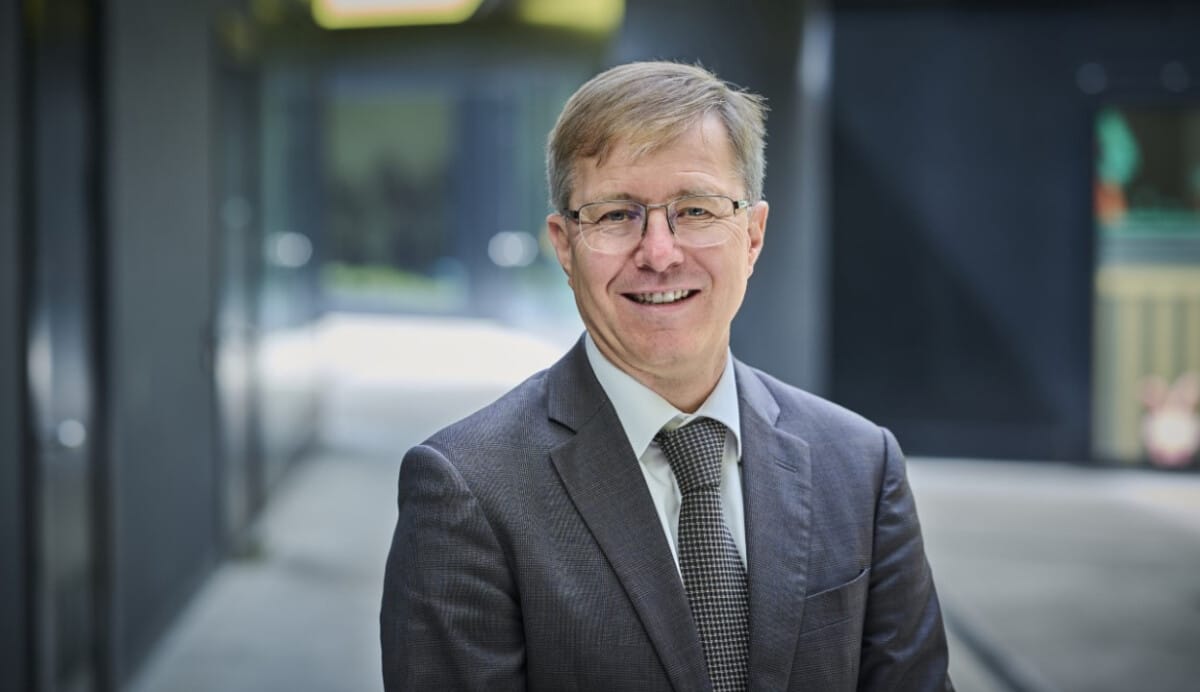
A large allocation to real estate at Migros-Pensionskasse (MPK) the CHF28.25 billion ($30.3 billion) pension fund for Switzerland’s largest retailer, Migros, supported returns in a difficult year, says MPK CEO Christoph Ryter in an interview with Top1000funds.com from his Zurich office.

“Real estate has been helpful in reducing our losses in equities and bonds,” he says. “Our high strategic asset allocation to real estate has been the main reason we performed better than other pension funds.” The fund has just recorded a loss of 5.6 per cent last year and a 9.4 per cent decline in the funding ratio to 124.5 per cent.

MPK’s strategic allocation to real estate and infrastructure (37 per cent) is larger than most of other pension funds in Switzerland. Other allocations comprise nominal value investments (33 per cent) equities (28 per cent) and gold (2 per cent). The real estate allocation is divided between a larger direct investment portfolio in Switzerland managed internally, and an international allocation that includes infrastructure, comprising fund investment and collective vehicles.

Returns

The bulk of MPK’s local real estate allocation is invested in rental apartments where valuations have escaped the impact of rising interest rates, and demand has been buoyant thanks to a jump in the number of people coming to live in Switzerland.

Moreover, unlike the United Kingdom or US market, more people in Switzerland tend to rent accommodation rather than buy their own properties in a cultural norm that means MPK has no plans to tweak the exposure. “In Switzerland, it’s more common to rent,” says Ryter. Around 80 per cent of the local real estate portfolio is rental apartments with the remainder invested in offices and commercial premises.

Sponsored Content

A single apartment lying empty will not really influence the total portfolio, he adds. In contrast, empty shops hit malls hard. “The volatility in rental apartments is much lower than in offices and commercial spaces.”

However, Ryter believes valuations are set to decline ahead. “Real estate valuations will decline over time although there will be some lag,” he predicts. Although he expects enduring rental demand for apartments, long-term, he expects gains in valuations to vanish or turn negative.

Ryter says another ingredient adding to the success of the portfolio comes from the fact most of the people running the properties the pension fund owns (cleaners to estate agents showing people around) are also employees of MPK. The identification with the portfolio is therefore much greater, he says.

One of the biggest challenges to the strategy in recent years has been finding enough properties in Switzerland to fill the target allocation. As MPK’s assets under management grew with buoyant returns from bonds and equities, it struggled to fill the illiquid allocation where buying and selling is slow and finding projects and securing permits time-consuming. Now bonds and equities have fallen back the target allocation is back on track.

“We are under less pressure to find new projects and to increase the allocation,” he says.

ESG

MPK has long-term targets to integrate ESG across the real estate portfolio, retrofitting heating systems and installing installation. However, Ryter charts slow and steady progress  to protect returns.

“We have to be careful, and take the long view,” he says.

“Real estate is the best asset class to do something good for the environment. It is really possible to change things for good, unlike bonds or equities where you can sell but someone else buys it.”


Leave a Comment

Why traditional investment committees can amplify group biases

Why traditional investment committees can amplify group biases

Investment committee meetings, a governance cornerstone at every asset owner organisation, run the risk of amplifying group biases and social dynamics, and can push the IC towards recommending more extreme investment positions collectively than the average of their individual views. Bernhard Scherer, head of portfolio implementation at ADIA, unpacks the thesis in a new paper.

Sort content by

Can America be great (again) ?

An erosion in social cohesion, lack of trust in institutions and lack of social mobility have weakened the fabric of society in the US; and it is these issues that are on trial as the country goes to the polls not who wins or loses, according to Stephen Kotkin, the John P Birkelund Professor in History and International Affairs at Princeton University.

Asset owners report half of all costs

Asset owners are reporting only half of their true total costs according to analysis by CEM Benchmarking exclusively for Top1000funds.com. This means tens of billions of dollars across the industry is not being reported. The authors look at case studies and make suggestions for industry best practice.

RI at core of manager relationships

When leading asset owners work with managers, they incorporate ESG issues into contracts and threaten to terminate relationships due to materialising ESG issues. To help make ESG considerations mainstream in investment management contracts the PRI has released a guide for investors on the manager selection and monitoring process.

Opportunity for FI to be more impactful

As more investors look to align with the SDGs, Andrew Parry, says there is a huge opportunity for the fixed income market to be more impactful and innovative.

Car industry divided by race to zero

The car industry is a stark case study in the unstoppable momentum in a race to zero that will leave behind old-school manufacturers. According to champion of COP26, Nigel Topping, Detroit’s car manufacturers risk Armageddon by staying in the fossil fuel industry while European and Chinese.

Time to change the curriculum

Finance education needs to move away from neo-classical economics towards a more holistic approach including sustainability, philosophy and ethics. Robeco is actively engaging with leading universities in The Netherlands to change the curriculum.

Previous



