
South Africa’s GEPF feels inflation’s impact

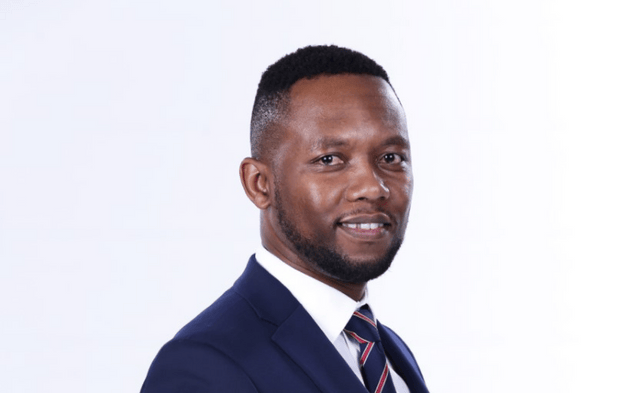
Africa’s largest pension fund, South Africa’s Government Employees Pension Fund, GEPF, is scrambling to protect its R2.1 trillion portfolio against the impact of inflation. GEPF invests around 90 per cent of its assets in South Africa in a strategy designed to match its assets with liabilities. Of the many issues buffeting the portfolio, safeguarding it from South Africa’s 7 per cent inflation is top of the list. “The impact of high inflation and how to protect the portfolio is really key at the moment,” says Sifiso Sibiya, head of investments at GEPF in an interview with Top1000Funds.com.

Strategies include building exposure to assets linked to goods and services that benefit from inflation and buying inflation-linked government bonds. “Government-issued linkers carry a sovereign guarantee and are tied to inflation, the thing we are trying to fight,” he says. That said, he notes government issuance of long-duration linkers that best match GEPF’s long-term liabilities has been slow. “Long dated linkers are in short supply.”

Alongside these explicit hedges to inflation, implicit strategies include exposure to equities particularly South African commodity producers or industrials which over the long-term typically outperform inflation. GEPF has a 50 per cent allocation to local equity, 80 per cent of which is passive. All stock selection is outsourced to GEPF’s state-owned asset manager the Public Investment Corporation, PIC, guardian of over 80 per cent of the portfolio.

SAA

GEPF’s long-term, strategic asset allocation aligns with the pension fund’s long-term liabilities. “Investment theory says 90 per cent of investment performance is driven by asset allocation. Our asset allocation is constant and not triggered by short-term market moves like we see today,” says Sibiya.

That SAA decrees the overwhelming home bias, imposing strict limits on the ability of the fund to diversify. “We are obviously highly exposed to the South African economy, but we consider this with our eyes open,” says Sibiya. “Our liabilities are rand based so it makes sense that most of our assets also rand based.”

Unlisted push

Still, two seams of strategy are evolving to allow more diversification. GEPF has re-started its allocation to unlisted African investments with the PIC after last year’s pause in the mandate. That followed a Judicial Commission of Inquiry into allegations of impropriety and political interference at the PIC during Jacob Zuma’s presidency, focused particularly on the PIC’s management of the unlisted allocation and oversight of a clutch of external asset managers. “Our relationship with the PIC has improved,” reflects Sibiya. “The mandate is more targeted and more deliberate in terms of meeting the GEPF’s investments.”

Sponsored Content

Although the unlisted allocation is currently capped at 10 per cent of AUM, it gives the GEPF exposure to important new sources of investment. Strategy follows key developmental themes including water, sanitation, digitization, technology and financial inclusion. Although investments will likely be diversified across Africa, all allocations will begin with the transaction first – rather than be made on a country-specific basis.

Targeted investment sizes will fall between R200 million to R500 million ($11 million to $28 million) with any larger allocations reviewed on a case-by-case basis. All investments will be made either via the PIC or via PIC-mandated third-party managers. “The allocation is given to the PIC which then decides how to split it,” explains Sibiya. “The allocation itself is dependent on factors like market capacity to absorb a certain amount of capital over a time period; our SAA, the deal flow and the pipeline on the ground.”

Sibiya adds that unlisted investments will also offer the opportunity for higher impact from a developmental point of view in keeping with GEPF’s ESG strategy where engagement and reporting are key tenets.

Other sources of diversification also come from GEPF’s overseas investment. The GEPF could, in theory, invest up to 15 per cent of its assets overseas. The current allocation is much less at around 9 per cent to foreign equities and bonds mandated to JP Morgan, Robeco and BlackRock. “We are still far from this target. We must apply this transition very gradually given our market impact in South Africa,” he concludes.


Leave a Comment

The twin forces rewriting the rules of investing

The twin forces rewriting the rules of investing

Portfolios built for the old world will be severely tested as emerging forces rewrite the rules of investing. The Fiduciary Investors Symposium heard that geopolitical and macroeconomic upheaval, together with the disruption wrought by AI, should force asset owners to rethink the structure and composition of portfolios.

Sort content by

Bridgewater’s Prince: Time to think differently in an MP3 world

Bridgewater’s co-CIO Bob Prince explains the perils of MP3 and suggests investors need to think differently, shaping strategies around cash-flow yields - connecting equity cash flows to stable sources of spending in the economy.

Changing priorities for infrastructure investors

Investors discuss how technological change and the new green economy is re-pricing assets in infrastructure, as well as the trend to substitute fixed income with infrastructure debt. But investors should not to lose sight of traditional infrastructure characteristics in their quest to tap new trends. Predictable cashflows and downside protection remain central. 

Examining the limits of modern portfolio theory

The definition of what it means to invest is changing, according to Jon Lukomnik and James P. Hawley, which means examining the limitations of the 75-year old legacy of modern portfolio theory.

CIO’s views on risk, cost and external partners revealed in annual survey

The latest annual CIO Sentiment Survey, a collaboration between Top1000funds.com and Casey Quirk, part of Deloitte Consulting, finds asset owners on track to hit return targets as risk on and active strategies reap rewards. Elsewhere, after consecutive years of cutting back on manager and consultant relationships, investors want more partners in 2021.

Future Fund sceptical on correlations

The Future Fund, Australia’s A$226 billion sovereign wealth fund, has embarked on an ambitious project instigated during the crisis which includes re-examining its investment assumptions, risk tolerance and the way it allocates capital. Amanda White talks to the fund’s new CIO, Sue Brake about where the fund will be allocating in the future including alternatives and active management.

Impact takes centre stage at Bridgewater

The appointment of Karen Karniol-Tambour and Carsten Stendevad as co-CIOs of Bridgewater’s new sustainability business marks a major milestone in the hedge fund’s business, applying its deep research-driven systematic approach to a new set of problems. Amanda White speaks exclusively to the two CIOs.

Previous



