

High inflation and low risk premiums are making it difficult for asset owners to meet their return targets, according to the investment heads of several major global funds who participated in the 2023 CIO Sentiment Survey.
The return target expectations were particularly testing for those whose mandates limit large allocations to illiquid assets, but the CIOs said that improved fixed income returns will bring some relief.
Commenting on the findings of the 2023 CIO Sentiment Survey, a collaborative effort between Top1000funds.com and Deloitte Consulting business CaseyQuirk, heads of three major funds in the Netherlands, Australia and the United States explained why funds were taking a wait-and-see approach despite historic market shifts, and why the resource crunch inside funds has become so acute.
The survey found most asset owners were planning ‘no change’ in allocation shifts as they waited for clearer market signals, despite drastic market changes not seen in a generation. It also found resources and time were stretched, with CIOs saying their internal teams were under-resourced and they faced personal time constraints.
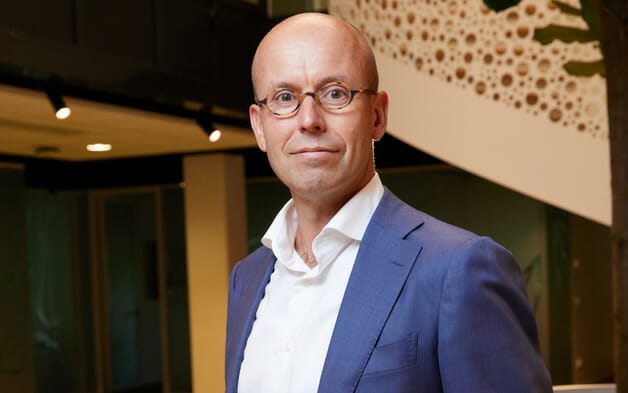
In the Netherlands, PGB Pensioendiensten, with around €35 billion in assets, has a minimum target to meet the nominal return of its liabilities, explained chief executive Harold Clijsen (pictured), and its “ambition is to meet inflation.”
But this has become a major challenge with 5 per cent inflation expected for 2023, Clijsen said, especially with risk premia in major equity markets currently around 2.5 per cent.
“So mathematically it is hardly possible to meet required returns,” Clijsen said, noting higher risk premia can be found in the market but typically in illiquid investments.
Having a “risk-off posture” at a time when markets have a relatively low risk premia would leave funds behind the industry benchmark, and therefore be a risky move in itself, he said, leading most investors to try to balance a relatively low risk premia with a dynamic approach to gain some extra return.
“So looking forward, probably the best is to navigate between the chances of lower inflation and maybe lower rates in the long run, and having still some risk budget available should markets come down due to further inflation and interest rate spikes in the near future,” Clijsen said.
The abundance of CPI+ targets among Australian funds explains why some Australian CIOs are not confident in meeting their targets, said Andrew Lill, chief investment officer of A$67 billion Australian superannuation fund Rest.
“When inflation is high but asset class returns moderate, it provides a challenge,” he said.
As a result of the market backdrop, many were planning ‘no change’ in their asset allocations “because it is not clear at this stage whether taking more risk, or de-risking, is the right course of action as markets are currently very data driven,” Lill said, noting funds were remaining broadly diversified and agile in the meantime.
“A wait-and-see approach to seeing what the data tells you is potentially the right approach in this market,” Lill said.
Increasing investment costs did not help with the pressure funds are facing. While the CIO Survey data had significant dispersion among respondents about the trajectory of investment costs, in comparison to previous years there were fewer respondents managing to get costs down, and greater numbers seeing costs increase.
This was likely due to the widespread shift into private assets, according to Chris Ailman, chief investment officer at $306 billion fund CalSTRS in the United States.
“I’m still very focused on lowering costs and doing so more efficiently,” Ailman said. “I can’t explain that trend on why we would be seeing costs rise, other than the shift from public market securities into private market securities which are inherently more expensive.”
Fortunately, improved fixed income and cash returns would bring some relief, said Ailman.
While he did not foresee a “massive asset allocation change,” he noted the 80/20 portfolio had been creeping away from fixed income towards an 85/15 allocation, but it was now returning to its prior 80/20 setting.
“Fixed income was becoming a smaller and smaller part of everyone’s portfolio, but now that it will have 4-6 per cent return, people will be putting in more money,” Ailman said.

Under-resourced, short of time
The survey also found fund CIOs were feeling resource-constrained, and were looking to hire more staff, gain assistance from investment consultants, and gain efficiencies.
Under-staffed internal teams and a shortage of talent were selected as top concerns by 58 per cent of respondents, and there was a large jump compared to previous years in respondents noting ‘personal time constraints.’
Clijsen said this resource crunch inside funds was most likely a combination of additional work resulting largely from ESG regulatory requirements and ESG data issues, and resourcing not being at full capacity following the pandemic, against a backdrop of general labour shortages.
“Also, work-private split may have changed following Covid, [with] people feeling the need for more private time,” Clijsen said.
In Australia, asset owners have been tackling market uncertainty, greater internalisation and greater regulatory oversight while looking to build improved technology into their investment process, Lill said.
“The above has been happening during the pandemic, which in Australia has meant zero immigration of core skills, so the pressure on finding new skilled workforce has been acute,” Lill said. “Given the above, a lot of the pressure to change has been placed on leaders to deliver, and therein lies the time constraints challenge.”
Ailman noted a similar situation in the United States, noting “the pandemic experience made younger generations in particular think more about their career and lifestyles, and turnover has increased across the industry.”
But he also pointed to drastic changes to work habits driven by technology, notably how cell phones had “broken through the work/life boundary.”
“I have a pretty disciplined 8.00am to 5.00pm lifestyle but see staff doing work late at night, on weekends, I’m not asking them to do that but now that they’re at home, suddenly the…natural boundaries we used to have to help with work/life balance have disappeared,” Ailman said.
With the home now the office for many people, it will take “self-discipline and technology” to recognise the problems and return balance to peoples’ lives, he said.
With regards to flexible work arrangements, not a single respondent of the survey is running a fully remote operation anymore, with 40 per cent requiring their employees to be in the office 3-4 days a week and 35 per cent requiring 1-2 days. Most of the remainder have relatively flexible policies, with only 6 per cent requiring employees to be in the office 5 days a week.








Leave a Comment
You must be logged in to post a comment.
Login