

PGGM, the €228 billion asset manager for the Netherland’s second-largest pension fund PFZW, is working with US hedge fund manager Bridgewater to help restructure its portfolio to incorporate impact.
The research partnership will integrate a 3D approach incorporating risk, return and impact at PGGM that goes beyond its existing SDG alignment and particular focus on healthcare and climate themes. Still in the early throes of the partnership, the investors are collaborating on analytical detail and wrestling with the tough issues that go into building these new portfolios.
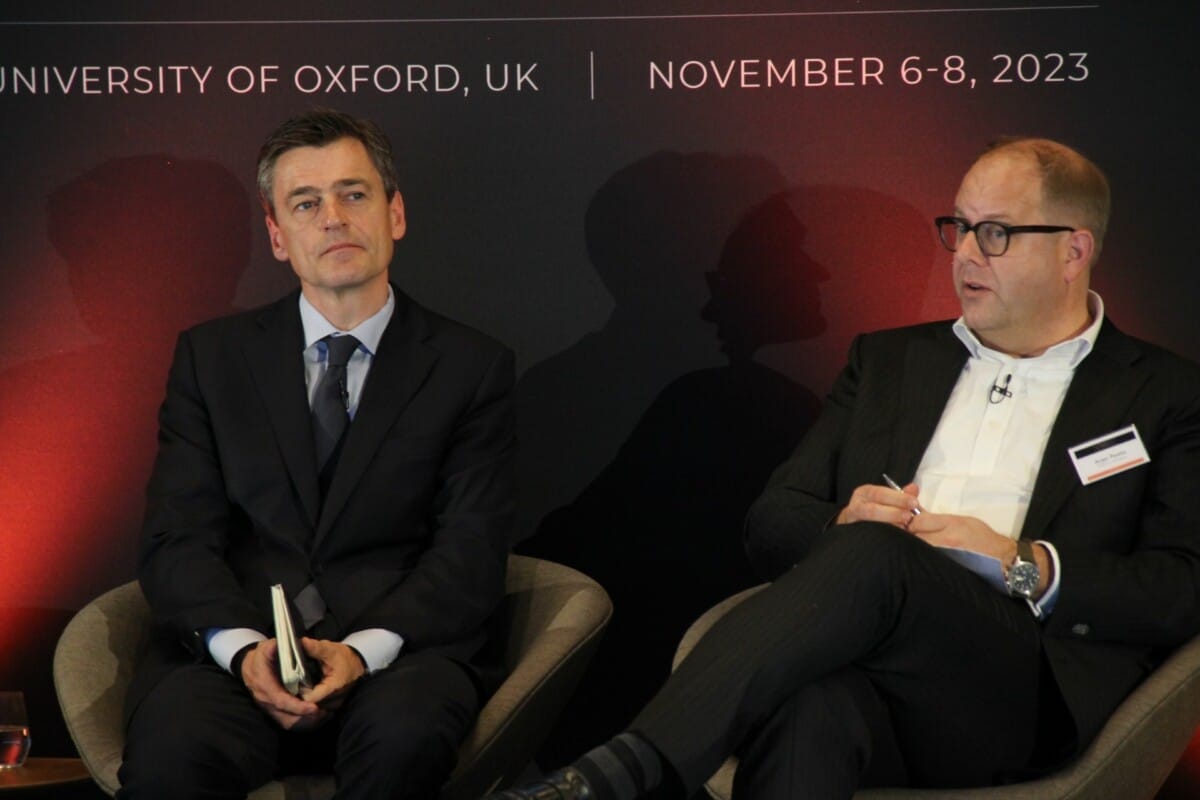
Arjen Pasma, chief fiduciary manager, PGGM, and Carsten Stendevad, CIO, sustainability at Bridgewater, took to the stage at Sustainability in Practice, the University of Oxford, to detail the strategy in action that will ultimately change the look of PGGM’s portfolio, most notably reducing the number of public market stocks.
“We will look very different in five years’ time,” said Pasma, who said the approach applies across public and private markets and the bar for claiming impact is high “There will be fewer names in the portfolio. Research involves a lot more than just buying a company.”
The importance of beliefs
In a catalyst to the new strategy, PGGM recently re-wrote its investment beliefs in a process that has shifted its focus away from exclusions, targets and risk and return optimization. Instead it has begun honing-in on the assets in the portfolio and conducted deep dive analysis on how to make the portfolio more sustainable.
The new approach is already addressing previous challenges – like the fact exclusions “don’t work” in the 30 per cent allocation to private markets. “For every single line in the portfolio, we want to know why it’s there and that we’ve evaluated the risk,” said Pasma.
Carving out beliefs sharpens strategy and helps navigate uncertainties. For example, investors need a strategy on whether or not to finance transition assets. Are they prepared to invest in high emitting companies if they are reducing their emissions and are on a credible pathway? This type of analysis involves a long journey and comparing notes in a concrete and practical process. Elsewhere, beliefs help decide whether to focus on climate or social issues – or both.
“There is no right way of doing it, but you need to understand all downstream choices,” said Stendevad.
Beliefs also provide a framework to respond to difficult questions around performance. Investing for risk, return and impact requires a more rigorous investment process and frequent trade-offs in contrast to less complex ESG strategies shaped around exclusions. It also involves having to defend strategies – like a decision to continue to invest in fossil fuels. “How do you measure that trade off? It’s a scary journey that might lose folks,” he continued.
Bridgewater conducts some its research in a top-down approach. This seeks to analyse the impact of climate policy on markets and economies, for example the IRA and European climate regulation. Elsewhere, the team are looking at how China will balance growth and climate policies. “Net zero won’t happen by itself. It will happen because policy makers make choices and our job is to try and understand how climate policies help the world and will change how economies work,” said Stendevad.
In a next step, Bridgewater is building out a detailed understanding of sustainability at an industry and company level, exploring how integrating sustainability interacts with impact, risk and return. “We want to take all this understanding and incorporate it into our fundamental investment processes. Any portfolio manager should be able to say this is my return, here is how it fits my risk dynamics, and this is how this company is aligned with sustainability. That is the north star but in practice it is difficult.”
The research partnership also seeks to understand which companies will impact the world most and aims to get under the hood of bank lending to fossil fuels – and to what extent banks are financing the transition.
“It’s not easy to to assess banks’ balance sheets and understand if they are aligned to net zero but only by breaking apart bank balance sheets, will we see if banks are putting money to sustainable outcomes,” said Stendevad.
In another strand, the research also seeks to assess to what extent sustainability endeavour is supported at CIO level. Strategy often flounders without leadership, and sustainability has to come from the top of the house.








Leave a Comment
You must be logged in to post a comment.
Login