
Investors need to face up to commodity realities in the energy transition

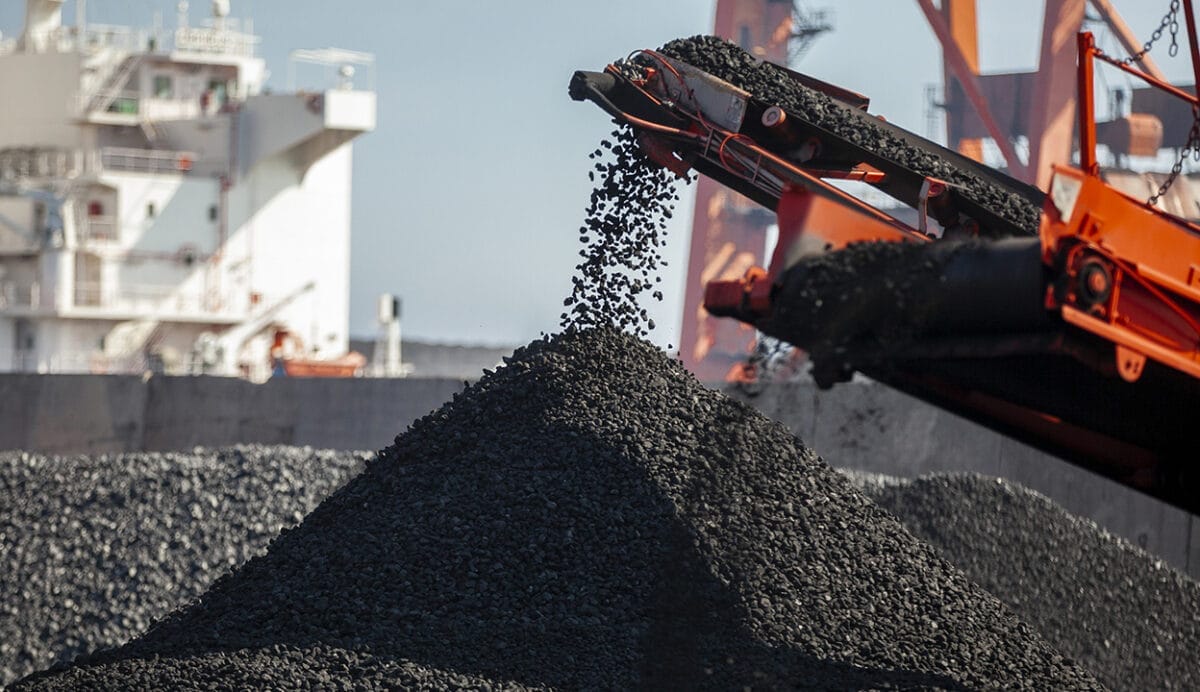
coal handling in a port

The commodities sector is at the heart of the energy transition, impacting both the coming structural decline of fossil fuels and the demand for the new economy critical materials. There is also the delicate matter of future nature-based land-use and food production conflicts facing investors and soft commodity driven deforestation, other potential clouds on their net-zero commitments.

The reality is that many investors are reluctant to talk openly about commodities because of the negative perceptions of the sector. To date, the commodities narrative has been mostly characterised by high emitting energy production from fossil fuel companies and mining companies that are misaligned with a sustainable future & their negative climate lobbying activities, which are still to be effectively curbed by those very same investors.

References to the role of commodities also often brings visions of irresponsible corporations and nations with issues beyond their environmental impact, including poor human rights records and a sometimes-dubious influence on some governments. In some cases, the list of broader ESG issues associated with commodity production reads like a list of investor red flags. If the global commodities sector were a single business, the CEO would be straight on the phone to Saatchi and Saatchi for an urgent rebranding.

Fossil fuels to critical materials–a rebalancing in indices

Investors increasingly recognize that the future of the energy transition and in turn emissions outcomes relies on the rapidly shifting balance in commodities trading from fossil fuels to critical minerals including metals, many of them in key transition sectors. Copper, cobalt, lithium and others are already exploding but their demand is not yet represented in the fossil fuel laden commodities indices that investors overwhelmingly use.

To better reflect this inexorable trend, Dutch giant APG is looking to launch a new forward-looking commodities index that will be constructed based on the future demand for these commodities rather than their historical counterparts, a move that will help shift some of the existing negative perceptions.

As any investor will tell you, exposure to futures indices is not the driver of change that many think they are. Nothing can alter fundamental economics more than early-stage investment, R&D, pro-active policy designed to accelerate commercialization and regulation to advantage the new over the old. Further complicating indices as a lever is that investors’ existing underlying exposure to commodities is often whispered in quiet corridors, blamed on supply chains where their influence is thin or on mining monoliths that no investor can afford not to hold in their portfolio. This has limited the opportunity for open debate.

Sponsored Content

However, with the development of these new forward-looking indices, investors can acknowledge their positive expectations of the new commodities exposure and then start the difficult discussions necessary to explore the social and environmental downsides. This can be far easier at the commodities level than at the company level, which often degenerates into a complex jurisdictional or commodity divestment discussion that shuts doors rather than opens them.

As the Inevitable Policy Response (IPR) shows in its 2023 Forecast Policy Scenario, most residual emissions by 2050 will be in Emerging Markets and Developing Economies (EDMEs). The transition will reflect a rapid transformation in those economies even though it is too slow to save us from a significant overshoot past 1.5C. Embedded in this inevitable future is the change in the commodities landscape that mirrors the change in the economies that produce the new materials.

To understand how the future will unfold, the history of commodities is worth recalling as the significance of the primary commodity sector in any national economy generally declines as the process of economic development improves in that country. Nations start by digging up their land for resource wealth or utilizing land in some productive way and a tipping point arrives when the benefits of this activity create a secondary manufacturing and service economy which fuel property and other booms to even the global playing field.

For example, the USA’s reliance on the primary sector for GDP contribution was around a quarter at the turn of the 20th century but had shrunk to just 5% by 1960 once Henry Ford and a couple of technology fueled world wars had washed through. History may well repeat itself regarding the new commodities, many of which will be produced in developing nations and some of which will send you scurrying towards an Atlas.

The Coming Commodities Shifts

Understanding how commodity shifts will manifest during the energy transition is vital for investors both at a sector and at a jurisdictional level with complex geo-politics. It is easy to point at investments in certain sovereign states in the most difficult and controversial of commodity producing destinations. China’s desire to influence nations in Africa is well documented and investors need only peek at their Sovereign and Corporate Debt portfolios to see that broader ESG issues are inherent in their investments.

Some commodities are already a major story in themselves with Cobalt in the Democratic Republic of the Congo (DRC) being the most recognised example, the country languishing 136th in The Economists Global Democratic Index out of 167 countries. When, in comparison, Zimbabwe and Burkina Faso are deemed some of the more stable areas to mine commodities in comparison, you have an industry facing difficult challenges.  Rare earth mining is also beset by some prickly ESG issues in some jurisdictions.

However few investors can afford to be without Cobalt in their portfolios whether they like it or not. Nothing short of total auto and battery divestment is required for an investor to look clean if they want to keep the DRC out of portfolios. This reflects how tightly integrated the world’s supply chains have become.

If no investor can look you in the eye and say they are totally clean on myriad ESG issues it further highlights that the real issue is about how to influence the future of commodities as transition shapes new demand, rather than how to avoid them. This is the debate that the APG indices can help promote whilst simultaneously advancing financial returns.

Once agriculture and nature – based commodities join the picture and you accept that the 1.5C overshoot is a coming reality, then investors may be forced into a new approach to commodities. Conflicts between bioenergy and food production are looming in future decades (an emerging issue the just released IPR Land Use & Bioenergy Outlooks both explore) with forestry playing a critical role in carbon removals to redress the temperature outcome towards the end of this century.

The emissions debate for investors is reaching a stage where difficult investment issues like commodities impacts can’t be avoided either in debate or implementation. The most obvious of these is the Net Zero alignment over reliance on Scope 1 and 2 emissions to make any sense. Scope 3 (with upstream supply chains being prevalent) is gradually being recognised as being essential to any logical framework for analysing emissions and pathways for reductions.

Like Scope 3 emissions, commodity exposure is also unavoidable for investors, even those committed to do the right thing on climate, just transition and stewardship. Divestment hasn’t worked as a theory of change and for large investors never could work once Scope 3 emissions were accounted for.

Investors should treat commodities in the same way, realising they are an inherent part of any portfolio and thus it is better to try to manage the inherent ESG issues as best they can whilst supporting the development of the critical minerals that the transition so desperately needs.

Within that framework, a new commodities index would not only be a tool to manage climate-related risks within a commodity futures portfolio but would help drive this new narrative which in turn can influence positive capital allocations towards these commodities.

Given that the Inevitable Policy Response has shown that investment in developing and emerging economies is the key to minimising an overshoot past 1.5C, and that many of these new transition commodities are in developing economies, the intersection of these two themes is a great opportunity for leading investors.

 Julian Poulter is a partner of Energy Transition Advisers (ETA) and head of investor relations at the Inevitable Policy Response (IPR). The views expressed in this article are personal and do not necessarily represent the views of IPR.


Leave a Comment

Finland’s Elo: Larger equity allocations promise new media scrutiny

Finland’s Elo: Larger equity allocations promise new media scrutiny

As Finland's pension funds prepare to increase their equity allocations to unprecedented levels compared to global peers, they must also navigate a new and unfamiliar risk. Elo's chief investment officer Jonna Ryhänen explains the fund's investment approach going forward and how it will manage stakeholder and media scrutiny as they react to swinging volatility and returns.

Sort content by

CalPERS’ Stephen Gilmore on the total portfolio approach

Listen to the detailed interview between Top1000funds.com editor Amanda White and CalPERS' CIO Stephen Gilmore to gain insights into how a TPA mindset has the potential, through a shared focus on the total portfolio, to add value, simplify accountability and open new opportunities for investments.

How CalPERS aims to add 50-60 bps using TPA

Stephen Gilmore says he can add 50 to 60 basis points to portfolio returns by using a total portfolio approach. In a long interview, Amanda White spoke to the CIO of CalPERS about why a TPA mindset can add value, simplify accountability and open new opportunities for investments.

Why West Virginia’s CIO is worried about its China divestment directive

The $28 billion West Virginia Investment Management Board will divest from Chinese state-owned companies and CIO Craig Slaughter has reservations about the decision. He outlines in an interview with Top1000funds.com about why the directive is an extension of a big threat facing investors: a decline in liberal democracy. 

USS paper urges governments to do more to support climate policy

A new report from USS and the University of Exeter, argues that investors who focus on decarbonising their portfolios won't change real-world decarbonisation and would have more impact on climate change by buying transition investments.

TRS strikes gold: Tiny allocation crushes its benchmark

This year, TRS doubled its tiny allocation to gold via a special fund that buys gold ETFs and mining companies. The strategy returned nearly 60 per cent, thanks to market conditions including inflation, geopolitics, government debt levels and de-dollarisation pushing gold higher.

Moving from risk 1.0 to risk 2.0

As investors move into 'risk 2.0', how should they change their modelling approach and investment toolkits? WTW global head of portfolio strategy Jeff Chee outlines in this column why investors should consider principles such as greater use of qualitative risk measures.

Previous



