
Illinois looks inward for new portfolio

The $42 billion Illinois Municipal Retirement Fund plans to launch a new, internally managed quantitative portfolio using multifactor strategies in 2019. The new approach means the fund will add to its active internal equity management capability, hiring two portfolio managers and one trader. The allocation will be US-focused, but further details remain under wraps.

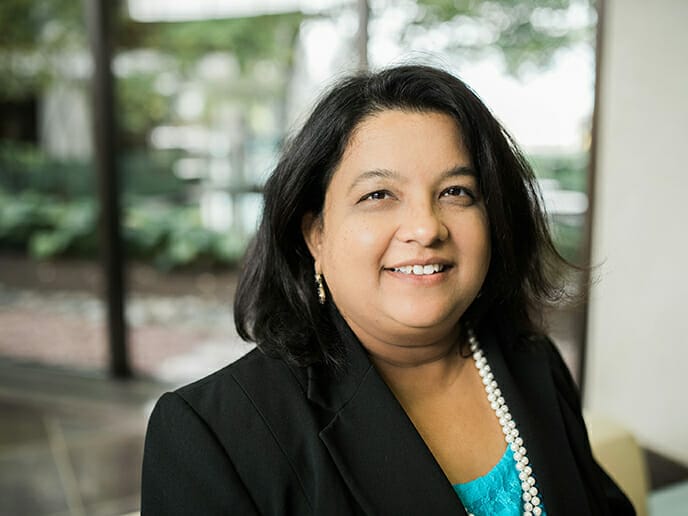
“It has been preliminarily approved in our budget, but the discussions are ongoing. [In 2019] we will go to the board with the specifics,” IMRF chief investment officer Dhvani Shah says.

The strategy builds on Shah’s gradual integration of more downside protection into the 44 per cent allocation to domestic US equity. So far, downside protection has mostly come via boosting cashflow-generating assets in an infrastructure allocation established in 2016. The new quantitative portfolio also reflects IMRF’s own growing investment expertise, where the internal team now stretches to 14, 11 of whom sit in investments.

It is an expertise evidenced by IMRF running its manager search in unlisted infrastructure internally, where Shah now hunts direct fund investment. Indeed, IMRF has carried out all its recent infrastructure searches itself, spanning five categories across the listed and unlisted spaces. In contrast, when Shah joined IMRF seven years ago from New York State Teachers’ Retirement System, where she headed up the private equity division, the fund didn’t run any inhouse investment searches or recommendations. Now IMRF has built a team that can do things itself and doesn’t need to use its consultant on every search.

“We can do things quicker ourselves,” Shah says. “We are the only client.”

Technology has helped IMRF build its internal capabilities. She has added Bloomberg and private equity software TopQ, amongst other tools.

Sponsored Content

“When I joined, if someone asked me how the portfolio did the day before, I couldn’t tell them until my consultant’s report came in. With the use of technology, I can see the portfolio and have the preliminary numbers when I need them,” Shah explains.

Other recent adjustments to the portfolio include tweaks at the edges of the asset allocation to help with implementation. For example, she recently reduced the allocation to alternatives by 1 per cent to better reflect the chunk of uncalled capital in the private equity portfolio, which had widened the gap between IMRF’s actual and target allocation.

“We reduced our alternative allocation not because of sentiment on the asset class but because the market value of our actual allocation was around 4 per cent, yet unfunded capital brings the allocation to about 7.7 per cent. As we deploy more capital, we will move back up.”

Less is more

Strategy in the alternative portfolio, which targets an annualised return of 9 per cent from allocations to private equity, venture capital, agriculture, timber and infrastructure, focuses on fewer GP relationships and direct allocations. It is a simple approach that led Shah to take hedge funds out of the alternative portfolio a couple of years ago, despite an initial decision when she joined the fund to rejuvenate the allocation by consolidating three fund-of-funds hedge fund products into one.

“The restructured hedge fund portfolio performed well and grew to around $500 million, but we had to either scale up hedge funds or reduce them and we made the decision to come out,” she recalls. “We only have a four-person team overseeing private markets. We were doing fund-of-funds but would have wanted to change this to direct control. Sourcing and monitoring hedge funds [requires] a larger team, but this didn’t match with our investment team model.”

She also says other strategies within allocations can give the same benefits as hedge funds. “There are niche strategies within each major asset class you can use to shape your risk-return profile of the portfolio.”

The private equity portfolio is structured around 20 direct GP relationships running about 55 mandates between them. Added to this, IMRF deploys capital to separate accounts for broader exposure. Success hinges on accessing the best funds; Shah believes IMRF has an edge as a “premier LP” because of its 93 per cent funded status, governance structure, reputation and ability to offer multiple mandates.

“We don’t have to invest in every private equity fund that comes our way. Our GPs are one of 20, not 200, and this makes a difference,” she says.

Within the fund’s private equity manager roster, a handful of minority managers also run mandates. It’s part of a wider program where minority managers invest about 20 per cent of the $40 billion portfolio across all asset classes, in a strategy underwritten by Illinois’ state-level pension code.

“Our minority managers are not a separate carve-out of the portfolio but are part of our performance and crucial to reaching our 7.5 per cent return,” Shah says. Most recently, IMRF mandated minority manager Piedmont Investment Advisors to run its $1 billion Russell 1000 Growth Fund. Piedmont used to run an active equity mandate for the fund, and wanted to grow into the passive space, Shah says.

“Our $1 billion investment mandate is a vote of confidence that they can do it.”


As of September 30, 2018

Market Value
ASSET CLASS (MILLIONS) % TARGET % ACTUAL
Domestic equity $18,958.6 37.0% 44.7%
International equity $8,138.5 18.0% 19.2%
Fixed income $10,915.6 28.0% 25.7%
Real estate $2,422.6 9.0% 5.7%
Alternative investments $1,704.6 7.0% 4.0%
Cash equivalents $271.8 1.0% 0.6%
Total $42,411.9 100% 100%


TOTAL INVESTMENTS BY REGION
Domestic: 76.5%
International: 23.5%

Leave a Comment

Beyond asset classes: Active credit becomes the test case for Florida’s portfolio evolution

Beyond asset classes: Active credit becomes the test case for Florida’s portfolio evolution

Florida State Board of Administration has built an active credit portfolio spanning public and private markets, CIO Lamar Taylor says the initiative could be the first step in a broader shift away from traditional asset-class investing towards a framework centred on return drivers and risk exposures.

Sort content by

NZ Super cuts benchmark return expectation on US valuation concerns

A view that the US stock market is overvalued and equity risk premia will be lower over the long term has driven New Zealand Super to lower the return expectations for its reference portfolio following its recent five-yearly review of the benchmark. Co-chief investment officer Brad Dunstan also flags underweight commodity exposure as an area to address and explains why the fund remains sceptical of illiquidity premia despite seeing a growing case for private markets.

Sampension: Why there are many reasons to be optimistic

Now is not the time to reduce risk, argues Henrik Olejasz Larsen, chief investment officer of Sampension, Denmark’s $50 billion pension fund for public and private sector employees. In an interview with Top1000funds.com, he says corporate profits have not deteriorated, and although the market has been tested from multiple directions, the underlying optimism driving equities is strong enough to overrule the negative impact of geopolitical risk.

France’s Banque des Territoires looks for data centre opportunities

France’s Banque des Territoires, a subsidiary of Caisse des Dépôts, the country’s €323 billion state-owned financial institution, plans to invest more in data centres in France. The push is in line with government policy to build out AI infrastructure off the back of the country's access to cheap, green, nuclear energy that uniquely positions France to provide power to the AI industry while maintaining net zero credentials.

Why NYC pensions CIO hasn’t drunk the ‘TPA Kool-Aid’

Three decades of investing have given Monte Tarbox sharp eyes for recognising risk and opportunities, and he’s putting it to use as the new permanent chief investment officer of the $306 billion NYC Bureau of Asset Management. In an interview with Top1000funds.com, Tarbox outlines his vision for the fund, why he’s bullish on infrastructure but “nervous” on PE, and why he hasn’t drunk the TPA “Kool-Aid”.

Returns, resilience and reinvention: What private markets’ top brass are worried about

Senior executives from some of the world's largest private market managers gathered in Berlin this month with a collective understanding: managers who move slowly on AI face not just weaker returns but the risk of owning businesses that have been competitively displaced before they can exit.

What a brief encounter with Elon Musk taught me about the limits of capitalism

In 2013, on the sidelines of the Milken Conference at the Beverly Hilton, my friend and then-colleague Sean Scallan and I found ourselves in a seven-minute private conversation with Elon Musk.   He was not yet the figure he is today. Tesla was struggling. SpaceX had launched but not yet proven itself. The idea of humans

Previous



