
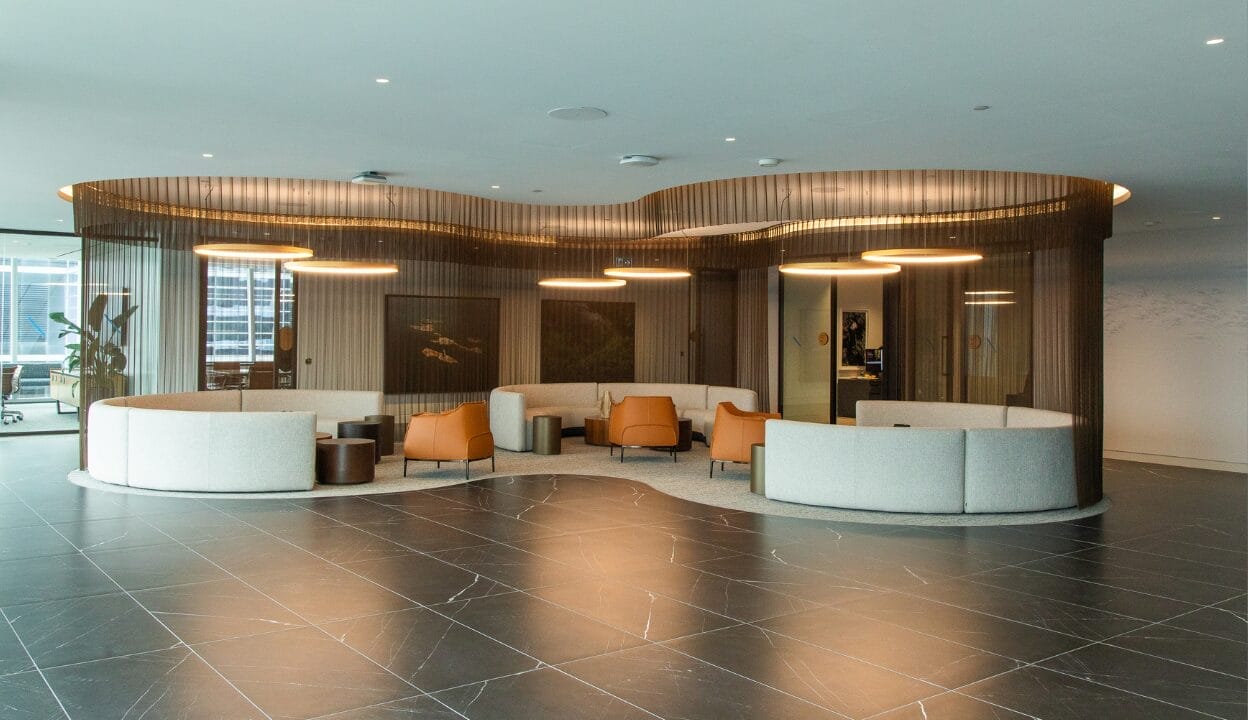

Staff at Ontario Teachers’ Pension Plan Board, the $247.5 billion global asset owner, come into the office at least three days a week. Although some come in four, or even five days, the investor hopes its new downtown Toronto offices will encourage people to spend more time on site.
It is also the type of premises that will help lure top talent to the pension fund, explains George Konidis, managing director, Real Estate & Workplace Transformation, OTPP, who led the dramatic renovation of the landmark building.
Since the pandemic, we have proved we can work effectively from home. And mandates that compel staff to show up more regularly at the office are often unpopular – although banks are taking a much tougher stance, stepping up enforcement of days required in the office.
Konidis believes OTPP’s new offices will boost human connection and creativity and show the office in a new light, bringing people together in a different way.
“Our new workplace experience fosters the need for collaboration, networking, mentoring and productivity,” he says.
“We have invested in our teams by providing a space that enables a successful workplace experience while also giving people the flexibility to work from anywhere. We’re pleased with what we’ve achieved.”
Flexibility and choice
The emphasis on flexibility and choice in work styles stand out as one of the building’s key features. OTPP’s new offices have tech-enabled work seats, lounge seating, collaboration seating, meeting rooms, cafés, lounges, quiet rooms, focused workspaces and amenities to support individual needs in the workplace.
Staff can work in different workspaces to suit their individual business needs and workstyle preferences, he explains. “The aim is to further elevate well-being and productivity by providing spaces that match how people want to work and the type of work that they will be doing.”
A suite of technology tools and solutions give employees the ability to work effortlessly from anywhere in the office and the range of rooms are designed to improve meeting equity by making the experience the same for participants in person and online via new, hybrid first meeting experiences, says Konidis.
“When we made the decision to create a brand-new workspace and head office, we were looking at and planning how we could drive an elevated workplace experience. We are proud to have created a space that reflects our culture and emphasizes sustainability, inclusion and well-being and one that, we see, will motivate employees and increase productivity.”
The investment teams can use the conference level floor and meeting space “to dial-up the experience when they are hosting meetings and events,” says Konidis. “Having the ability to elevate the in-person experience, coupled with being centrally located in downtown Toronto, will certainly be beneficial.”
He adds that the new office will also help attract top talent.
“We see the in-office experience – especially when a physical space can reflect an organization’s culture and draw-in priority elements to our teams like wellness, sustainability, and amenities – playing a vital role in attracting and retaining talent.
We took the time to speak with employees and understand what they were looking for in a workspace. The outcome was an amenity-rich space with sustainability, inclusivity, wellness and flexibility embedded in its design.”








Leave a Comment
You must be logged in to post a comment.
Login