
Future Fund to internalise some local real assets amid US uncertainty

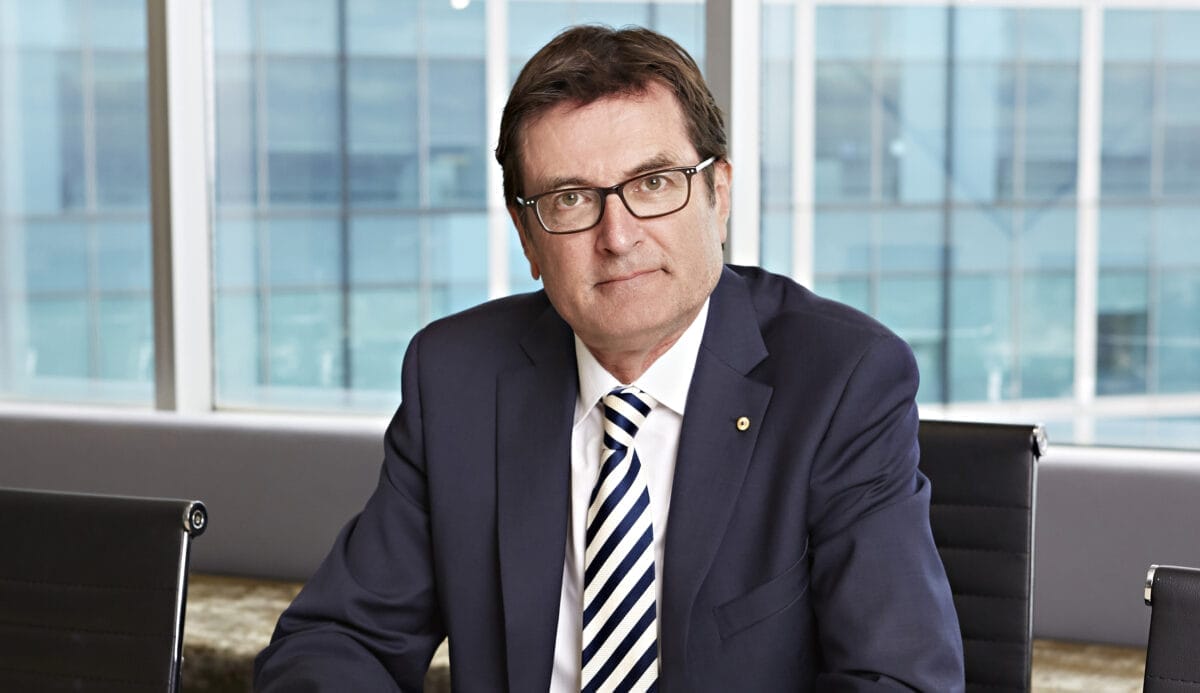
Greg Combet.

Greg Combet.

Australia’s Future Fund will partially internalise its direct local infrastructure and property investments to cut costs and boost flexibility in the wake of its growing concerns about investing in the US.

The shift aligns with the sovereign wealth fund’s revised government mandate to consider investments across three national areas of priority: the energy transition, the supply of residential housing, and Australian infrastructure.

Future Fund chair Greg Combet said this increased focus on domestic real asset exposures had prompted the fund to seek government approval to invest in local infrastructure and property assets – a first since the fund was established nearly two decades ago.

“This additional capability is intended to help access new opportunities in Australian infrastructure and property that we might otherwise be unable to access efficiently, or which external managers may not be focused on,” he said in a speech to a Committee for Economic Development of Australia (CEDA) event in Sydney.

It is understood that this may also include defence-related infrastructure assets where the pool of existing fund managers is small or non-existent.

While the majority of Australia’s superannuation funds have internalised much of their asset management, the Future Fund employs more than 100 external managers, which manage the bulk of its A$240 billion ($155 billion) barring some co-investment sleeves.

Sponsored Content

“We do not anticipate a significant shift away from the way in which we partner with our external managers,” he said.

The move is also viewed as a way to bring more dollars home as the fund grows increasingly cautious on the investment and geopolitical outlook for the United States. The Future Fund has more than 70 per cent of its assets offshore, well above most local super funds, which hold less than half of their portfolio offshore.

Combet said the election of Donald Trump as US president last year has “added layers of volatility and uncertainty”, adding that the Future Fund was focused on the US’ retreat from global security and economic arrangements, and on the uncertainties that have arisen as a result of that waning influence.

“We’re also mindful of the geopolitical contest between China and the US, including the race to dominate in artificial intelligence capability,” he said.

“The US tariffs and their likely macroeconomic impact are on our mind… The dollar has fallen about 10 per cent this year against major currencies, and continuing depreciation may be significant for global capital flows of asset values.”

Investors also have to contend with the “big beautiful bill” – the US’ budget reconciliation bill – which contains Section 899, which “potentially and dramatically escalate” tax rates for foreign institutional investors like the Future Fund.

“In combination, these policies and dynamics are making the US a more risky and uncertain investment destination,” Combet said.

“The factors I’ve highlighted are alerting investors that elevated risk demands a higher return on capital and that they may be overweight US assets.

“So while the US will undoubtedly continue to offer many attractive investment opportunities at the margin, I think it’s fair to say that it’s become a less attractive investment destination than it was, and maybe likely to see a smaller share of capital flows going forward.”

Those changes, if not permanent, will be long-lasting, Combet said, and the Future Fund is reviewing its short- and long-term investment scenarios.

“What will the investment environment look like under the Trump Administration and beyond? It seems unlikely that even dramatic reversals of Trump policies would engender a return to business as usual approach from long-term investors now that some doubt has been sown.

“And the trend towards deglobalisation, greater political tensions, geopolitical tensions and multi-polarity pre-date Trump and can be expected to post-date the Trump era. We certainly don’t think at the Future Fund that the dynamics I’ve spoke of will pass and return the world to the norms of yesteryear.”

Combet’s comments echoed Future Fund chief investment officer Ben Samild’s comments earlier this month at the Australian Fiduciary Investors Symposium hosted by Top1000funds.com’s sibling publication, Investment magazine.

“The global institutional order is changing,” Samild said. “The stability of the post-Bretton Woods II institutional framework may be fracturing. Portfolio construction against this backdrop is considerably more challenging and you have unsatisfactory choices.”

Samild said several forces had raised the risks for offshore asset owners investing in US dollar-denominated assets, including China’s waning appetite for US dollar assets and accumulating large foreign exchange US dollar-denominated reserves in response to the Trump administration’s hefty proposed tariffs.

“Is the global savings flywheel reversing? The US has captured 70 per cent of global savings – Europe, Japan, the most important surplus countries, Canada, Australia. I think China’s out. Many of the policies that have been announced or discussed make it more difficult for capital providers in all these countries.”

Samild said the fund viewed FX as the most important lever in its portfolio.

“It’s the least spoken about but the most important one. It changes your returns over time more than any, and it has more nasty trade-offs that you really have to think through than any of the other things that we do.”

The fund takes an active, whole-of-portfolio approach to managing currency through overlays rather than allowing FX exposures to be shaped by its underlying investments.

Samild said the Future Fund was now questioning three core beliefs about the Australian dollar that had held up over decades:

  • The Australian dollar will (on average) exhibit pro-cyclical behaviour against a basket of developed market currencies.
  • Australia will (on average) have somewhat higher real interest rates than other developed markets.
  • Developed market FX is a valuable source of diversification, particularly in stressed environments, and for liquidity risk reduction.

“We have changed our duration exposure,” Samild said. “We changed our strategic FX, we changed our tactical FX. You have to be really careful about correlation.”

“We think we might be in a world which is even harder than the one I’ve described, because our running correlation, from an Australian dollar perspective, might turn the other way, but your tail correlation in an event may still be Australian dollar down.

“It’s very hard to take on this correlation risk blind now. So maybe you buy gold, maybe you buy alternative reserve currencies, maybe you use hedge funds instead, maybe you use long vol, maybe you use options yourself. Maybe you do some version of all of this. But this is all more challenging than reliable, scalable, rewarding portfolio anchors like US duration and FX have been.”

Asset Owner:Future Fund

Leave a Comment

The twin forces rewriting the rules of investing

The twin forces rewriting the rules of investing

Portfolios built for the old world will be severely tested as emerging forces rewrite the rules of investing. The Fiduciary Investors Symposium heard that geopolitical and macroeconomic upheaval, together with the disruption wrought by AI, should force asset owners to rethink the structure and composition of portfolios.

Sort content by

Strategic tilting adds value at NZ Super

Strategic tilting has added 1.1 per cent, or NZ$3 billion, to the New Zealand Super Fund’s reference portfolio over the past 10 years, David Iverson, head of asset allocation at the NZ$41 billion fund says. This is way above the expected return from the program which was set at around 40 basis points.

At a glance: FIS Cambridge day three

An overwhelming number of delegates at the Fiduciary Investors Symposium said the funds management industry was not doing well in innovationMartin Gilbert, who started Aberdeen Standard Investments in 1983 and is now chair, said industry participants needed to innovate and disrupt themselves.

Different ways to navigate risk

Institutional investors are navigating the different risks that can impact their portfolios in different ways, explained chief risk offers speaking at the Fiduciary Investors Symposium in Cambridge. Arjen Pasma, chief risk officer at Dutch asset manager PGGM noted how risks span investment risk, counterparty risk, liquidity risk and ESG risk. Measuring ESG risk in the manager’s large allocation to private markets where each deal is scored on ESG and climate risk is particularly important, he said.

How to build innovation

Innovation is more important than ever given the uncertain and ambiguous times that lie ahead for institutional investors like climate change, political dysfunction and poor returns. “Returns can only come from an ecosystem that works and we need innovation to do this,” said Roger Urwin, global head of investment content, Willis Towers Watson speaking at the Fiduciary Investors Symposium at Cambridge University.

Climate change risk to spur stress test

Mercer has quantified a ‘low-carbon transition’ premium in the sequel to its seminal climate change report, showing that a 2⁰C scenario equates to 11 basis points per annum to 2030 in a typical growth portfolio.

Long-term investors must engage

Long-term infrastructure investors need to engage with the public and do much more to build trust in the value of their capital, said Brett Himbury, chief executive, IFM Investors (Australia), the global infrastructure manager, owned by 27 leading pension funds with $120 billion AUM.

Previous



